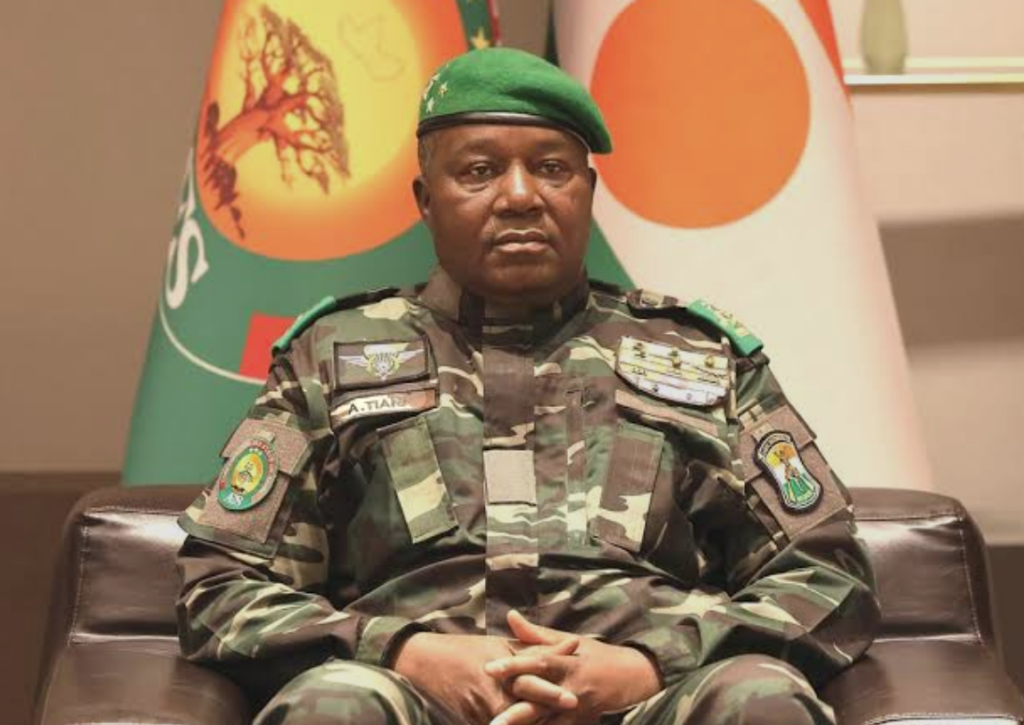
In the wake of a failed coup attempt, Niger’s military regime is revealing deeper fractures beneath its surface. Just days after a sweeping reshuffle at the top of the armed forces, General Abdourahamane Tiani dismissed four key ministers in a move that signals less about governance and more about growing internal panic. The purge—coming on the heels of the aborted putsch during the night of August 28–29—lays bare a leadership increasingly consumed by self-preservation while the country sinks further into chaos.
The illusion of control in a fractured command
General Tiani now appears to suspect betrayal at every turn. The failed coup attempt in Niamey sent shockwaves through the corridors of power, shattering the illusion that he had total command over both state institutions and the military ranks. In response, the National Council for the Safeguard of the Homeland (CNSP) launched an immediate crackdown—not only arresting officers but also decapitating the military leadership structure.
This campaign of suspicion soon spilled into the civilian government. By presidential decree, four pivotal ministers—overseeing Agriculture, Agrarian Reform, Energy, and Communications—were abruptly removed. These are not peripheral roles; they touch core levers of economic stability and information control. Reassigning them to loyalists underscores Tiani’s desperate bid to consolidate power in a system already showing signs of collapse.
Irony of the putschist fearing another putsch
There’s a bitter irony in Tiani’s current paranoia. He himself seized power in July 2023 by overthrowing democratically elected President Mohamed Bazoum—a coup executed from his position as head of the presidential guard. Now, having come to power through force, he faces the very threat he once embodied: internal military dissent.
Non-democratic regimes often founder on this paradox—their lack of legitimacy makes them vulnerable to replication of their own origin story. Tiani’s fear isn’t unfounded; it’s structural. The August coup attempt wasn’t an anomaly but a symptom of deepening rifts within Niger’s military elite. The CNSP no longer commands unity—it barely commands cohesion.
A nation abandoned amid institutional implosion
While Tiani reshuffles ministerial portfolios to shore up personal security, ordinary Nigeriens endure the consequences of chronic instability. The original justification for the 2023 coup—improving security against jihadist threats—has utterly collapsed in practice:
- Escalating terrorist violence: Attacks by groups linked to Al-Qaeda and ISIS have surged across border regions, claiming dozens of civilian and military lives.
- Strategic vacuum: Severing ties with international military partners left vast territories exposed, with no effective replacement strategy.
- Economic and humanitarian freefall: Combined with sanctions and insecurity, local markets have stalled, pushing millions into acute vulnerability.
No exit from the spiral
Routine cabinet purges won’t fix Niger’s systemic crises. By swapping personnel instead of rethinking policy, Tiani delays reckoning rather than resolving it. The relentless militarization of governance and witch hunts within the administration reflect not strength, but strategic emptiness.
Governing through fear and suspicion only deepens isolation—both domestically and internationally. Censorship and last-minute ministerial replacements can’t conceal the stark reality: the CNSP’s promise of order has devolved into institutional and security chaos, with the Nigerian people paying the highest price.