In Lomé, a pivotal but often misunderstood development unfolded on September 11: Benin, Ghana, Togo, Burkina Faso, and the UN Refugee Agency (UNHCR) signed three tripartite agreements aimed at enabling the voluntary, safe, and dignified return of Burkinabè refugees. Yet beneath the diplomatic formalities lies a far more complex reality—one defined by unresolved violence, fragile governance, and deep humanitarian dilemmas that could determine whether any return is truly sustainable.
Why these agreements aren’t about immediate repatriation
The Lomé accords establish a cooperative framework—not a repatriation schedule. They create mechanisms for consultation, monitoring, and preparation between each host country (Benin, Ghana, and Togo), Burkina Faso, and UNHCR. Crucially, they reaffirm a core principle: refugee returns must be voluntary, informed, and grounded in actual safety. In a region where displacement is driven by relentless insecurity, this distinction is not just procedural—it’s existential.
The scale of displacement confronting west africa’s coastal states
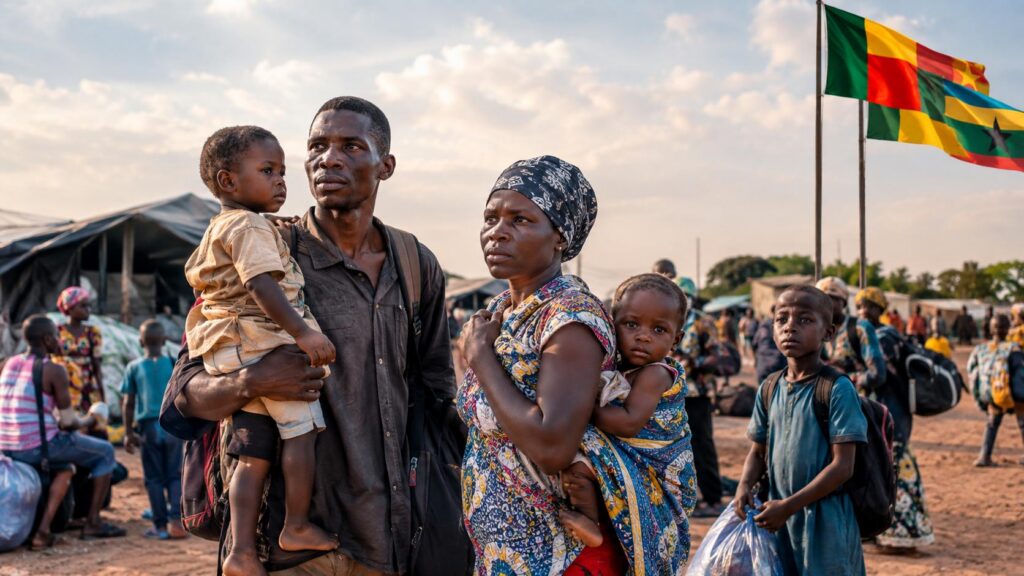
Benin, Ghana, and Togo have shouldered a disproportionate burden stemming from Burkina Faso’s escalating crisis. As of May 31, 2026, Benin hosted over 11,000 Burkinabè refugees. Ghana recorded 13,368 Burkinabè refugees by June 2026—nearly two-thirds of its entire refugee population—and had granted prima facie refugee status to new arrivals as early as February 2025, setting up reception centers in Tarikom and Zini.
Togo’s challenge is even more acute: by June 2026, it sheltered approximately 65,100 refugees and asylum seekers, with 86% originating from Burkina Faso. These aren’t abstract statistics—they represent families who fled villages under fire, abandoned livelihoods, and carry trauma that no bureaucratic process can erase.
Security failures and human rights abuses undermining return prospects
Any discussion of return must confront the conditions forcing people to flee in the first place. Since 2023, Burkina Faso has been engulfed in a multifaceted conflict involving Islamist armed groups, state forces, and allied militias. According to a comprehensive April 2026 report, Human Rights Watch documented 57 incidents of grave violations—including extrajudicial killings, forced displacement, and attacks on civilians—committed by all major actors. Many of these abuses may amount to war crimes or crimes against humanity.
Adding to the instability, the military junta led by Captain Ibrahim Traoré—installed after the September 2022 coup—has extended the transition period and systematically curtailed civic freedoms. Independent media, political opposition, and civil society face increasing repression, with enforced disappearances and forced conscription reported as recently as May 2026.
What “safe return” really requires
For refugees, safety isn’t just the absence of active combat. It means reclaiming homes and land without fear, accessing civil documentation, enrolling children in school, receiving healthcare, and having recourse if rights are violated. UNHCR emphasizes that durable solutions depend on addressing root causes—not merely signing agreements. Without credible accountability for past atrocities and tangible improvements in governance and security, any return risks becoming another cycle of displacement.
Regional responsibility beyond borders
Benin, Ghana, and Togo are not passive bystanders but active stewards of regional stability. By hosting tens of thousands despite their own economic and security constraints, they’ve demonstrated humanitarian leadership. The Lomé framework wisely avoids pitting “protection” against “return.” Instead, it enables ongoing coordination among states, UN agencies, and local communities—a necessary step given how fluidly crises now cross West African borders.
The true measure of success
Ultimately, the Lomé accords are a roadmap, not a resolution. Their value will be judged not by how many refugees are moved back to Burkina Faso, but by how many can return freely, reintegrate securely, and rebuild lives without the shadow of renewed flight. Until the underlying drivers of displacement are meaningfully addressed, caution—not speed—must guide every decision affecting those who have already lost so much.