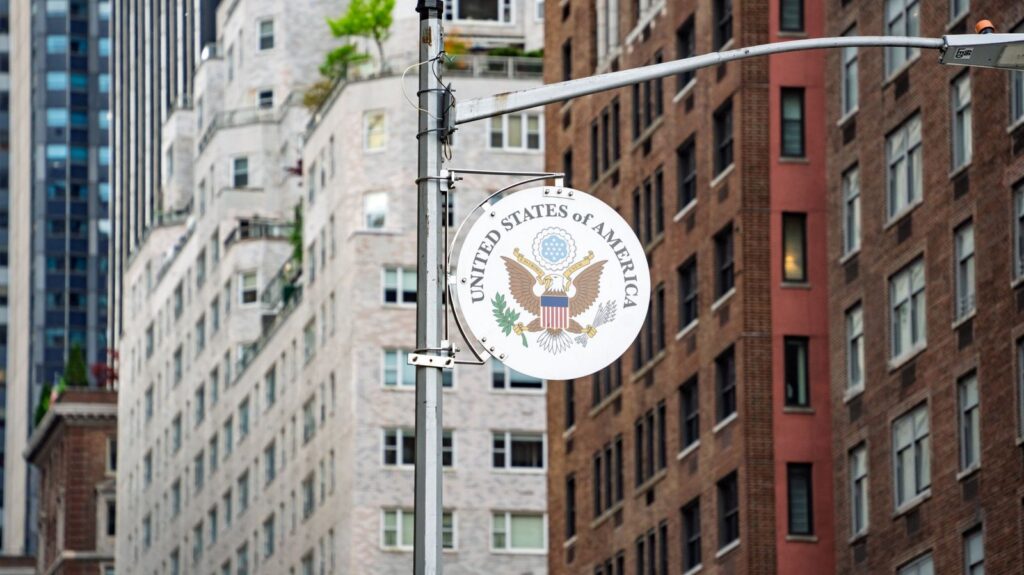
Securing an American visa from Bamako has become a detour no longer worth taking. United States consular authorities have shifted visa processing for Malian applicants to Dakar, making Senegal’s capital the mandatory stop for anyone seeking entry into the U.S. This move follows months of escalating tensions between Washington and Mali’s ruling junta, reshaping consular flows across West Africa.
Regional ripple effects of a shifted consular hub
The shift forces Malian applicants to travel to Dakar for biometric collection and interviews. The U.S. consulate in Senegal now faces a surge in workload, absorbing cases from its western neighbor. This decision fits into a broader pattern of scaled-back American diplomatic presence in West Africa, where embassies in Mali, Burkina Faso and Niger have scaled down operations after recent coups.
For Malian travelers, the financial and logistical burden has doubled. Costs now include round-trip transport to Dakar, accommodation during processing, and standard consular fees. This economic barrier risks limiting access to U.S. visas to wealthier applicants or those with foreign connections, leaving students, researchers and entrepreneurs with fewer options. The shift disproportionately affects professionals who rely on mobility for education, innovation or business development.
Dakar strengthens its role as regional diplomatic hub
The choice of Dakar was not arbitrary. Senegal remains one of the few West African capitals where the U.S. maintains a robust diplomatic footprint, with fully operational consular services and a secure infrastructure. As a long-standing U.S. partner and frequent recipient of American aid programs, Senegal solidifies its position as the region’s diplomatic gateway. The city already hosts multiple consular missions handling cross-border services for European and Asian countries.
This centralization in Dakar reinforces Senegal’s image as a Western anchor in a shifting West Africa. It coincides with the growing influence of the Alliance of Sahel States—comprising Mali, Burkina Faso and Niger—as it distances itself from traditional partners and aligns more closely with Moscow. The diplomatic divide now extends into the everyday administrative routes of ordinary citizens.
Mobility reshaped by political constraints
American authorities cite security and service quality as reasons for the move. Since political instability in Bamako, several Western embassies have reduced non-essential staff or suspended services. Visa processing is often among the first functions to be relocated when security or diplomatic conditions deteriorate. This approach, already tested in other African contexts, is becoming standard across the subregion.
For the Malian diaspora in the U.S., estimated in the tens of thousands, the change complicates family reunification and return trips. Remittances from North America form a vital economic lifeline for Mali, and any drop in mobility directly impacts these flows. Business actors engaged in trade and digital services also fear a slowdown in the movement of skilled professionals.
In the coming months, the true test will be whether the Dakar consulate can handle the increased demand without significant delays. For Malians, the logistics of obtaining a U.S. visa have quietly become a visible marker of the ongoing geopolitical realignment in the Sahel.