Between July 4 and 9 in Anéfis, Mali, national forces alongside Russian-backed African elements engaged in intense combat against terrorist factions. As hostilities subsided, a coordinated disinformation campaign emerged, targeting the former presence of French troops—who officially withdrew from Mali in August 2022. Malicious accounts sought to falsely implicate a French soldier in collaboration with separatist groups such as the National Movement for the Liberation of Azawad and the Group for the Support of Islam and Muslims.
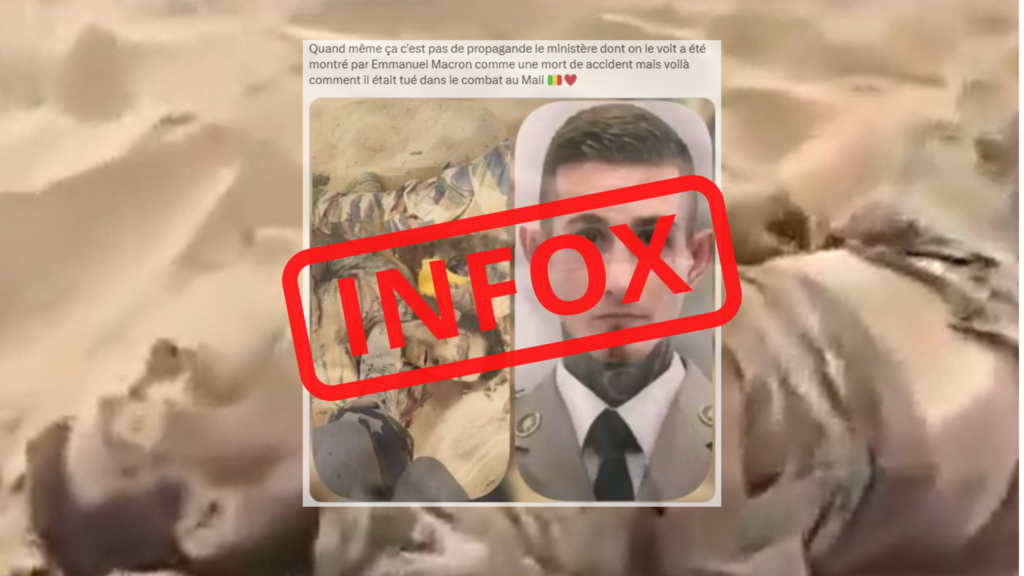
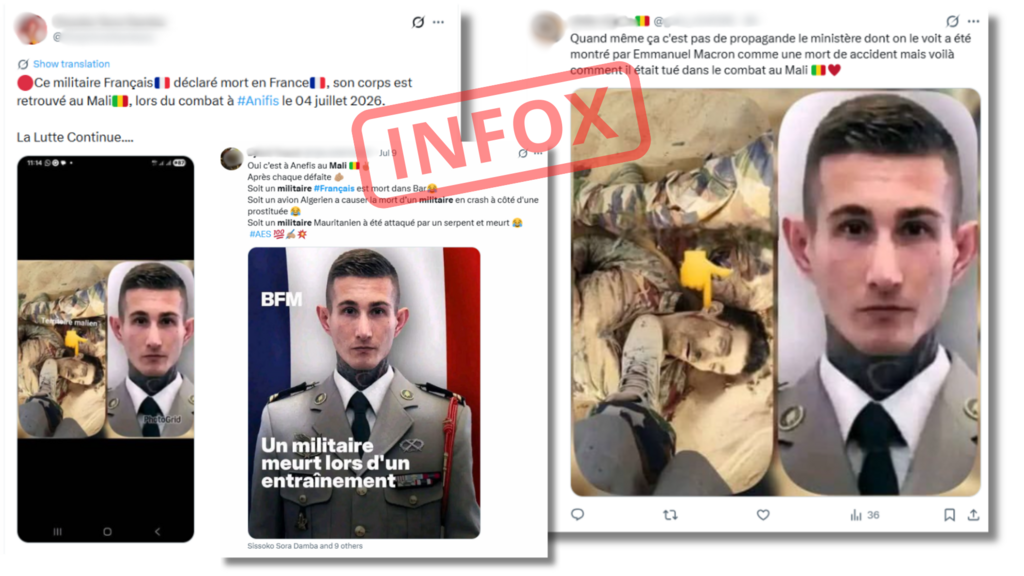
As the dust settled from the fiercest clashes in Anéfis, the first misleading post surfaced on X (formerly Twitter) on July 9. Its author attempted to distort official reports of a French soldier’s death in a July 7 training accident in the French Alps. The French General Staff had publicly honored Sergeant Pena, who died in service. Pro-AES accounts seized the moment, suggesting: “other theories persist, including possible death in Anéfis, Mali.”
Russian mercenary, not French soldier
The deception escalated the following day with the release of a photo allegedly depicting the French soldier’s death—a white soldier lying in the sand. The image bore a striking resemblance to the official portrait of Sergeant Pena, deliberately exploiting his Russian origin to sow confusion.
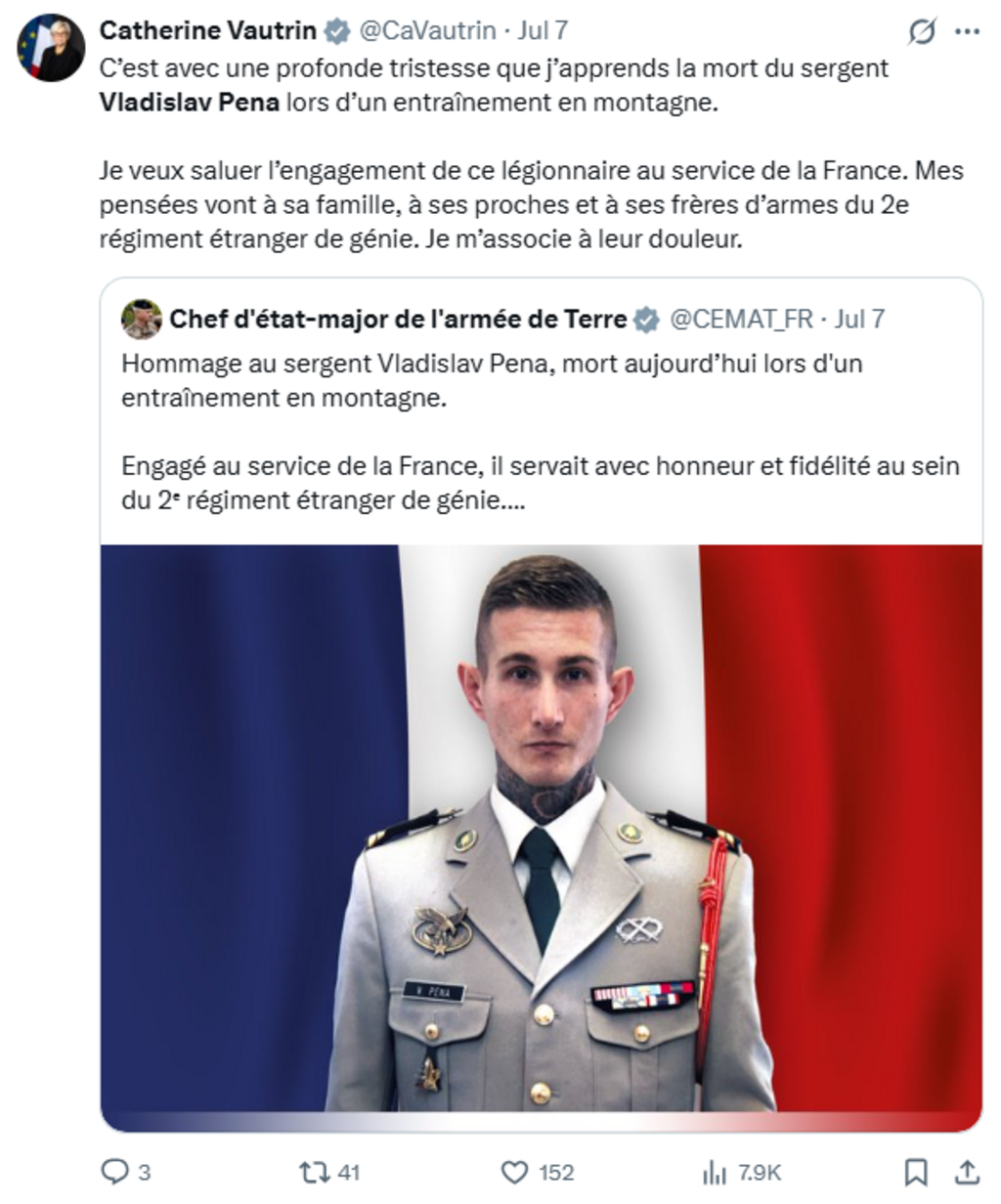
When these grim images were shown to Sahel specialists, they identified them as footage from the Tinzaouatène battle two years prior. Reverse image searches confirmed the photo matched an archived image of a Russian mercenary lying in the sand, published on an anonymous forum where unverified claims circulate freely.
Videos from 2024
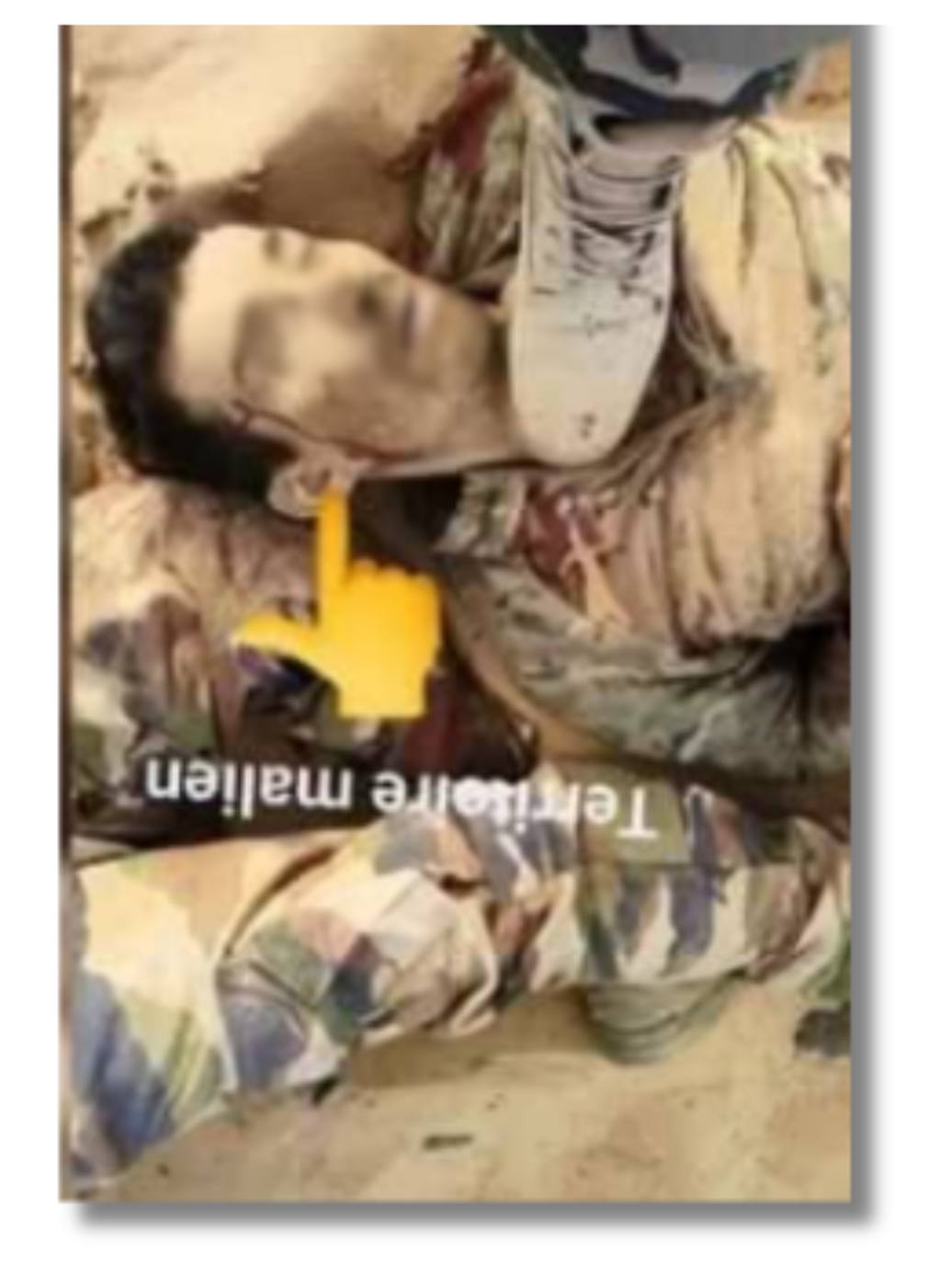
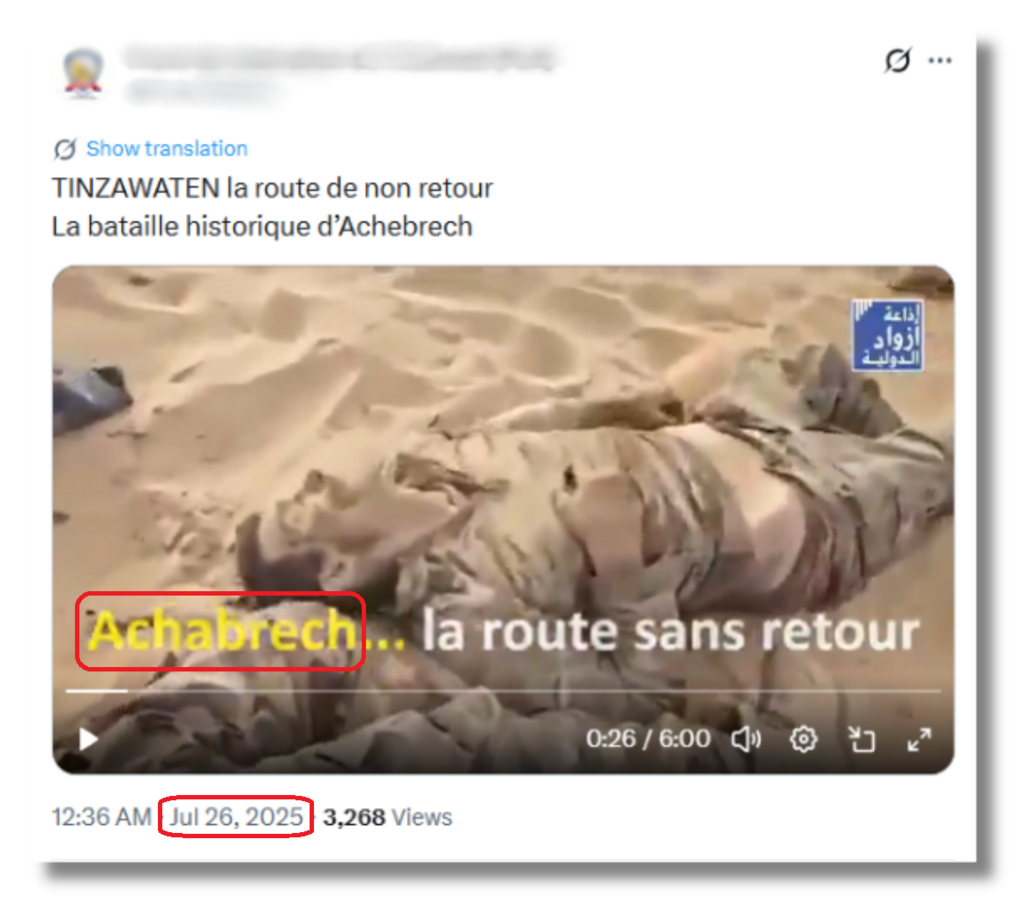
A six-minute propaganda video released by the National Movement for the Liberation of Azawad in 2025 to mark the first anniversary of the battle provided further confirmation. The footage—blurred and distressing—showed the same body alongside other Russian fighters. The arrangement of bodies, camouflage patterns, facial features, and hairstyles all aligned with the archived images.
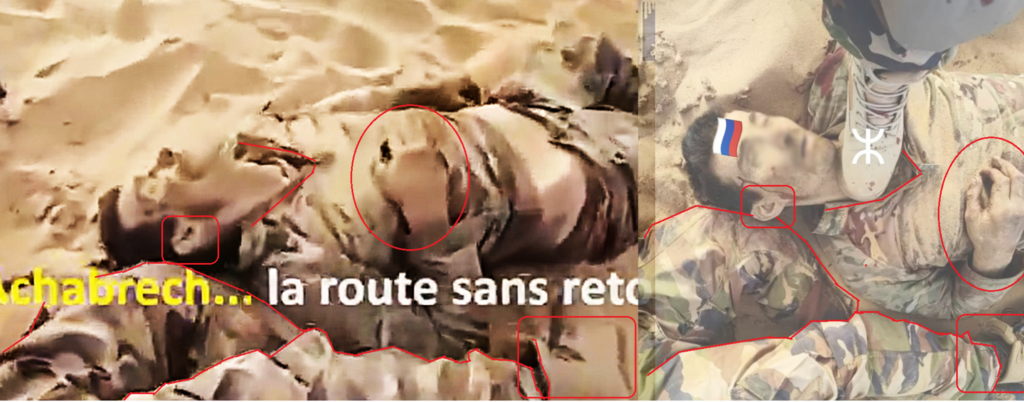
This false narrative relies on an image taken out of context: archival footage of Wagner Group members killed in Tinzaouatène in 2024, not a French soldier allegedly found in Anéfis in 2026.
A weak disinformation attempt that failed to gain traction
The narrative accusing French troops of colluding with terrorists is not new. However, this particular disinformation effort remained confined to familiar propaganda accounts and garnered little amplification. Many users promptly denounced the manipulation, signaling that repeated narratives may finally be losing their grip after four years of relentless repetition.
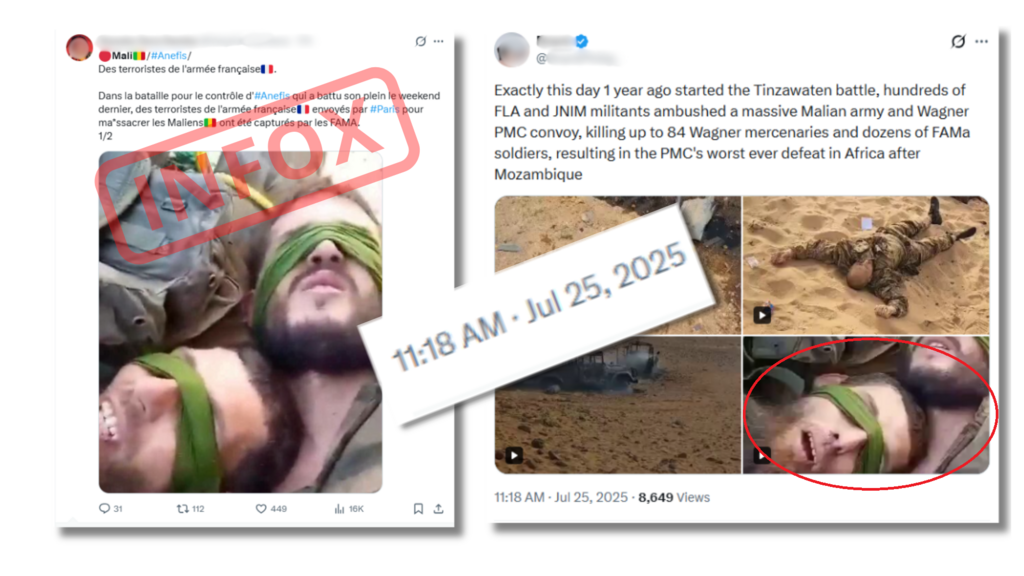
At this stage, X has recorded fewer than 50,000 views of these posts. However, the attempt represents an egregious case of identity theft against a fallen French soldier and an affront to his memory.