Gabon seeks to harness mining wealth for local economic growth
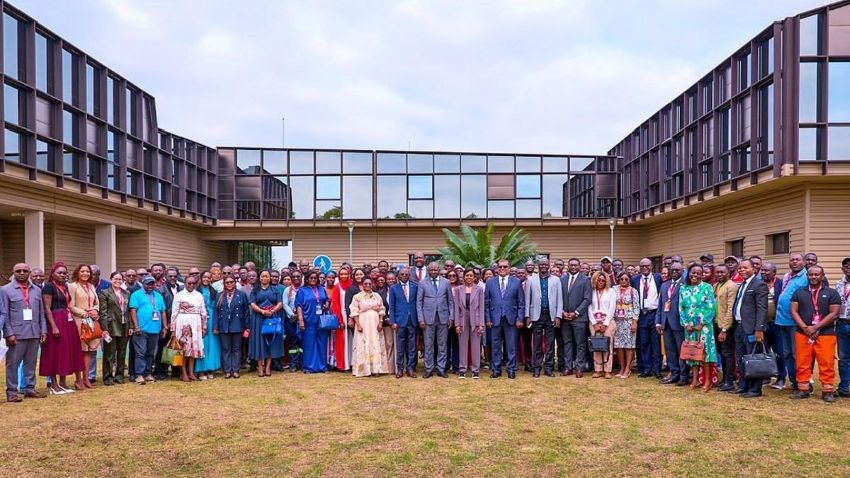
Libreville, July 17, 2026 — For decades, African extractive economies have grappled with a persistent paradox: while abundant natural resources are unearthed, a significant share of added value, skilled jobs, and industrial opportunities flows overseas. Gabon is now determined to break from this entrenched pattern.
Under the leadership of the Minister of Entrepreneurship, SMEs, and Youth Entrepreneurship, Zénaba Gninga Chaning, public officials, private enterprises, financial institutions, and mining operators have convened to devise a strategic roadmap centered on local content—a cornerstone of the nation’s economic transformation.
For the Compagnie Minière de l’Ogooué (Comilog) and Eramet Group, this initiative transcends mere regulatory compliance. The goal is far-reaching: to permanently convert mining rents into national expertise, competitive businesses, skilled employment, and shared prosperity.
The shift in focus is clear. Extracting minerals is no longer the sole priority; the challenge now lies in ensuring that an increasing portion of the wealth generated remains within Gabon’s borders, directly benefiting its people.
Ending the extractive dependency cycle
The concept of local content is gaining traction as a pivotal economic discourse across resource-rich nations. While the principle is straightforward, implementation demands meticulous planning. Every mining investment must catalyze the growth of domestic enterprises, local skills, and homegrown industrial capabilities.
This vision goes beyond awarding contracts to national firms. The ambition is to cultivate robust national champions capable of innovation, exporting expertise, and expanding into regional and global markets.
A recent strategy session highlighted persistent hurdles hindering Gabon’s SMEs, including limited access to financing, cumbersome administrative and tax compliance, unclear market opportunities, certification gaps, and a shortage of specialized talent. Participants also emphasized the need to enhance the business climate and strengthen collaboration among government agencies, businesses, banks, training institutions, and employer organizations.
Forging an ecosystem, not just a market
The initiative’s uniqueness lies in its methodology, inspired by Design Thinking principles. It prioritizes solutions rooted in ground realities over top-down directives. Prior consultations engaged public administrations, financial institutions, microfinance bodies, professional associations, and training centers in a co-creation process.
This signals a shift in industrial policy. Local content cannot thrive on contractual obligations alone. It requires a dynamic economic ecosystem that meets international standards in quality, safety, competitiveness, and governance.
Human capital emerges as the linchpin. Technical training, professional certification, mentorship, skills transfer, and SME professionalization form the invisible infrastructure of economic sovereignty. All participants agreed that no local content policy can succeed without substantial investment in national capabilities.
Tangible progress with room for expansion
Comilog’s latest figures reflect meaningful strides. The company now collaborates with 780 local suppliers and service providers, 75% of which are Gabonese-registered entities. Over 37% of its procurement is sourced domestically, injecting nearly 56.8 billion CFA francs into the national economy. These partnerships have generated over 3,000 direct jobs, underscoring real but still modest progress relative to Gabon’s mining potential.
The roadmap now calls for scaling these efforts. Objectives include retaining more wealth locally, fostering resilient SMEs, creating thousands of additional skilled jobs, strengthening human capital, and nurturing lasting public-private partnerships.
Local content is evolving from a sector-specific policy into a national economic transformation project.
In an era where critical raw materials are becoming geopolitical assets, tomorrow’s leaders won’t necessarily be those who extract the most. They will be nations that transform resources into enterprises, expertise, technology, and sustainable prosperity. Gabon appears poised to join this forward-looking group.