Libreville’s bold urban renewal project at Baie des Cochons
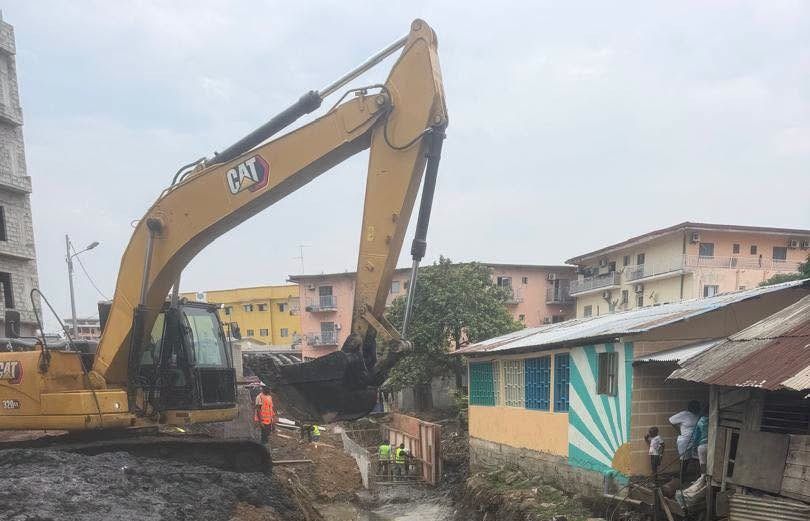
Libreville, June 25, 2026 – A defining chapter in Gabon’s urban transformation unfolds tomorrow as demolition work begins in the Baie des Cochons district.
The initiative marks the first phase of a sweeping urban renewal strategy spearheaded by President Brice Clotaire Oligui Nguema, designed to reshape traffic flow, sanitation, and territorial integration across key neighborhoods.
The project targets critical zones including Sipagel, the Léon Mba intersection, and the corridor stretching from Gabon’s energy and water facilities to the Petit-Paris roundabout. These areas have long suffered from severe congestion, underscoring the government’s commitment to prioritizing foundational infrastructure to support the capital’s growth.
Breaking free from urban gridlock
Baie des Cochons sits at the heart of Libreville’s most congested economic and human transit routes. The district acts as a bottleneck linking Mont-Bouët market, the city center, Bessieux Boulevard, and surrounding neighborhoods.
Officials plan to establish a primary thoroughfare flanked by secondary roads, improving access to the Libreville University Teaching Hospital, Petit-Paris, Léon Mba junction, and adjacent areas. Housing, Urban Planning, and Land Affairs Minister Mays Mouissi recently visited the site to outline the project’s goals to residents.
The initiative also addresses chronic flooding issues affecting thousands of households annually. Plans include clearing drainage channels, restoring deteriorated hydraulic systems, and installing new stormwater evacuation networks—dual priorities addressing mobility and sanitation.
Balancing progress with community needs
Large-scale urban projects inevitably bring both promise and disruption. Families who have called these neighborhoods home for decades now face uncertainty, while local businesses built on these lands confront potential displacement.
Recent urban renewal projects across Africa reveal that success hinges not only on infrastructure quality but on how sensitively authorities manage human transitions. Compensation, relocation support, protection of livelihoods, and social safeguards are just as critical as the construction itself.
Government representatives assert they have engaged in extensive consultations with affected communities ahead of demolition. The coming weeks will test whether this dialogue translates into a sustainable balance between public progress and safeguarding residents’ interests.
A litmus test for modernizing Libreville
Baie des Cochons exemplifies the need for Libreville to evolve beyond outdated urban practices. Rapid population growth, unchecked expansion, and environmental pressures demand infrastructure upgrades that meet today’s realities.
Chronic traffic jams, emergency service access challenges, sanitation failures, and isolated neighborhoods now hinder the capital’s economic potential. The government aims to correct these issues through this project, but it also serves as a political barometer: Can the state execute ambitious reforms while preserving social harmony?
A modern city isn’t built on concrete and steel alone. It thrives on the trust and participation of its people. The Baie des Cochons project will be judged not by the cranes and bulldozers it employs, but by how it transforms daily life for those who call this district home.