Libreville grapples with urban renewal amid public space challenges
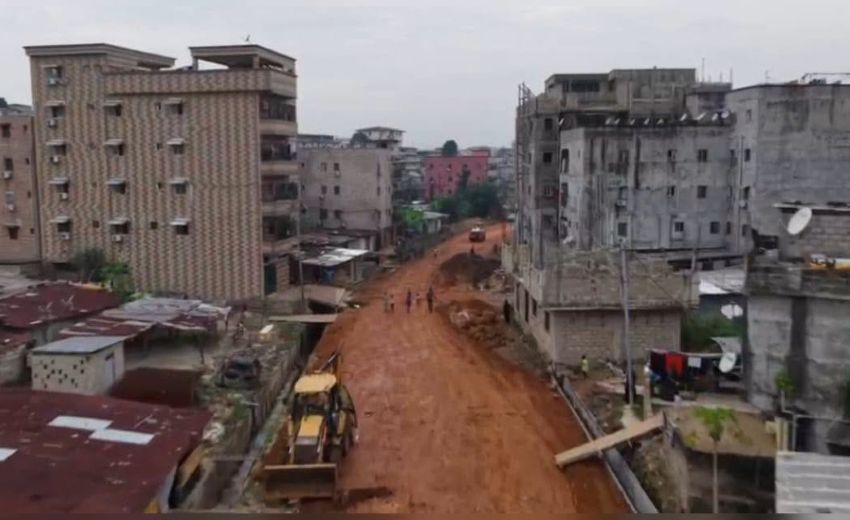
Libreville, July 13, 2026 – The 72-hour deadline issued by Mayor Eugène M’ba on July 10 is ticking down. Within hours, Libreville will shift into a decisive phase of its anti-insalubrity campaign, targeting unauthorized constructions, illegal street vending, vehicle wreck removals, informal garages, and commercial encroachments on public land.
The municipality’s stated mission is unambiguous: restore order to the urban landscape, enhance traffic flow, elevate hygiene standards, and project an image of a modern, clean, and inviting capital. Few dispute the urgency of addressing the creeping occupation of sidewalks, intersections, gutters, and even roadways—spaces that, over time, have morphed into makeshift markets or extensions of private enterprise.
For many residents, the city’s intervention feels like a long-overdue necessity. A political and economic hub cannot sustainably thrive amid urban chaos without jeopardizing mobility, public health, and economic appeal. The mayor’s campaign responds to a pressing need for urban governance reform.
Yet as the deadline looms, a counter-narrative is gaining traction. It does not reject municipal authority but instead calls for a broader, more inclusive approach.
Beyond evictions: the deeper challenge
A forward-thinking municipality cannot be measured solely by its enforcement capabilities. Its success also hinges on its ability to engage citizens, anticipate social shifts, and deliver sustainable solutions.
This perspective deserves consideration—not as a critique of current efforts, but as a call to strengthen their effectiveness.
Behind every unauthorized stall, informal garage, or roadside wash station lies a web of economic realities: youth unemployment, household financial strain, scarce affordable commercial spaces, exorbitant rental costs, and the rise of survival economies that inevitably colonize public spaces when alternatives are absent.
Without addressing these root causes, cleared areas may simply reappear elsewhere, under different guises and in different neighborhoods. History shows that eviction campaigns in African cities, including Libreville, rarely yield lasting results unless paired with relocation strategies and economic integration plans.
Addressing root causes, not just symptoms
The conversation is evolving. It is no longer solely about restoring public order; it is about shaping the urban model Libreville envisions for the coming decades.
Options include creating neighborhood markets, designating artisan zones, formalizing informal economic actors, and fostering sustained dialogue between residents and municipal services. These measures could transform a one-off operation into a robust public policy.
As urban planning expert Raphaël Mouissi-Ntoko observes, treating the symptom without addressing the disease offers only temporary relief. His analogy resonates with cities like Lagos, Kigali, Abidjan, and Casablanca—all of which have learned that urban modernization demands a balance between regulatory rigor and social support.
Authority is indispensable. A city cannot thrive without rules, respect for public land, or protection of communal assets. Yet decades of urban policy show that durable authority is built on a foundation of enforcement, education, and concrete solutions.
A new urban contract in the making
Libreville’s campaign could mark more than a cleanliness drive. It may signal the beginning of a renewed social contract between the city and its people. The municipal team now has a rare opportunity to prove that order can be restored without severing dialogue, that laws can be enforced without ignoring social realities, and that rules can be established while creating new opportunities.
The stakes extend far beyond occupied sidewalks or unregulated structures. They concern how major African capitals in the 21st century will reconcile population growth, economic development, and social cohesion. Libreville has chosen to act swiftly in response to a critical situation. The coming weeks will determine whether this intervention targets the root of the problem, ensuring that the reclamation of public space is not just an administrative victory, but the first step toward a more inclusive, humane, and sustainable urban future for the Gabonese capital.