The streets of Kinshasa have taken on an unusual rhythm as the political atmosphere in the Democratic Republic of Congo intensifies. A coordinated effort by major opposition figures has significantly slowed the pace of life in the capital, marking a direct challenge to the administration of President Félix Tshisekedi.
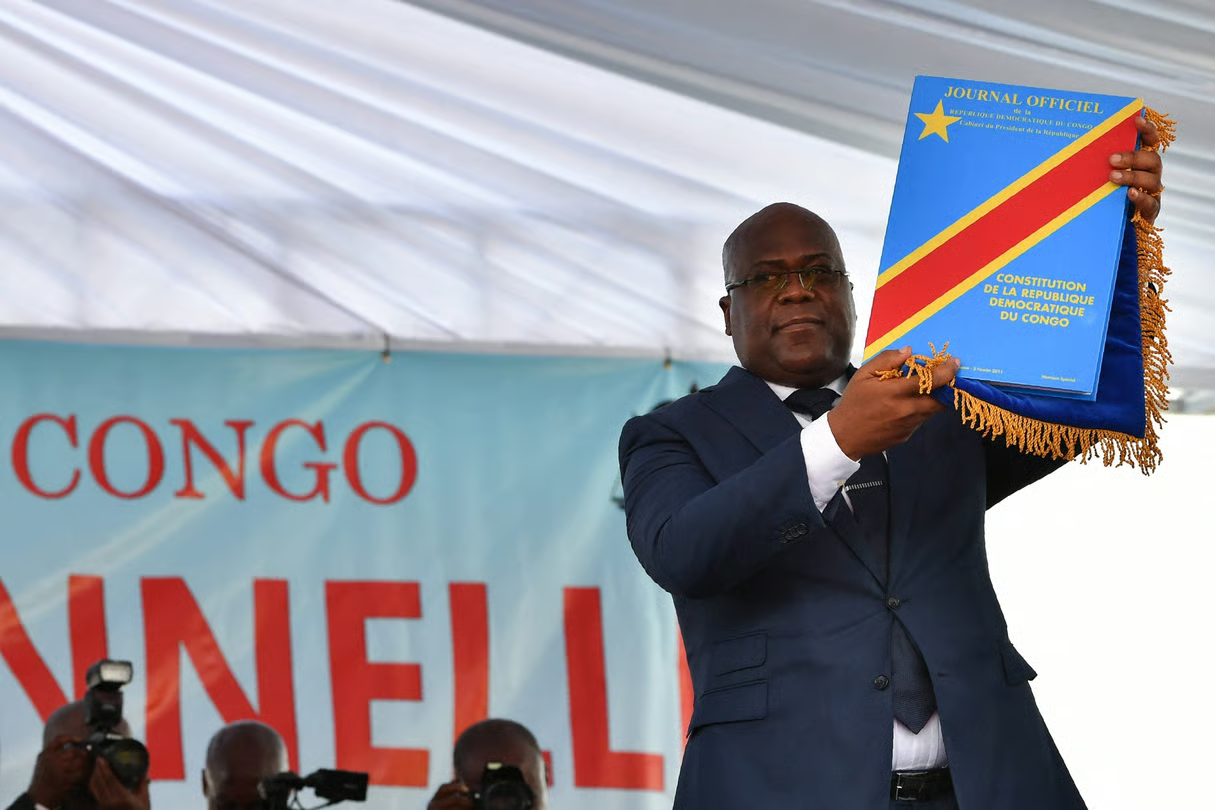
A capital under pressure
The typical bustle of Kinshasa was replaced by a heavy silence in several districts. This “slow-motion” state is the result of a call to action by a coalition of influential political rivals. Leaders such as Moïse Katumbi, Matata Ponyo Mapon, and Martin Fayulu have united their voices to signal their deep dissatisfaction with the current governance and the political direction of the country.
Opposition leaders unite
This mobilization highlights a growing rift between the presidency and the opposition bloc. By effectively paralyzing key sectors of the city, the opposition aims to demonstrate its capacity to mobilize the masses and disrupt the status quo. The presence of high-profile figures like Martin Fayulu and Moïse Katumbi at the forefront of this movement adds significant weight to the protests.
- Moïse Katumbi continues to leverage his regional influence to challenge the executive.
- Matata Ponyo Mapon maintains a critical stance on governance and economic stability.
- Martin Fayulu remains a persistent voice for electoral integrity and constitutional respect.
As Félix Tshisekedi navigates these turbulent waters, the eyes of the nation remain fixed on the capital. The success of this “slowdown” strategy serves as a barometer for the public’s appetite for political change and the strength of the opposition coalition in the RDC.