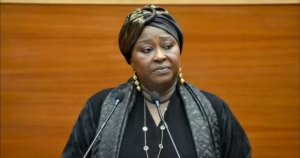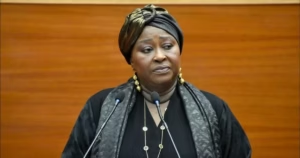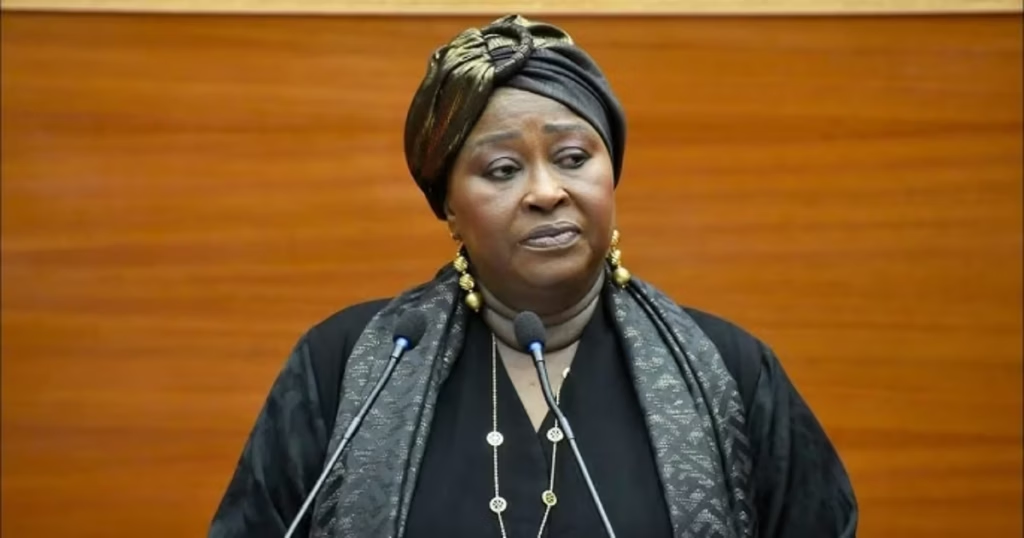
In Khombole, a statement by Maïmouna Dièye linking Ousmane Sonko’s name to a religious invocation has triggered sharp reactions, casting a spotlight on the delicate balance between political admiration and religious sanctity in Senegal.
Dièye’s words and their religious implications
During a public address in Khombole, Maïmouna Dièye referred to Ousmane Sonko using the phrase « under the presence of Seyidina Ousmane Sonko Salalahou Aleyhi Wa Salam », a wording that deeply unsettled many observers. In Islamic tradition, the term « Salalahou Aleyhi Wa Salam »—often abbreviated as SAWS—is reserved exclusively for the Prophet Mohammad (peace and blessings be upon him). According to religious scholars, its use is strictly confined to the Prophet and, in some interpretations, to other recognized prophets, but never to political figures, no matter their stature or influence.
By applying this sacred invocation to a Senegalese opposition leader, Dièye crossed a line that many see as blurring the sacred and the profane. The phrase is not merely a formality; it carries profound theological weight, symbolizing reverence so profound it is due only to the Prophet. Its misapplication risks elevating a human leader to a quasi-divine status, a practice strongly discouraged in Islam and widely condemned by religious authorities across West Africa.
Sonko’s swift response
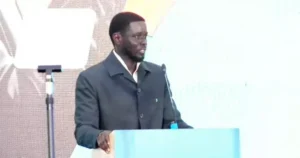
Recognizing the gravity of the situation, Ousmane Sonko quickly clarified his stance, emphasizing that such religious invocations are not meant for any individual outside the Prophet. In a public address, he acknowledged the affection his supporters hold for him but firmly stated that he has never sought or claimed the spiritual status implied by Dièye’s words. His response was not just a personal reaction but a strategic move to prevent the episode from being exploited by political opponents during a highly sensitive period in Senegal’s political landscape.
This incident has once again highlighted the thin line Senegalese leaders must walk between rallying public support and respecting the nation’s deep religious traditions. In a country where faith and politics often intersect, any perceived transgression can escalate quickly, making caution and clarity essential for political figures.