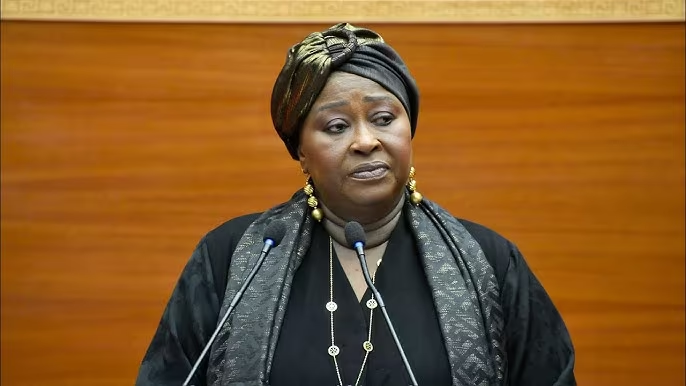
A speech by activist Maïmouna Dièye during a gathering in Khombole has ignited a heated discussion across Senegal, after she invoked a religious blessing typically reserved for prophets when mentioning opposition leader Ousmane Sonko.
When political praise crosses religious boundaries
During a public address in Khombole, Maïmouna Dièye made a statement that would quickly become the center of national attention. By addressing Ousmane Sonko with the phrase “Seyidina Ousmane Sonko Salalahou Aleyhi Wa Salam”—a phrase traditionally used to honor the Prophet Muhammad—she inadvertently elevated a political figure to a sacred status reserved only for divine messengers in Islamic tradition.
The phrase, which translates to “Our Master Ousmane Sonko, may Allah’s blessings and peace be upon him”, carries immense spiritual significance in Islam. It is exclusively reserved for prophets, with only rare exceptions made for other revered figures. The use of such language for any political leader, regardless of their influence or popularity, is widely considered a theological misstep that blurs the sacred-profane divide.
A swift political correction
Ousmane Sonko responded immediately to the controversy, clarifying that he never intended to be placed on a spiritual pedestal. In a public statement, he emphasized that the affection of his supporters, while deeply valued, should never be expressed in ways that compromise religious principles. “I have never reached such a status, nor do I claim to,” he asserted, drawing a clear line between political admiration and religious veneration.
This incident highlights the delicate balance politicians in Senegal must maintain when navigating religious sensitivities. The country’s political landscape is deeply intertwined with Islamic values, making any perceived transgression a potential flashpoint for broader debate.
The deeper implications for Senegal’s political discourse
The controversy surrounding Maïmouna Dièye’s remarks extends beyond a single verbal slip. It reflects an ongoing tension between political enthusiasm and religious respect in Senegal. While supporters often express admiration for their leaders in fervent terms, religious leaders frequently caution against crossing the line into what they consider blasphemous or idolatrous territory.
For Ousmane Sonko, the immediate clarification served a dual purpose: it acknowledged the genuine affection of his base while firmly rejecting any attempt to elevate him to a divine status. This approach not only diffused the immediate controversy but also reinforced his commitment to maintaining the boundaries between political leadership and religious sanctity in public discourse.