Côte d’Ivoire is currently in the peak of its cashew harvesting season, yet the Bounkani region in the north-east is facing significant challenges. The Cotton and Cashew Council projects a nationwide yield of over 1.3 million tonnes this year, a figure consistent with recent trends. However, this represents a potential decline of 200,000 tonnes compared to the previous season. The drop is particularly noticeable in Bounkani, where climatic irregularities have disrupted the harvest.
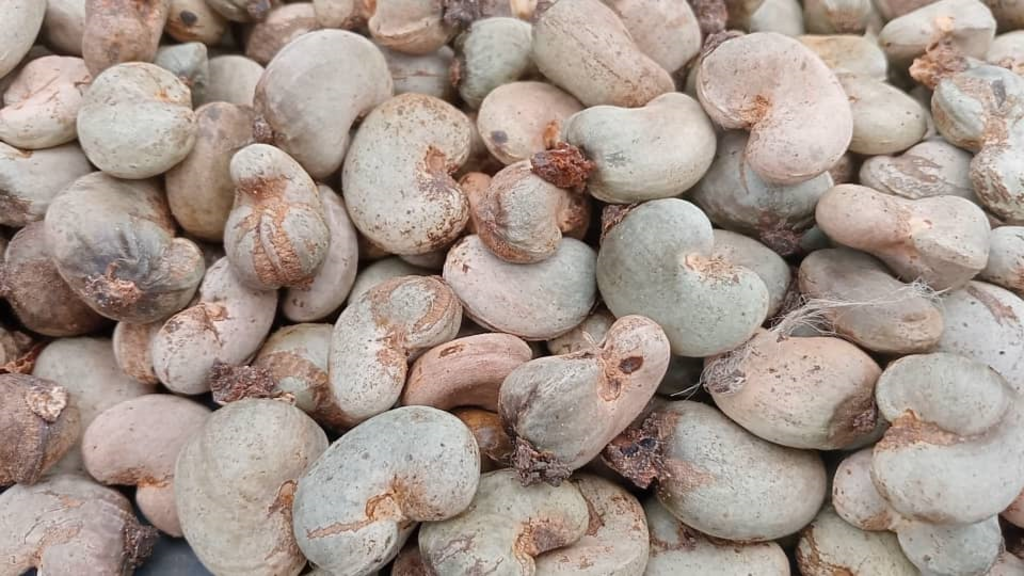
In Bouna, the heart of Bounkani, farmer Kouamé Ouattara reports a drastic reduction in his cashew production. “Three years ago, I could harvest up to 500 kg per hectare,” he explains. “This year, I barely managed to gather two sacks from my entire 3-hectare plantation.” He attributes the decline to shifting rainy seasons. “Typically, heavy rains from November to December encourage cashew trees to blossom. This year, the rains stopped in October, leaving us with no precipitation from October through February. Without blossoms, there is no harvest.”
The consequences extend beyond cashew growers. Beekeepers who maintain hives within cashew orchards are also suffering. Koffi Ouattara, president of the Koflangué beekeepers’ association, notes a sharp decline in honey production. “Last year, we harvested 100 litres of honey. This season, we’ve barely managed 30 litres,” he laments. “This is a significant loss for us.”
Addressing farming challenges
While climate change plays a role, Dr. Sibirina Soro, a researcher at the University of Daloa and coordinator of the national cashew research project, highlights poor agricultural practices as a major factor. “Many cashew orchards resemble forests due to improper planting densities,” he explains. “The recommended density is 100 trees per hectare, but this is often ignored.” Soro advocates for rejuvenating existing orchards and training farmers in sustainable practices. He also stresses the importance of pest control, particularly since Ivorian cashew farmers avoid chemical pesticides, making them more vulnerable to crop losses during poor harvests.