In Côte d’Ivoire, the cashew harvest season is underway, with the Cotton and Cashew Council projecting over 1.3 million tonnes of cashew nuts this year. While this figure shows consistency with recent years, it still represents a decline of 200,000 tonnes compared to last season. The drop is particularly noticeable in the northern regions, including Bounkani, where farmers face significant challenges due to irregular rainfall patterns.
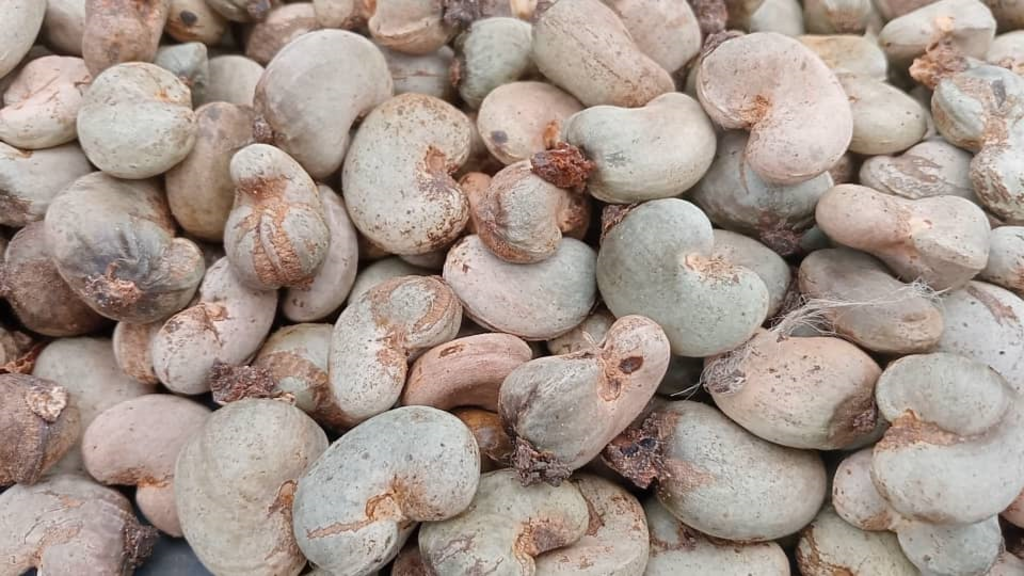
From Bouna, our correspondent reports on the struggles of local farmers. Kouamé Ouattara, who owns a 3-hectare cashew plantation, describes his situation as a technical unemployment. “Three years ago, I could harvest up to 500 kg per hectare, but this season, I barely managed to gather two sacks from the entire 3 hectares,” he explains. Ouattara attributes the poor yield to disrupted rainfall patterns. “Typically, heavy rains between November and December help the cashew trees bloom. This year, however, the rains stopped in October,” he notes. “There was no rain from October through February, and without blooming, the harvest fails entirely.”
Beekeepers who maintain hives in cashew orchards are also feeling the impact. Koffi Ouattara, president of the Koflangué beekeepers’ association, shares, “We’re producing almost no honey this year. Last season, we harvested 100 liters; this year, only 30 liters. It’s a significant loss for us.”
Addressing poor agricultural practices
Beyond climate factors, experts point to suboptimal farming methods as a key contributor to the decline. Dr. Sibirina Soro, a researcher at the University of Daloa and coordinator of the national cashew research project, explains, “The issue largely stems from improper planting density. Many orchards resemble dense forests because the initial planting density was not respected.” He adds, “The recommended density is 100 trees per hectare. We’re advising farmers to rehabilitate their orchards to achieve this density.”
Dr. Soro also conducts annual training sessions to combat pest infestations. He emphasizes the need for better support for farmers, highlighting that Ivorian cashew producers avoid chemical pesticides, leaving them more vulnerable to losses during poor harvests.