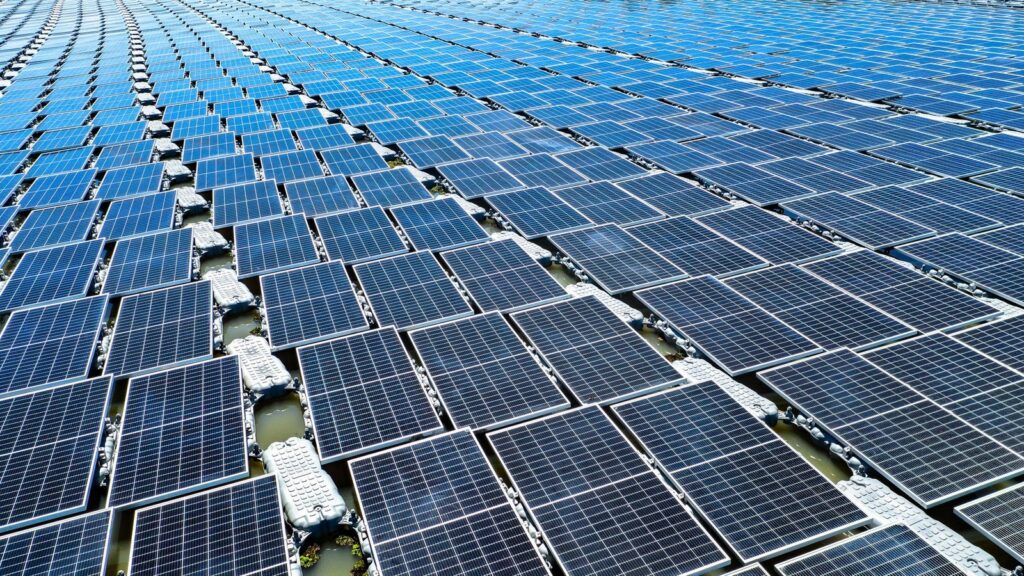
The agreement connecting Gabon with Karpowership, a subsidiary of the Turkish conglomerate Karadeniz Holding specializing in floating power plants, has become a focal point of financial and industrial contention. Figures circulating in specialized media indicate that Libreville disburses 1.8 billion CFA francs monthly for a theoretical capacity of 150 megawatts. However, the actual power delivered to the national grid currently hovers between 80 and 90 megawatts. This significant disparity raises questions, particularly as the transitional authorities strive to streamline public expenditures, which have long been criticized for their lack of transparency.
An emergency contract becomes a structural fixture
The initial signing of the contract with the Turkish operator was intended as a short-term measure. Facing a persistent power generation deficit, exacerbated by aging thermal infrastructure and the erratic nature of hydroelectricity during the dry season, the Gabonese executive opted for the rapid deployment of powerships. These vessel-based power stations, anchored off Owendo, are capable of injecting tens of megawatts into the national grid within a matter of weeks. This method, successfully implemented in nations such as Ghana, Sierra Leone, and Senegal, provides an immediate solution to energy crises, though typically at a higher unit cost per kilowatt-hour compared to conventional land-based power plants.
What was conceived as a temporary stopgap has, however, evolved into a long-term dependency. The scaling up of domestic power generation projects, particularly those centered around dams and gas-fired plants, has not yet rendered the Turkish contract dispensable. Consequently, the Société d’énergie et d’eau du Gabon (SEEG) remains reliant on this external provider to balance its electricity supply, especially during peak demand periods. Over a twelve-month span, the accumulated cost exceeds 21 billion CFA francs – a substantial sum for a country whose budgetary trajectory remains under close observation.
A deepening economic debate over the powership deal
The primary point of contention revolves around the discrepancy between the billed capacity and the actual power supplied. Paying a fixed rate based on 150 megawatts while receiving only a fraction of that amount effectively inflates the real cost of each megawatt delivered. Several voices, both within government administration and technical circles, argue that the current contractual framework excessively shields the Turkish operator from fluctuations in demand and potential technical issues. The transitional authorities, who assumed power in August 2023, have since initiated a comprehensive audit of major public contracts inherited from the previous administration.
Karpowership is not an isolated entity on the African continent. The group operates dozens of its vessel-based power plants across approximately fifteen countries, maintaining a particularly strong presence in Sub-Saharan Africa. Its key strength lies in its ability to rapidly deploy units ranging from 30 to 470 megawatts. However, from the perspective of client states, its weakness is the dependence it fosters: once a powership is connected, disengaging from the service necessitates having reliable alternatives in place, lest the country risk a return to widespread power outages.
Charting a course: renegotiation or an orderly exit
Therefore, the challenge extends beyond mere financial considerations; it is also operational. Terminating the current contract without simultaneously activating equivalent alternative capacities would expose SEEG to a significant supply shock. Crucially, anticipated large-scale projects, such as the Kinguélé Aval dam being developed with Meridiam or future gas power plants fueled by domestic production, are not expected to be fully operational for another two to three years. This leaves little immediate room for maneuver.
Several strategic options are currently under consideration. The first involves renegotiating the financial terms, aiming to more strictly link billing to the actual power injected into the grid. A second approach favors a gradual disengagement, carefully synchronized with the phased commissioning of new infrastructure. A third, more assertive option, would entail a complete termination of the contract, potentially involving other suppliers, even if it risks international legal disputes. The ultimate decision will significantly impact the credibility of Gabon’s energy policy and, more broadly, the doctrine of industrial sovereignty championed by the transitional authorities.