The rise of drones in African security strategies
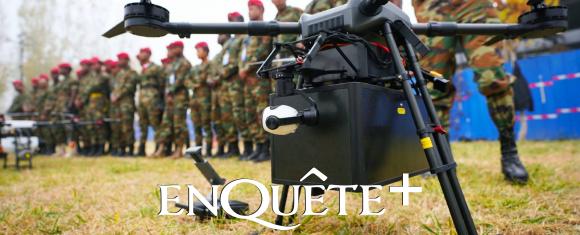
Drones have rapidly become a cornerstone of military and security strategies across Africa. In a recent analysis from Geopolitics of Africa Report 2026, researcher Djenabou Cissé highlights how this “dronization” is reshaping conflicts on the continent. While these unmanned systems enhance operational capabilities, they also expose African nations to new dependencies on foreign powers and introduce complex challenges in governance, civilian safety, and security.
Initially deployed for surveillance and reconnaissance, drones now play a pivotal role in conflict zones. From Mali to Burkina Faso, Niger to Somalia, these systems are no longer exclusive to state militaries—non-state armed groups have also adopted them, fundamentally altering how warfare is conducted in Africa.
From surveillance to combat: the shifting role of drones
Between 1980 and 2024, African countries acquired over 1,500 military drones, with a sharp increase in purchases from 2020 to 2023. The data shows a dramatic shift: while only one drone acquisition deal was recorded in 2001, the number surged to 21 by 2021. North Africa dominates these acquisitions, with Nigeria emerging as one of the continent’s top buyers.
This surge reflects the worsening security environment across the Sahel and East Africa. Drones provide states with unmatched surveillance, intelligence, and precision strike capabilities—all while reducing risks to ground troops. Conflicts in Sudan, Mali, Burkina Faso, Niger, Somalia, and Ethiopia demonstrate how drones have become central to both offensive and defensive operations.
Weapons of both state and non-state actors
One of the most concerning developments is the accessibility of drone technology to armed groups. Once limited to militaries, drones—often repurposed from civilian models—are now being used by organizations such as Boko Haram, Al-Shabaab, and the Group for Support of Islam and Muslims (JNIM). These groups leverage drones not just for reconnaissance but for targeted strikes, ground coordination, and propaganda campaigns, amplifying their operational reach and psychological impact.
This democratization of drone warfare has redefined power dynamics on the battlefield, making conflicts more unpredictable and intense.
Foreign dependence: a strategic vulnerability
Despite their growing presence, African nations remain heavily reliant on external suppliers. China, Israel, the United States, and increasingly Turkey dominate the drone market, offering not just equipment but also training, maintenance, software updates, and spare parts. This creates long-term strategic dependencies that extend beyond mere military hardware.
These arrangements also raise critical concerns about digital sovereignty and data protection. As African governments deploy drones for surveillance and operations, the question of who controls the data—especially when systems are operated by foreign entities—becomes a pressing issue.
Local production: a path to autonomy?
To reduce reliance on foreign powers, several African countries are investing in domestic drone production. South Africa leads the continent’s industrial efforts, while Morocco, Nigeria, Egypt, Ethiopia, Tunisia, and Algeria are advancing their own initiatives—ranging from local manufacturing to international partnerships.
The Senegalese firm Ndobine is one such example, developing drones tailored for maritime surveillance, precision agriculture, and mapping. Yet, local production still accounts for only about 12% of the African drone market, indicating a long road ahead for self-sufficiency.
Tactical gains, unresolved conflicts
Despite their strategic advantages, drones are not a panacea for Africa’s conflicts. While they enhance military capabilities and alter battlefield tactics, they do not address the root causes of instability. In some cases, drone proliferation has escalated violence: in 2024 alone, 484 drone strikes resulted in 1,176 civilian deaths across 13 African countries. In Sudan, for instance, drone attacks killed nearly 700 civilians in the first three months of 2026.
Djenabou Cissé emphasizes that drones alone cannot resolve Africa’s crises. For sustainable peace, states must pair technological adoption with robust public policies: clear operational doctrines aligned with international humanitarian law, enhanced operator training, transparent procurement processes, and stronger local industries. Continental coordination under the African Union could further harmonize regulations and promote ethical use.
The future of drone warfare in Africa
The way forward hinges on Africa’s ability to master—not just access—drone technology. Without deliberate governance, the region risks deepening foreign dependence and fueling violence. The challenge is no longer simply acquiring drones, but ensuring they serve long-term security and development goals.