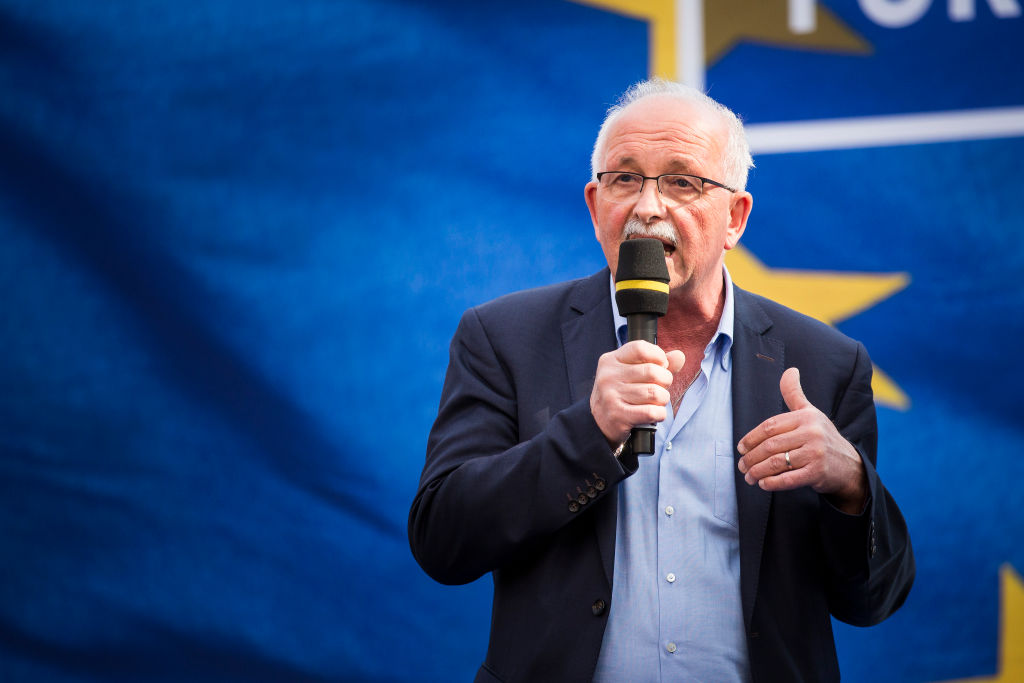
Social democrat MEP Udo Bullmann argued that Senegalese authorities are justified in using European Union development funds to buy Chinese‑made buses, provided the deal brings benefits to Senegalese workers.
A European tender worth over €300 million for the supply of buses and supporting infrastructure in Dakar has stirred controversy, as the contract appears poised to go to a Chinese state‑linked company previously found guilty of violating EU foreign subsidy rules.
While several EU officials and lawmakers have denounced this prospect, with one describing it as “madness,” Bullmann said he would endorse granting European funds to a Chinese state‑linked firm if it benefits local employment.
“The criterion is skilled African labour and the creation of African added value,” Bullmann told reporters in Brussels on Monday.
During a visit by the Senegalese government to China last June, the two countries agreed to build a bus assembly plant in Sénégal.
As long as the winning bidder hires local staff, the MEP said he has no concerns about the Chinese offer.
“It doesn’t matter to me,” he stated, while acknowledging he is not familiar with the specifics of the Senegalese project.
“I welcome investors who come to Africa and train the African workforce to higher standards,” he added. “That makes all the difference.”
Bullmann, who chairs the European Parliament’s delegation for relations with South Africa, is currently coordinating the Socialists’ Africa Days at the European Parliament, bringing together African policymakers and decision‑makers in Brussels. Europe remains Africa’s best option, he argued.
“If you want exploitation, you turn to the Chinese. If you want political repression, you turn to the Americans. If you want friendship, you turn to the Europeans,” Bullmann said.
EU Development Commissioner Jozef Síkela stated in May that “measures to strengthen European preference” would be integrated into future EU development aid projects – a stance Bullmann rejects.
“We need a rule that gives preference to local production. That is what matters most,” Bullmann said, noting that EU‑backed tenders should prioritise African‑made products.
Barry Andrews, chair of the European Parliament’s development committee, also stated that Senegalese authorities should choose the offer that best suits their needs, as he previously indicated.
“In essence, you are asking Senegalese to pay twice as much,” Andrews pointed out, referring to the fact that CRRC’s bid is less than half the price of Scania, the only European competitor in the tender.