The slogan that captured a nation’s aspirations
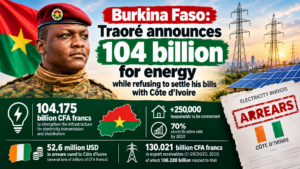
In Ouagadougou, the phrase « Y’a pas crédit dedans » has become a rallying cry among supporters of the military-led government under Captain Ibrahim Traoré. Repeated endlessly across social media and state broadcasts, the slogan champions the narrative of Burkina Faso’s economic self-reliance, claiming that vast infrastructure projects—from road rehabilitation to state modernization—are funded entirely by domestic resources, free from foreign debt.
This message, simple yet potent, paints the picture of a nation breaking free from the shackles of international lenders, forging ahead under its own financial might.
From aspiration to accounting reality
Economic sovereignty is an undeniable goal for any nation. The ambition to reduce reliance on external aid, bolster domestic revenue, and strengthen national capacities is universally acknowledged. Yet, when official rhetoric presents every public investment as entirely self-funded, discrepancies emerge upon closer inspection of financial records and official agreements.
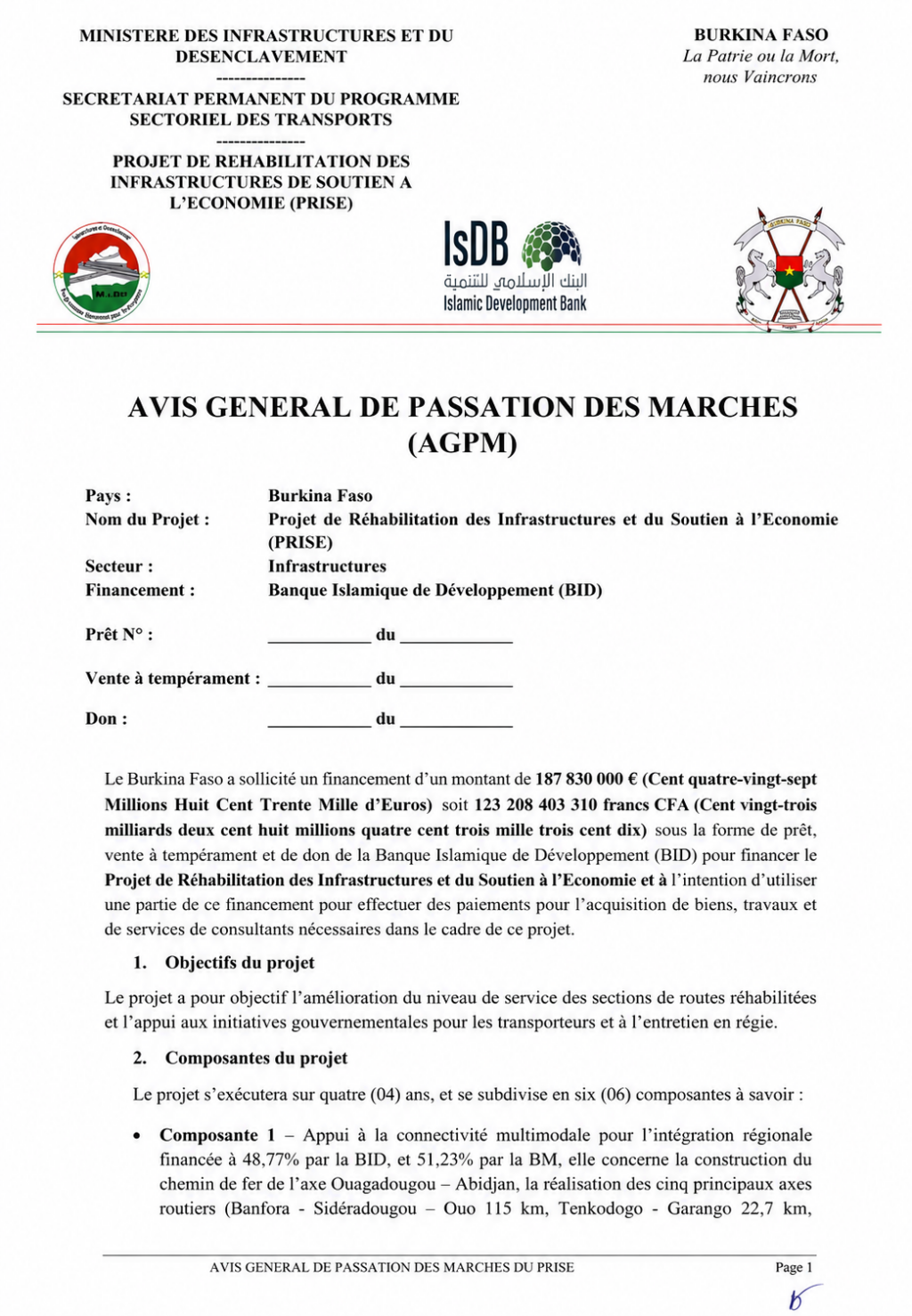
Recent financing deals with the Islamic Development Bank (BID), for instance, reveal a different story. Key infrastructure initiatives—particularly in road construction—are being funded through concessionary loans from international partners. While these loans offer favorable terms, they remain debts that must be repaid within stipulated timelines, binding Burkina Faso to future financial obligations.
The paradox of a cash-only narrative
Why insist on a narrative of absolute financial autonomy when borrowing remains a cornerstone of public financing? Borrowing is not an anomaly; it is a standard practice for governments worldwide when domestic revenues fall short of investment needs.
The contradiction lies in the stark contrast between:
- a government proclaiming near-total financial independence;
- the continued reliance on international financial partners to fund critical projects.
This disconnect fuels skepticism about the credibility of official communications.
An economy under siege
Burkina Faso’s economic landscape today is one of relentless pressure, making the notion of self-funded mega-investments highly implausible.
The nation grapples with:
- an escalating security crisis draining public coffers;
- soaring military expenditures;
- strained public finances;
- urgent infrastructure demands;
- massive internal displacement;
- declining tax revenues amid economic slowdown in key regions.
Against this backdrop, funding billions in infrastructure projects without external financial support seems unsustainable—at least according to economic analysts.
The real issue isn’t debt—it’s transparency
Public borrowing is not inherently flawed. When used responsibly, it can catalyze growth by financing productive infrastructure, enhancing transportation networks, and strengthening public services. The critical factor is accountability.
Citizens deserve clarity on:
- the precise sources of project funding;
- the volume of loans secured;
- the applied interest rates;
- repayment schedules;
- collateral provided;
- the true economic cost of initiatives.
A transparent financial governance framework ensures that citizens can assess whether borrowed funds are being used effectively and whether future revenues will suffice to cover repayments.
A political message disguised as economic doctrine
The slogan « Y’a pas crédit dedans » performs a dual function: it reinforces the government’s image as a breakaway from past dependency and frames every completed project as proof of regained national pride.
In a climate where sovereignty dominates political discourse, this narrative resonates deeply with segments of the population. Yet, when slogans eclipse budgetary education, the danger lies in fostering unrealistic expectations about the state’s capacity to finance its development independently.
The burden on future generations
Every debt contracted today will be repaid tomorrow—through future tax revenues. While today’s infrastructure may benefit coming generations, so too will the financial obligations it carries.
This makes transparency in public borrowing not just a fiscal issue, but a democratic imperative. Citizens must be able to judge whether loans are financing productive investments capable of generating sufficient returns to ensure repayment.
True sovereignty lies in responsible stewardship
Economic sovereignty is not measured by the absence of debt, but by the ability to:
- sustainably manage public finances;
- invest strategically and efficiently;
- publish clear, accessible accounts;
- answer to citizens’ oversight;
- use borrowed funds responsibly;
- gradually reduce dependence through a competitive, resilient economy.
A nation’s strength is not defined by denying its financial commitments, but by confronting them with honesty and channeling them toward sustainable progress.
Conclusion
« Y’a pas crédit dedans » has undeniably left its mark. Yet, the sustainability of public finance cannot rest on catchphrases alone.
International financing agreements persist, reminding us that like most developing nations, Burkina Faso continues to depend on external resources to fund critical development projects.
The debate, therefore, should not pit borrowing against sovereignty. Instead, it must focus on governance quality, financial transparency, and the tangible outcomes of public investments. Ultimately, it is today’s and tomorrow’s taxpayers who will bear the weight of current fiscal decisions.