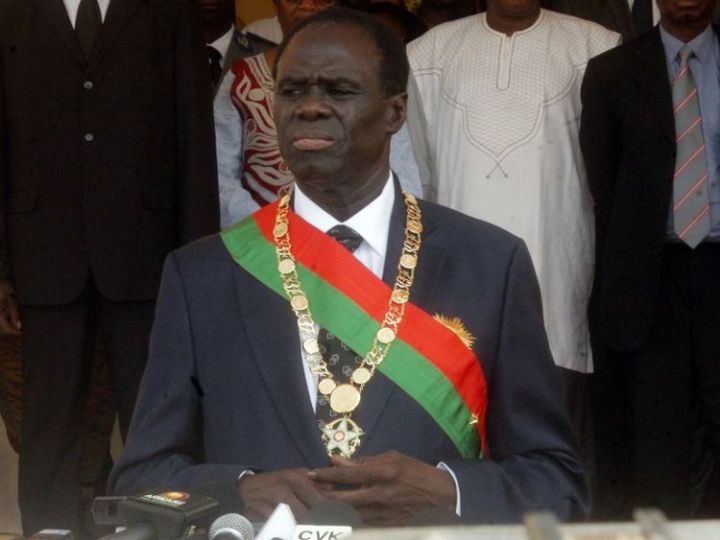
The definition of a coup d’état often hinges on international interests and the stance of neighboring states, making its legitimacy a contentious issue. In Burkina Faso, the appointment of Michel Kafando as Transition President was deemed unconstitutional, yet the country proceeded with transitional institutions for at least twelve months.
Following the abrupt departure of Blaise Compaoré, Ouagadougou witnessed a gradual return to calm as the military-led transition took shape. The sudden rise of Lieutenant-Colonel Isaac Zida raised eyebrows—his rapid consolidation of power amid protests and political negotiations suggested premeditated coordination, possibly involving Compaoré and General Gilbert Diendéré. His initial actions, including suspending the Constitution and dissolving the National Assembly, fueled fears of a military junta, risking the very victory the people had fought for.
Regional and international pressures shape Burkina Faso’s path
The African Union swiftly threatened sanctions, while leaders from the ECOWAS bloc—John Dramani Mahama (Ghana), Goodluck Jonathan (Nigeria), and Macky Sall (Senegal)—intervened to steer the transition. Learning from past military takeovers in Guinea and Mali, Burkina Faso’s officers sought a compromise to avoid isolation and prolonged instability. The resulting Transitional Charter established a power-sharing deal: a civilian-led executive, military oversight of the government, and a 90-member National Transitional Council (CNT) to accommodate key stakeholders. A 20-member designation committee was tasked with selecting a Transition President, with a fixed mandate until November 2015—the end of Compaoré’s original term.
Selecting the Transition President: balancing legitimacy and experience
Each sector—military, civil society, opposition parties, religious and traditional authorities—submitted shortlists for the presidency. The opposition backed two journalists: Newton Ahmed Barry (editor of *L’Event*) and Chériff Sy Moumina (*Bendré*’s director), whose media outlets had fiercely criticized the former regime. The military, however, prioritized broader experience, nominating:
- Archbishop Paul Ouédraogo of Bobo-Dioulasso, who declined the role to focus on his ministry;
- Michel Kafando, a seasoned diplomat with two stints at the United Nations (1981–1982, 1998–2011);
- Joséphine Ouédraogo, a former minister with ties to the United Nations Economic Commission for Africa.
Kafando’s UN background provided both diplomatic leverage and a robust network, outweighing the journalists’ profiles. His dual role as Transition President and Foreign Minister streamlined Burkina Faso’s external engagements, eliminating the need for multiple interlocutors. Meanwhile, Joséphine Ouédraogo became Minister of Justice, and Augustin Loada, a civil society leader, was appointed to the Civil Service Ministry. The military secured four critical portfolios, including Defense (held by Prime Minister Isaac Zida) and Mines and Energy.
International recognition vs. constitutional ambiguity
The transition’s legitimacy hinged on delicate diplomatic balancing. Leaders from Mauritania, Ghana, Togo, Benin, Mali, and Niger attended Kafando’s inauguration, signaling Burkina Faso’s reintegration. Yet, the U.S. maintained its stance against cooperation with unelected leaders, leaving Ouagadougou in a precarious position. The international community’s solution? A veneer of constitutional restoration to mask the coup’s aftermath.
Confronting the past: Sankara’s legacy and transitional justice
Within weeks of his appointment, Kafando authorized investigations into the remains of Thomas Sankara, the revolutionary leader assassinated in 1987. Prime Minister Zida pledged to reopen the case, even requesting Blaise Compaoré’s extradition from Morocco. These moves, while symbolically powerful, risked reopening old wounds. The National Commission for Reconciliation and Reforms (CRNR) was tasked with addressing decades of grievances, but its long-term viability remained uncertain. Meanwhile, General Gilbert Diendéré, Compaoré’s former chief of staff, was removed from his post—a calculated move to assert civilian control over the military.
Balancing transitional justice with stability proved challenging. Two state-owned enterprise directors linked to the former regime were dismissed, and Gilbert Noël Ouédraogo, leader of the ADF-RDA party, publicly distanced himself from Compaoré’s legacy. The nation also honored the seven protesters killed during the October 30–31 unrest, burying them in Ouagadougou’s Gounghin Cemetery.
Elections loom: navigating a fragile transition
With institutions now in place, the focus shifts to preparing for elections. The CNT, led by Chériff Sy Moumina, faces the daunting task of drafting electoral laws, reforming the code, and ensuring transparency. Yet, the absence of prominent figures in the executive or CNT—many barred from running—raises questions about the transition’s inclusivity. The opposition coalition CFOP dissolved, and presidential hopefuls are gearing up for a 2015 showdown. The challenge? Avoiding witch hunts while addressing the grievances that fueled the uprising against Compaoré’s 27-year rule.
As Burkina Faso treads a tightrope between past and future, the transition’s success hinges on reconciling justice, stability, and democratic renewal.