Burkina Faso’s military leader Ibrahim Traoré calls for abandonment of democracy
- Reading time: 5 min
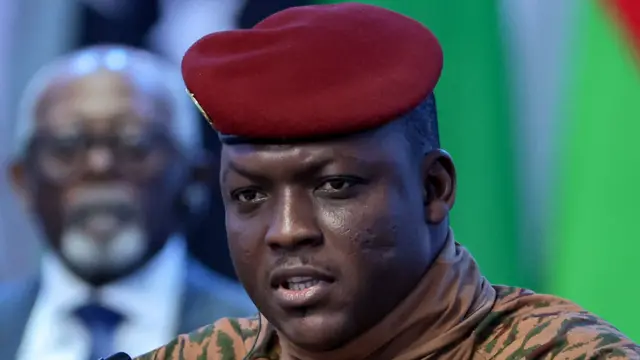
The people of Burkina Faso must move beyond democracy, which stifles progress, declared Captain Ibrahim Traoré during a national television broadcast on Thursday evening. The 38-year-old military leader, who seized power in a 2022 coup, argued that the system has no place in the country’s current struggle for sovereignty and security.
Addressing his remarks directly to citizens, Traoré stated: « The population must forget about democracy. Democracy is not for us. » He suggested that most Africans reject the Western-backed governance model, though he provided no details on what should replace it beyond a vague commitment to « our own approach. »
This bold declaration comes two months after the military government extended its rule by five years—despite previously pledging to restore civilian governance by July 2024. The announcement followed a sweeping ban on all political parties in January, part of what authorities described as a broader effort to « rebuild the nation. »
Traoré’s comments echoed his revolutionary rhetoric, positioning himself as a defender of Burkina Faso against foreign interference. « Wherever Western powers impose democracy, it always ends in bloodshed, » he asserted, drawing a parallel with Libya’s post-Gaddafi turmoil. The North African nation, once a regional model under autocratic rule, has remained mired in instability since NATO-backed intervention toppled its longtime leader in 2011.
While Traoré did not outline a concrete alternative, he emphasized a vision rooted in sovereignty, patriotism, and revolutionary mobilization. Traditional leaders and grassroots structures would form the backbone of this new order, he claimed, alongside relentless economic and military self-reliance. « Working six or eight hours a day won’t lift Burkina Faso out of poverty, » he warned, advocating for a more disciplined approach to national development.
The military leader has systematically suppressed dissent since taking control, targeting opposition figures, independent media, and civil society groups. Critics have accused his administration of silencing opponents by deploying them to frontline combat positions in the ongoing Islamist insurgency—a conflict that has ravaged the country for over a decade.
Despite the repression, Traoré has cultivated significant support across Africa for his anti-Western stance and pan-Africanist rhetoric. His government’s pivot away from traditional Western allies—particularly France—aligns it with neighboring juntas in Mali and Niger, all of which have severed security cooperation with Paris and Moscow in favor of Russian military assistance. Yet, violence in the Sahel continues unabated.
Human Rights Watch reported Thursday that over 1,800 civilians have been killed in Burkina Faso since Traoré’s 2023 takeover, with two-thirds of the deaths attributed to state forces and their allied militias. Islamist militants claimed responsibility for the remaining third.
The stark rise in civilian casualties under military rule underscores the deepening crisis in Burkina Faso. As the junta consolidates power, its rejection of democracy and embrace of authoritarian tactics raise questions about the country’s future stability and the costs of its revolutionary experiment.