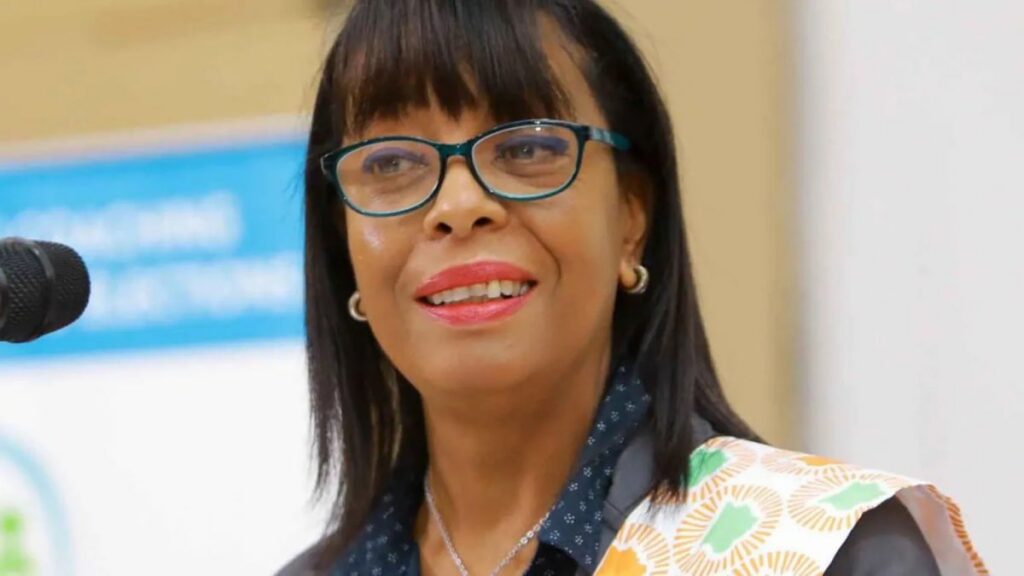
Earlier this week, Burkina Faso’s military junta declared Carol Flore-Smereczniak, the United Nations’ chief representative in the nation, “persona non grata,” leading to her expulsion. This action followed a recent UN report detailing abuses against children within the country.
Ms. Flore-Smereczniak marks the second high-ranking UN official to be ousted by the junta, succeeding Barbara Manzi, who faced a similar “persona non grata” declaration in 2022. This pattern underscores the junta’s increasing reluctance to accept independent scrutiny.
The junta’s spokesperson attributed Ms. Flore-Smereczniak’s expulsion to her alleged role in drafting the April report, which meticulously documented the impact of the armed conflict in Burkina Faso on children. The military government dismissed the report’s conclusions, particularly those pointing fingers at Burkinabè authorities, pro-junta militias, and anti-government Islamist armed factions.
The comprehensive report highlighted 2,483 grave violations impacting 2,255 children between July 2002 and June 2024. These violations encompassed murders, kidnappings, and the conscription or utilization of children by both armed groups and state security forces. Islamist armed groups were responsible for 65 percent of these abuses, with the remaining violations attributed to Burkinabè security forces and the Volunteers for the Defense of the Homeland (VDP), civilian auxiliaries supporting the armed forces.
Furthermore, the report observed a worrying surge in assaults on educational institutions and expressed significant concern regarding the “detention of children due to their presumed association with armed groups.” Human Rights Watch has extensively documented abuses perpetrated by all sides of the conflict against both boys and girls since 2016, including targeted attacks against students, educators, and school facilities.
The junta has voiced repeated criticisms of the UN in recent months. In March, the Foreign Minister denounced the UN’s “inappropriate” terminology, specifically its use of “non-state armed groups” to describe “terrorists” affecting the population, and its characterization of the VDP as “militias.” By July, the Foreign Minister had called for a “re-centering” of UN interventions in Burkina Faso, urging them to align with the nation’s leader’s “vision.”
Since seizing power in a 2022 coup, Burkina Faso’s military authorities have systematically suppressed independent media, political opposition, and dissenting voices. Rather than attempting to obscure these ongoing abuses, the junta should instead engage collaboratively with the United Nations to develop a comprehensive plan aimed at bringing them to an end.