The Malian capital Bamako has breathed a sigh of relief following the successful arrival of two critical convoys, one carrying fuel and the other heavy weaponry, easing months of supply chain strain. Yet, while the city enjoys a rare moment of stability, the country’s central regions remain trapped in a spiraling security nightmare, where militant groups are tightening their grip with relentless precision.
Bamako’s lifeline: strategic supply chains break through terror barriers
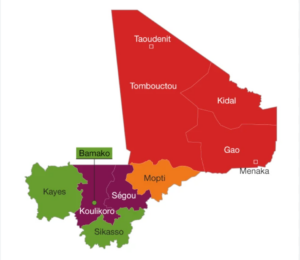
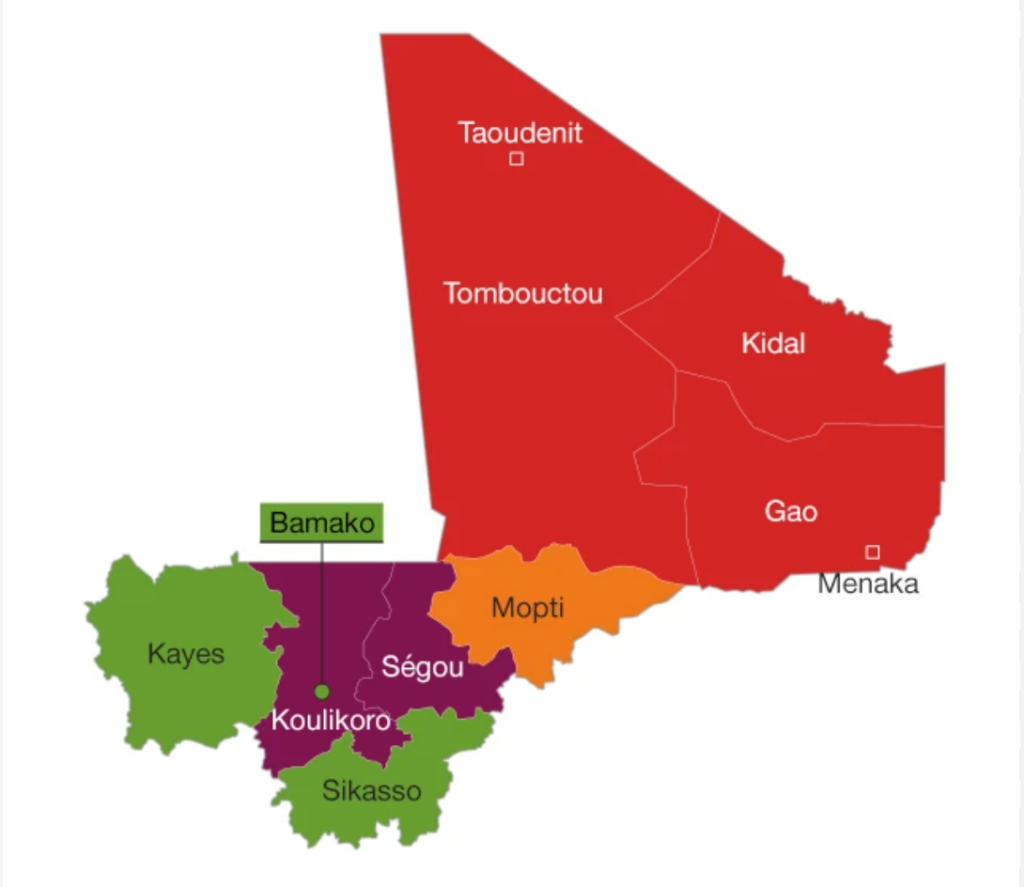
A palpable tension had gripped Bamako for weeks as fuel shortages threatened to cripple daily life and commerce. That pressure eased dramatically on July 24 when a massive convoy of fuel tankers entered the capital after a daring overland journey from Kayes. The convoy, comprising hundreds of trucks, navigated past heavily contested zones where the Jama’at Nusrat al-Islam wal Muslimin (JNIM) typically enforces blockades. The mission’s flawless execution marked a significant tactical win, ensuring the city’s generators, hospitals, and transportation systems remained operational.
The very next day, July 25, Bamako welcomed another game-changing delivery. A high-profile military convoy, originating from Russia and initially offloaded in Lomé, Togo, made its way through Burkina Faso before crossing into Mali via Sikasso. This marked the activation of a newly established West African supply route, bypassing traditional high-risk corridors. The shipment included an array of advanced weaponry designed to bolster the operational capacity of the Malian Armed Forces (FAMa) and their Russian allies in Africa Corps. Among the delivered assets were infantry fighting vehicles (BMP-2 and BMP-3 models), mine-resistant ambush-protected vehicles (MRAPs), armored personnel carriers (BTR-82), air defense systems, and a fleet of logistics trucks and tactical motorcycles.
Central Mali’s brutal reality: roads become death traps
Despite Bamako’s gains, the broader picture remains alarming. The nation’s central belt continues to suffer under the JNIM’s tightening stranglehold, where every major road has become a battleground. The RN16, a critical lifeline connecting Mopti to Gao, witnessed intense combat on July 25 and 26. A joint FAMa and Africa Corps convoy, en route from Sévaré to Gao, came under coordinated ambushes near Hombori. Militants deployed improvised explosive devices (IEDs) along the Wami to Agoufou stretch, destroying or severely damaging several vehicles. The attacks underscored the jihadist group’s deep territorial control and the persistent challenges faced by government forces in securing secondary supply routes.
JNIM’s expanding offensive: targeting FAMa and Africa Corps
The insurgency’s reach extends beyond the Sévaré-Gao axis. On the same days, JNIM militants ambushed a FAMa convoy between Niafunké and Tonka, while launching a counter-offensive north of Niono to push back advancing Africa Corps units. These incidents highlight the group’s ability to exploit gaps in military operations and maintain pressure across multiple fronts.
Kouakourou’s fall: a humanitarian catastrophe unfolds
The most glaring symbol of central Mali’s collapse came on July 19, when the JNIM seized the military camp in Kouakourou, a small but strategically vital town in the Djenné circle. The loss of this position dealt a severe blow to the state’s territorial integrity. In response, the Malian military launched large-scale airstrikes on July 21, claiming to neutralize five militants on motorcycles and destroy a logistics vehicle. However, despite intense aerial bombardment, ground forces were unable to retake the town, which remains under full jihadist control.
Civilians pay the price: mass displacement and desperation
The human cost of Kouakourou’s fall has been catastrophic. With no military presence to shield them, thousands of residents have fled their homes, abandoning farms and livelihoods. This exodus has exacerbated an already dire internal displacement crisis in the Mopti region, overwhelming neighboring communities already stretched to their limits by years of conflict.
Can new military hardware shift the balance?
The paradox at the heart of Mali’s struggle is stark. While Bamako’s leadership demonstrates an ability to forge new alliances, open alternative supply corridors, and arm its forces with modern weaponry, the JNIM’s asymmetric warfare continues to fracture the nation’s territory. The influx of Russian-supplied combat vehicles may bolster defense in urban centers, but the real test lies in whether these assets can translate into sustainable territorial gains beyond the capital’s perimeter. The coming weeks will reveal whether FAMa and Africa Corps can turn logistical breakthroughs into lasting military victories—or if the militants will continue to dictate the tempo of this brutal conflict.