This World Cup has already delivered breathtaking drama—last-minute goals, stunning comebacks, and results that defied all expectations. With the quarterfinals just around the corner, the tournament in Canada, Mexico, and the United States is shaping up to be one for the history books.
With 48 teams competing for the first time ever, the sheer scale of this edition makes it the most ambitious in football’s most prestigious tournament history. But does it rank as the greatest of all time? The answer, of course, depends on who you ask.
For some, their first World Cup experience will always hold a special place. For others, the best tournament may be the one where their country made a deep run. Yet when it comes to the action on the pitch, the statistics suggest this World Cup is hard to beat.
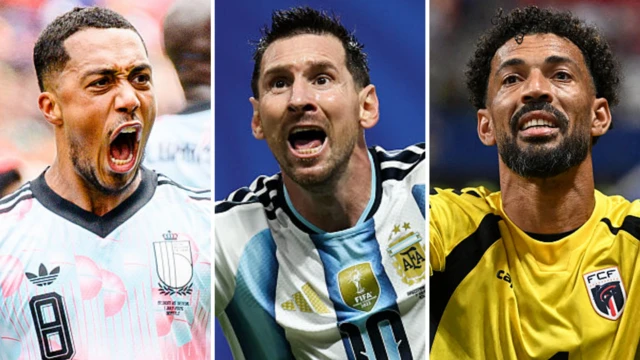
From left: Youri Tielemans (Belgium), Lionel Messi (Argentina), Vozinha (Cape Verde)
With 280 goals scored across 104 matches, this World Cup is averaging 2.92 goals per game—the highest since Mexico 1970, when 95 goals were scored in 32 games. For comparison, the last four editions averaged between 2.27 and 2.69 goals per match.
Strikingly, 74.6% of all goals came from open play—the highest proportion in World Cup history—while penalties accounted for just 5% of goals, the lowest ever recorded. The most prolific match saw Germany thrash Curaçao 7-1, while six other games featured six goals and 13 others saw five goals.
dramatic finishes and edge-of-the-seat suspense
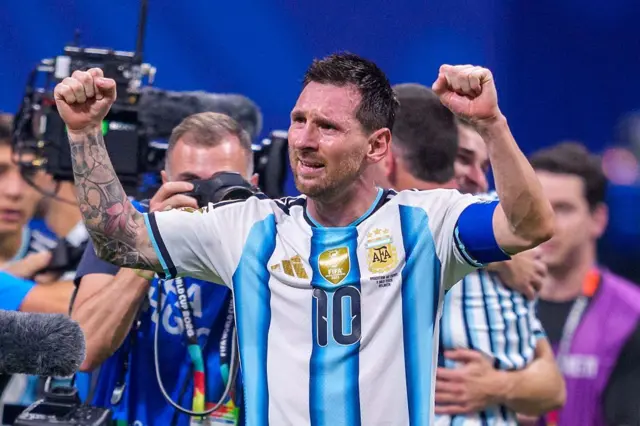
Lionel Messi leads Argentina’s thrilling comeback against Egypt
The knockout stages have been especially captivating. Out of 24 matches so far, eight were decided by a goal scored after the 85th minute. Argentina required extra time to overcome Cape Verde, one of the tournament’s feel-good stories, while four games were settled on penalties.
Enzo Fernández’s 90th-minute winner against Egypt marked the 10th goal scored in the 90th minute or later—a World Cup record. Just days earlier, Belgium and Argentina both erased two-goal deficits in the same match, a feat not seen since 1970. England, too, delivered a heroic performance despite playing over 40 minutes a man down and a hostile atmosphere at Mexico City’s Azteca Stadium.
The competition has already seen eight goalless draws—a World Cup high—but far from signaling weakness, this reflects the growing parity among teams. Could this be the most evenly matched World Cup ever?
fans, stars, and underdog stories steal the show
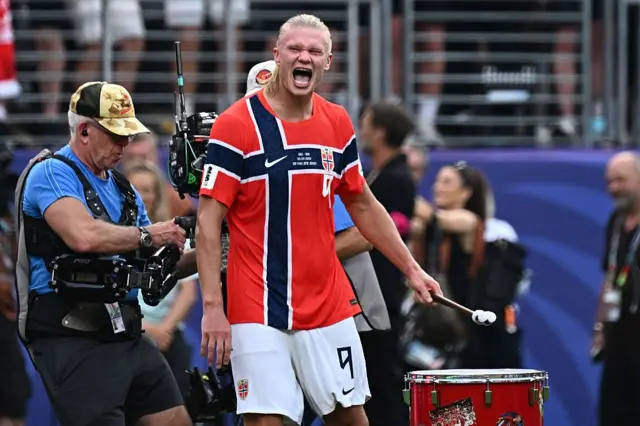
Erling Haaland fires Norway past Brazil in a stunning round-of-16 upset
Despite concerns over sky-high ticket prices and travel costs, the stadiums have been packed. The FIFA reports a 99.7% attendance rate, with over 4.4 million spectators in the group stage alone and a total of 6.2 million so far. That’s an average of over 65,000 fans per match—the highest since the 1994 World Cup in the U.S.
The world’s top stars have also been front and center. The race for the Golden Boot is wide open: Messi leads with eight goals, followed by Mbappé and Haaland with seven each, and Kane with six. It’s the first time in World Cup history that three players have scored seven or more goals in a single tournament.
Four of the planet’s best forwards are locked in a tight battle, keeping fans glued to their screens. Meanwhile, the expanded format has given smaller nations a chance to shine.
Curaçao, the Caribbean’s smallest World Cup debutant, recovered from a 7-1 thrashing by Germany to salvage a draw with Ecuador. Qatar, despite a heavy 6-0 loss to Canada, held Switzerland to a 1-1 draw. Cape Verde, led by 40-year-old goalkeeper Vozinha, stunned fans by drawing with Spain, Uruguay, and Saudi Arabia before pushing Argentina to extra time in the Round of 16.
controversies and off-field debates
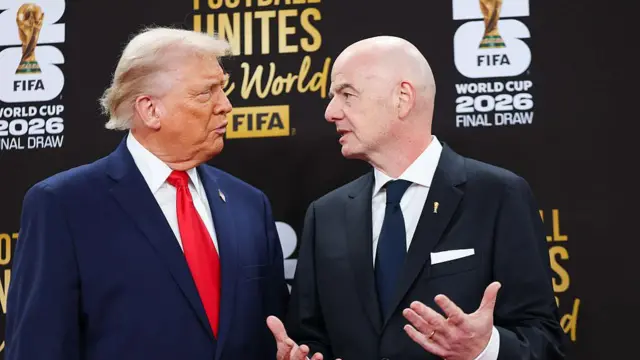
Gianni Infantino meets Donald Trump during the tournament
No World Cup is without its controversies. This one is no exception. Critics argue that exorbitant ticket prices, hydration breaks, and a grueling schedule have overshadowed the on-field brilliance.
Players have faced relentless back-to-back matches, with the Premier League set to resume just over a month after the final. The timing has drawn sharp criticism, especially as teams like Belgium and England rely on top Premier League talent.
Arbitration decisions have also sparked debate. U.S. striker Folarin Balogun received a red card against Bosnia and Herzegovina, only to have his suspension overturned after Trump personally contacted FIFA President Gianni Infantino. Balogun played in the next match, raising serious questions about political interference in the sport.
This incident echoes a 1962 case involving Brazil’s Garrincha, who avoided suspension amid allegations of political pressure—a rare instance in World Cup history where a red card was not enforced.
can the finals live up to the hype?
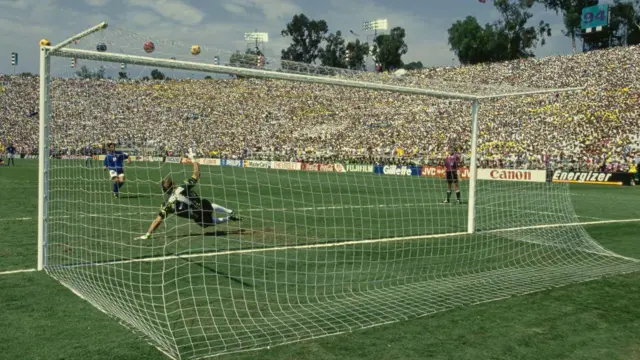
A missed penalty in 1994: could the 2026 final be even more dramatic?
As the tournament enters its final stretch, the stage is set for a thrilling climax. With Argentina, Spain, France, and England—four of the world’s top-ranked teams—still in contention, the semifinals promise fireworks. A sensational final could cement this World Cup’s legacy as the greatest ever.
History shows that mediocre finals can tarnish even the most exciting tournaments—just ask fans of the 1990 and 1994 editions. But a breathtaking finale, like the one in Qatar four years ago, can redefine a World Cup’s reputation.
With so much talent, drama, and unpredictability still on display, one thing is certain: this tournament has already made its mark. Whether it becomes the greatest of all time may well depend on what unfolds in the next 10 days.