The 39th African Union summit concluded with a bold declaration: to silence the guns and put an end to unconstitutional power transfers. But can this pledge be taken seriously? Paul-Simon Handy, a Cameroonian researcher and Regional Director of the Institute for Security Studies (ISS) for Eastern Africa, who attended the summit in Addis Ababa, shares his insights on the matter.
African Union’s tough stance on unconstitutional power transfers
The African Union’s latest summit in Addis Ababa sent a clear message: no more tolerance for unconstitutional changes of government. Yet, the elephant in the room remains—how will this stance be enforced when leaders of coup d’états are allowed to run in elections and even win? This contradiction was at the heart of discussions during the summit.
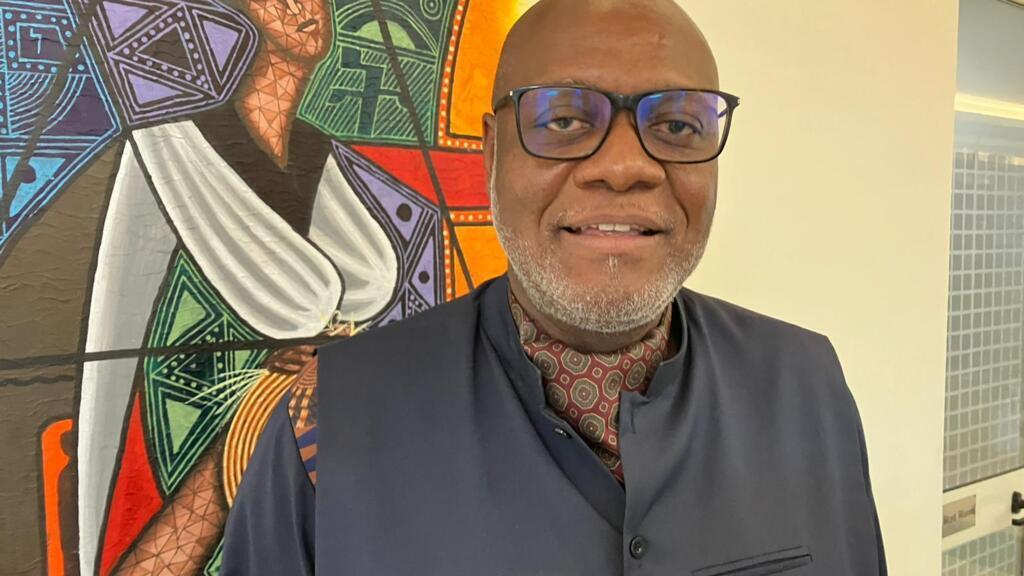
Paul-Simon Handy, Regional Director of the Institute for Security Studies (ISS) for Eastern Africa, was present at the summit. He provided a critical analysis of the AU’s commitment to ending unconstitutional power transfers and questioned whether the organization’s declarations align with reality.
Can the African Union’s zero-tolerance policy be enforced?
The AU’s declaration to silence the guns and reject unconstitutional power changes marks a significant shift in its approach to governance crises across the continent. However, the challenge lies in implementation. Handy emphasized that the AU’s stance is not merely about making declarations but taking concrete actions to ensure compliance.
According to Handy, the AU must hold member states accountable for their actions. This includes addressing the issue of junta leaders participating in elections. He argues that allowing such leaders to run for office undermines the AU’s commitment to democratic principles and sends mixed signals to the international community.
Accountability and enforcement
Handy highlighted the need for the AU to enforce its policies consistently. He pointed out that the organization has previously struggled to take firm actions against member states violating its principles. The dilemma now is whether the AU can muster the political will to enforce its zero-tolerance policy on unconstitutional power transfers.
The summit’s outcome raises questions about the AU’s ability to balance its commitment to democracy with the realities of political instability in some regions. Handy suggested that the AU must adopt a more proactive approach to prevent coups and ensure that democratic processes are respected.
Regional cooperation and long-term solutions
Handy also stressed the importance of regional cooperation in addressing governance crises. He argued that the AU should work closely with regional organizations like the Economic Community of West African States (ECOWAS) to implement effective solutions. This includes providing support to countries facing political instability and ensuring that elections are conducted fairly and transparently.
He concluded that the AU’s commitment to ending unconstitutional power transfers is a step in the right direction. However, the success of this policy will depend on the organization’s ability to enforce its principles and work collaboratively with regional partners.