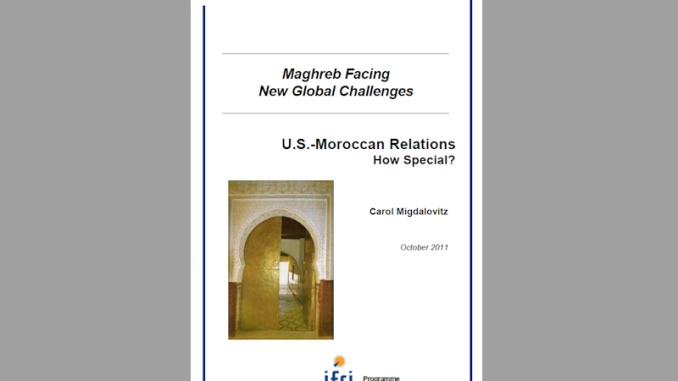
Diplomatic observers often label the bond between Washington and Rabat a “special relationship,” one of the most enduring and distinctive alliances in modern American foreign policy. This partnership has weathered decades of geopolitical upheaval, rooted in a shared history that blends strategic necessity with evolving political realignments.
The foundation of this enduring connection was laid centuries ago, long before the era of superpower rivalries. On June 23, 1786, Morocco became the first nation to formally recognize the independence of the United States through a landmark treaty of peace and friendship—an agreement that remains legally valid to this day. While initially motivated by mutual maritime interests, this historic accord would eventually serve as the bedrock of a diplomatic rapport that both capitals continue to celebrate as exceptional.
World War II: a turning point in US-Morocco relations
Though the alliance predates the 20th century, the Second World War marked a pivotal chapter in its evolution. In 1942, during Operation Torch, Allied forces under General Dwight D. Eisenhower executed a massive amphibious landing along Morocco’s coastline, deploying over 35,000 American troops. The strategic significance of this operation extended far beyond battlefield logistics.
For Sultan Mohammed V, the moment became a defining chapter in Moroccan history. During the Casablanca Conference of 1943, President Franklin D. Roosevelt is said to have privately pledged support for Morocco’s post-war sovereignty—a promise that resonated deeply among Moroccans, even as it sparked controversy among European allies.
The Cold War era: strategic bases and shifting priorities
After Morocco regained full independence in 1956, relations entered a new phase shaped by Cold War dynamics. The United States saw Morocco as a vital geopolitical asset and established several air bases under the Strategic Air Command, capable of deploying nuclear assets toward Soviet targets. Yet this military alignment soon collided with Morocco’s determination to reclaim full sovereignty.
King Mohammed V’s insistence on removing foreign military presence triggered friction. While Washington viewed Morocco as a potential partner against communist expansion, Rabat prioritized national autonomy. By 1963, this tension culminated in the complete withdrawal of U.S. troops from Moroccan soil, fulfilling a core nationalist demand.
Regional stability and delicate diplomatic balancing acts
For decades, Washington regarded Morocco as a stabilizing force in North Africa. When two attempted coups threatened King Hassan II’s rule in 1971 and 1972, U.S. policymakers viewed the crises with concern, fearing instability in a strategically vital region. Despite fleeting suspicions—fueled by the use of American-supplied aircraft by coup plotters—Morocco’s monarchy endured, reinforcing the alliance’s resilience.
Over time, Morocco mastered the art of navigating America’s complex political landscape, transforming its security needs into a mutually beneficial partnership. From intelligence cooperation to Peace Corps initiatives, the relationship evolved beyond mere military alignment into a form of reciprocal soft power engagement.
Navigating the challenges of a changing world
Today, the future of this long-standing partnership faces fresh questions as regional dynamics shift in the wake of the Arab Spring and evolving security threats. The United States must balance the preservation of a historic alliance with the need to respond to emerging political aspirations across North Africa.
The path forward demands careful diplomacy. How Washington reconciles its strategic interests with the evolving expectations of Moroccan society will shape the trajectory of this relationship for decades to come.