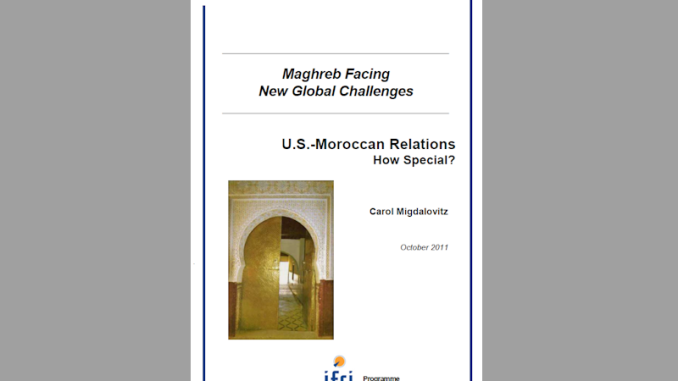
Few international partnerships have endured as long as the one between Morocco and the United States. Often described as a « special relationship », this alliance stretches back to the 18th century, evolving through global conflicts, Cold War tensions, and shifting regional power dynamics. Yet beneath the diplomatic rhetoric lies a story of pragmatic cooperation shaped by mutual interests and strategic necessity.
The foundations of this bond were laid in 1786, when Morocco became the first nation to formally recognize American independence by signing a historic Peace and Friendship Treaty. This agreement, originally designed to protect U.S. merchant ships from Mediterranean piracy, remains in force today, serving as the cornerstone of a relationship both nations proudly uphold.
World War II: a turning point
The alliance took on new significance during the Second World War. In 1942, American forces executed Operation Torch, landing 35,000 troops on Moroccan soil under General Dwight D. Eisenhower’s command. The operation was not merely military—it marked a pivotal moment for Sultan Mohammed V, who secured a private assurance from President Franklin D. Roosevelt at the Casablanca Conference (1943) that Washington would support Morocco’s post-war sovereignty. Though this pledge delighted Moroccans, it sparked sharp disagreement with General de Gaulle, who viewed it as interference in French colonial ambitions.
Cold War maneuvers: bases and sovereignty
After Morocco regained independence in 1956, bilateral relations entered a delicate phase. Washington, eyeing Rabat as a critical strategic outpost, sought to establish air bases capable of projecting nuclear deterrence against the Soviet bloc. However, King Mohammed V prioritized full sovereignty, leading to friction. By 1963, mounting pressure culminated in the complete withdrawal of U.S. military installations from Moroccan territory—a compromise that reflected both nations’ evolving priorities.
Regional stability and political maneuvering
The United States has consistently viewed Morocco as a stabilizing force in North Africa. During the failed coups against King Hassan II in 1971 and 1972, Washington responded with measured concern, wary of destabilizing a key regional ally. Though Hassan II briefly suspected U.S. involvement—fueled by the use of American-supplied fighter jets by the plotters—the partnership endured, adapting to new challenges through military cooperation, intelligence sharing, and development initiatives like the Peace Corps.
Over time, Morocco honed its ability to leverage this relationship, turning security imperatives into a form of mutual soft power. From military support in the Western Sahara to joint counterterrorism efforts, the alliance has demonstrated remarkable resilience, balancing historical ties with modern geopolitical realities.
Challenges ahead
Today, as the Arab Spring’s aftershocks reshape the region, the future of this long-standing partnership faces fresh scrutiny. Washington must reconcile the preservation of a historic alliance with the evolving aspirations of local populations. The trajectory of U.S.-Morocco relations will hinge on how both nations navigate these competing demands—whether through renewed cooperation or strategic recalibration.