How the US-Morocco alliance shaped decades of diplomacy and its role in the Ceuta migration surge
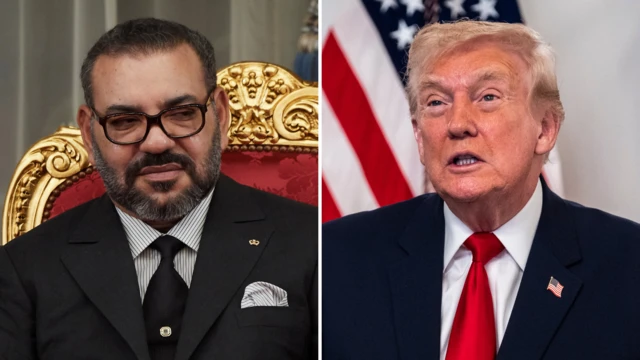
The bond between the United States and Morocco spans centuries, rooted in mutual benefit and strategic foresight. From an early friendship treaty to modern military cooperation, this alliance has endured through global shifts and regional challenges. Most recently, it has taken center stage in one of Europe’s most pressing humanitarian crises.
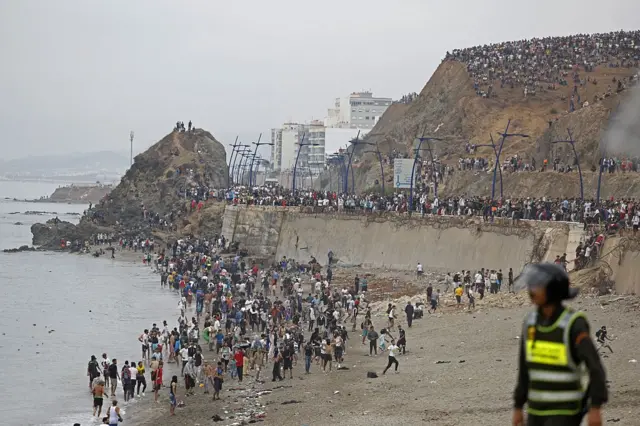
When more than 70,000 people surged across the border from Morocco into the Spanish enclave of Ceuta in a single wave, the event claimed over 140 lives and triggered an international emergency. The response from Washington underscored the depth of its ties with Rabat, even as tensions flared with Madrid—highlighting how this decades-old partnership continues to shape North African and European geopolitics today.
From friendship treaty to strategic partnership
The roots of this alliance stretch back to 1776, when the newly independent United States sought allies beyond the reach of British naval power. Morocco, led by Sultan Mohammed III, stood out as a singular partner. Within 18 months of American independence, the sultan granted US ships unrestricted access to Moroccan ports—a move Rabat still celebrates as the kingdom’s earliest recognition of the United States.
By June 1786, the two nations formalized their relationship with the Treaty of Peace and Friendship in Marrakech. For the young republic, this was no mere diplomatic gesture. With British protection lifted, American merchant ships faced relentless threats from Barbary corsairs. The treaty ensured safe passage, opened critical trade routes, and bolstered America’s standing on the world stage.
“Morocco’s strategic position at the Mediterranean’s gateway and its connections across Europe, Africa, and the Islamic world made it an invaluable partner for the US in building global influence and expanding commerce,” reflects Timothy W. Kneeland, professor of History and Political Science at Nazareth University in New York.
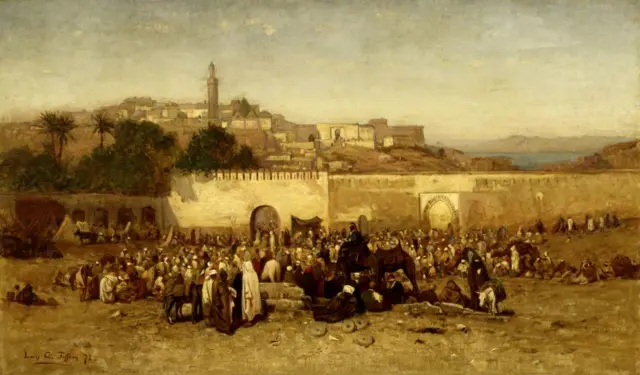
The treaty, renegotiated in 1836, remains in force today—making it the oldest unbroken agreement in US diplomatic history. As Sarah Yerkes, a senior fellow at the Carnegie Endowment for International Peace, notes, “Moroccans rightly point out that this treaty predates all others still active in America’s diplomatic archives.”
Despite this continuity, formal relations did not always translate into deep engagement. When Morocco was divided into French and Spanish protectorates in 1912, the US initially hesitated to recognize the new colonial order. It formally did so in 1917. Upon Morocco’s independence in 1956, Washington swiftly recognized the new state and opened its embassy in Rabat within months—signaling a fresh chapter in bilateral ties.
Security, trade, and the Western Sahara question
Military cooperation between the two nations predates Morocco’s independence. In 1950, even as the kingdom was under French rule, the US secured agreements with Paris to develop air bases in Morocco—part of a broader Cold War strategy to project power across North Africa.
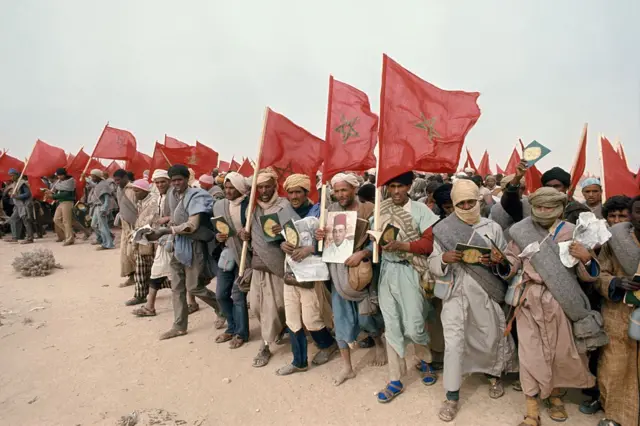
The alliance deepened further in 1975, when Morocco launched the Green March, mobilizing hundreds of thousands of civilians to press Spain to relinquish control of Western Sahara. While Washington publicly advocated for a negotiated solution, declassified documents reveal a quiet alignment with Rabat’s position. Henry Kissinger, then US Secretary of State, told Morocco’s King Hassan II in 1974 that he would act similarly in his place. By January 1976, US officials acknowledged they had placed “no significant obstacles” in Morocco’s path in Western Sahara. A later State Department report described US policy as “essentially pro-Moroccan.”
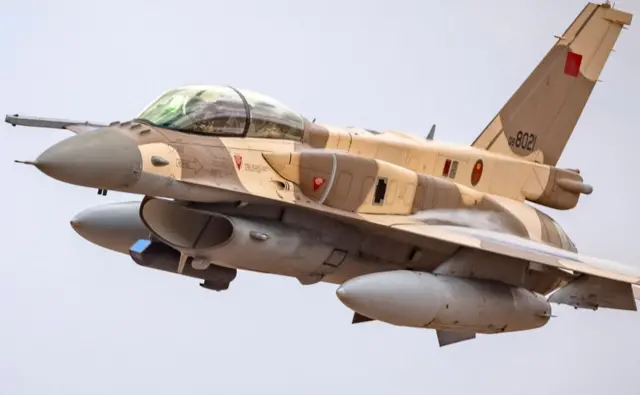
Security ties reached a new level after the 9/11 attacks. The US designated Morocco a Major Non-NATO Ally in 2004, granting Rabat preferential access to advanced military equipment and joint training programs. Today, Morocco hosts Africa Lion, the US Africa Command’s largest annual exercise, and co-chairs the Africa group of the international coalition against ISIS. According to the Stockholm International Peace Research Institute, the US accounted for 60% of Morocco’s major arms imports between 2021 and 2025—the highest share of any supplier.
Economically, the 2006 US-Morocco Free Trade Agreement was Washington’s first with an African nation. By 2025, bilateral trade had surged to $7.4 billion—nearly eight times the $927 million recorded in 2005 before the pact took effect. Though modest on the scale of US trade, the growth has been transformative for Morocco’s economy.
Diplomatically, the alliance reached its peak in December 2020, when then-President Donald Trump recognized Morocco’s sovereignty over Western Sahara as part of the US-brokered Abraham Accords normalizing relations between Morocco and Israel. The US continues to support Rabat’s autonomy plan as the only viable path to resolving the conflict. “Morocco has become the most successful participant in the Abraham Accords. Despite the Gaza war, normalization with Israel remains strong and resilient,” says Yerkes.
The US-Morocco-Spain triangle under strain
The Ceuta crisis has exposed deep fissures within the triangle formed by the US, Morocco, and Spain. The surge of migrants—one of the largest in recent European history—has strained Madrid’s relationship with both Rabat and Washington. While Spanish Prime Minister Pedro Sánchez attributed the influx to human trafficking networks and social media, many Spanish experts and officials accused Morocco of either orchestrating or enabling the border breach.
Washington’s response was telling. In a rare public rebuke, the Trump administration framed the crisis as a consequence of Spanish immigration policies, even comparing the event to an “invasion.” The White House criticized Madrid’s approach to NATO defense spending and its veto on using Spanish bases in Rota and Morón for operations against Iran. These tensions came to the fore during the Ceuta emergency.
Yerkes offers a sharp analysis: “Washington does not appear to view the Ceuta events as a Moroccan initiative. Instead, the White House has directed its sharpest criticism at Spain, blaming its border mismanagement for triggering the crisis.”
The US stance underscored the resilience of its alliance with Morocco, even as relations with Spain—both a NATO ally and a key partner in North Africa—faltered. Experts suggest that Morocco may now serve as a critical alternative for US military logistics and regional security operations, especially in light of Spain’s restrictions on base and airspace use. In a message marking Morocco’s Throne Day in July 2026, Trump reaffirmed the alliance’s strength: “This year, we celebrate 250 years of American history and unbreakable friendship with Morocco—a bond built on trust and mutual respect.”
Following a clear nod to Rabat’s position on Western Sahara, he added: “I hope our cooperation continues to thrive for the next 250 years.”
