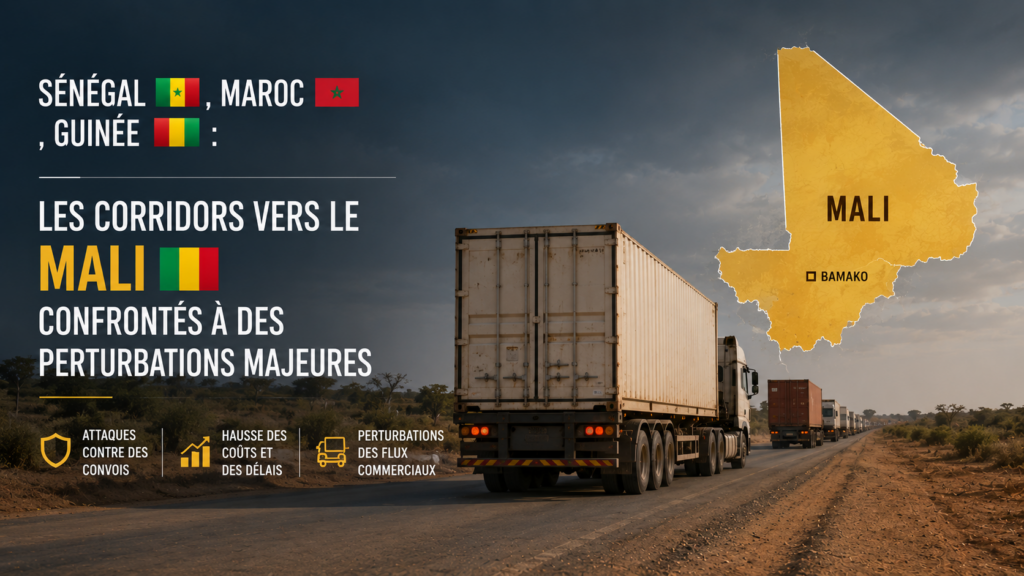
Transport routes to Mali hit by escalating disruptions
The flow of goods into Mali is facing mounting challenges as critical transport corridors from Senegal, Morocco, and Guinea experience severe disruptions. From calls to suspend deliveries to heightened security risks, regional logistics networks are under unprecedented strain, directly impacting trade and supply chains.

Trucking companies across West Africa are reassessing their operations as attacks on commercial convoys and rising security threats reshape longstanding trade routes. The Dakar-Bamako corridor, a lifeline for Malian imports, has seen a sharp decline in reliability, with transporters reporting increased delays and higher operational costs. In 2024 alone, nearly 2.6 million metric tons of goods destined for Mali passed through the port of Dakar, underscoring the corridor’s pivotal role in the country’s economy.
Security concerns force transporters to adapt
The situation has reached a critical point, with industry groups warning that the risks are no longer economically sustainable. Senegalese trucking unions report at least eleven vehicles set ablaze in recent weeks while operating on Malian routes. In response, professional associations have urged drivers to reduce or halt certain trips, citing the growing difficulty in mitigating financial and safety risks.
An incident on May 6 further intensified these concerns, as armed groups targeted multiple commercial convoys along the route connecting Mauritania to Bamako. According to industry sources, over fifteen trucks—including those from Morocco, Senegal, and Mauritania—were attacked, with at least six Moroccan heavy-duty vehicles destroyed by fire.
The fallout from these attacks has extended beyond immediate losses. Moroccan transport operators are now exercising greater caution when dispatching trucks to Mali, with soaring insurance premiums, vehicle immobilization, and additional security expenses eroding profit margins. Long-haul routes, already expensive, are becoming even less viable for many businesses.
Guinea-Mali corridor under pressure
The Guinea-Mali corridor, another vital trade route, is also experiencing severe disruptions following attacks reported in late April. This axis, which connects Mali to the port of Conakry, plays a key role in diversifying supply chains. However, persistent threats have slowed the movement of goods and passengers, leaving businesses with fewer alternatives when other routes face closures or delays.
The ripple effects of these disruptions extend far beyond logistics companies. Drivers are forced to wait longer before departures, convoys are traveling in larger groups for safety, and families are left in limbo, uncertain when their loved ones will arrive. For commercial operators, each delay translates to higher storage costs, missed delivery deadlines, and sluggish regional trade. When multiple corridors falter simultaneously, the consequences ripple through Mali’s supply chains, logistics timelines, and cross-border commerce.
Three years after Mali, Burkina Faso, and Niger shifted their security partnerships, the impact of these changes continues to reverberate across the Sahel. The region’s shifting alliances have not eased the pressure on trade routes, with transport organizations in Senegal, operators in Morocco, and Mauritanian convoy services all raising alarms about the growing hazards on Malian roads.