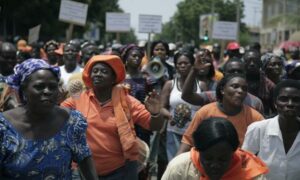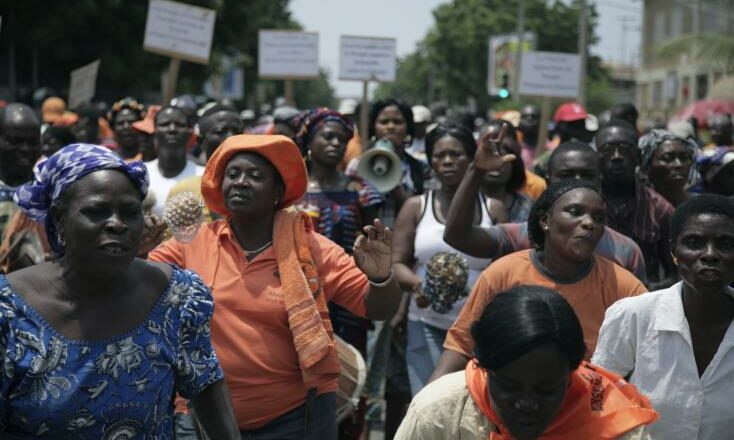
Hundreds of protesters took to the streets of Vogan, southern Togo, on Sunday to voice their opposition to the 2024 constitutional changes. The demonstration, spearheaded by the Cadre national de concertation pour le changement au Togo (CNCC)—a coalition of opposition parties and civil society groups—marked the second major gathering in three months, following an earlier rally held in early May.
The protest unfolded roughly 60 kilometers from Lomé, where tensions have been simmering since the controversial reforms were enacted. Demonstrators held up banners with messages like « No to unconstitutional government changes » and « Constitutional coup », denouncing what they perceive as an illegitimate power grab.
David Dosseh, spokesperson for Front citoyen Togo debout (FCTD)—a key group in organizing the protest—addressed the crowd, stating, « The 2024 Constitution is entirely illegal. This is a constitutional coup that Togolese citizens will never accept. »
The 2024 reforms, which overhauled Togo’s political institutions, eliminated direct presidential elections and introduced a parliamentary system. Under the new framework, the Conseil présidentiel—now the country’s top executive position—is held by Faure Gnassingbé, who has led the country since 2005. Critics argue the changes are designed to extend his rule indefinitely, while government supporters claim the reforms enhance institutional representation.
Unrest stemming from the reforms has already led to deadly clashes in 2025, with civil society reporting seven fatalities, though prosecutors attribute five deaths to drowning. The controversy reached a legal turning point on January 29, when the Economic Community of West African States (ECOWAS) Court of Justice ruled that the constitutional changes amounted to « an unconstitutional change of government. » The Togolese government swiftly dismissed the ruling, arguing the court lacked authority to assess domestic constitutional matters, limiting its role to human rights and community law compliance.