A high-stakes wager on Burkina Faso’s industrial future
TEXFORCES-BF, a flagship textile initiative, has been presented as a cornerstone of Burkina Faso’s economic sovereignty and industrialisation drive. Official enthusiasm is unmistakable. Yet beneath the optimistic rhetoric, the project’s financial architecture and rollout conditions raise serious questions. From direct withdrawals from pension reserves to unpaid benefits for thousands of retirees, from persistent terrorist threats to the apparent absence of a rigorous industrial maintenance plan, this large-scale venture bears the hallmarks of a high-risk equation.
Pension savings as the engine of industrialisation
At the heart of TEXFORCES-BF’s funding strategy lies a major economic decision: the mobilisation of public savings, specifically the invalidity and retirement funds managed by national social security institutions. The idea of turning long-term savings into productive investment is not new, but here it takes on a singular dimension.
It is not private capital or foreign direct investment that carries the initial effort, but the money of Burkinabè workers and former civil servants. The state has chosen to channel the liquidity of pension bodies into an ambitious textile industrial unit, betting on future returns to shore up these institutions’ financial balances.
This financial engineering choice raises a fundamental question: is it legitimate to expose funds intended for social protection to major operational and industrial risks? Pension management traditionally follows a strict prudential principle, prioritising liquidity and maximum security of investments. By injecting these sums into an industrial enterprise, the operating risk is directly transferred to the community of contributors and beneficiaries.
The social paradox: unpaid pensions amid massive investment
One of the most striking aspects of this case is the glaring gap between the scale of funds injected into TEXFORCES-BF and the daily reality of many users of the social security system. On the ground, claiming retirement rights remains an ordeal for thousands of families.
Many beneficiaries, orphans and widows still struggle to obtain their pensions or survivor allowances. Administrative delays, blocked files and recurrent cash shortages at payment counters create palpable social distress. Seeing these same funds commit billions of CFA francs to industrial projects, while basic social obligations suffer from arrears or excessive delays, fuels a growing sense of injustice.
For beneficiaries, the absolute priority of a pension fund must remain the punctual and full payment of benefits due. The argument that industrial investment will sustain the funds in the long term hardly convinces households facing rising living costs and deprived of their immediate subsistence income.
Producing under the shadow of security risk
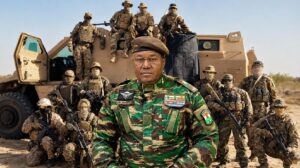
Beyond financial and social fragilities, TEXFORCES-BF operates in an extremely complex geopolitical and security context. Burkina Faso has faced a deep security crisis for several years, marked by the presence and incursions of armed terrorist groups across a large part of the territory.
Establishing and running an industrial complex of this size requires continuous logistics: transporting raw cotton, supplying energy, moving workers and evacuating finished products. The vulnerability of road axes and the constant threat of sabotage constitute an unprecedented risk factor for such a production tool.
An arson attack, a direct strike on infrastructure or the blocking of supply routes by terrorist groups could paralyse the factory within hours. If such a catastrophe occurred, it would not just be a production tool going up in smoke, but the capital built from retirees’ contributions. The absence of explicit public guarantees or international insurance capable of covering the full terrorist risk in this zone casts a heavy shadow over the investment’s long-term viability.
The technical challenge: no lasting maintenance plan
Beyond financial and security aspects, the sustainability of a textile plant depends on fine mastery of its industrial equipment. The textile industry is a precision industry, demanding spare parts, stable energy and specialised technical skills.
To date, little convincing evidence has emerged about the existence of a comprehensive preventive maintenance and equipment upkeep plan for TEXFORCES-BF. The region’s industrial history is littered with promising projects that fell into disuse after only a few years, due to failure to anticipate maintenance costs, spare parts availability or transfer of technical skills.
Running a textile unit is not limited to acquiring modern machines at the inauguration phase. It requires rigorous planning for equipment renewal, maintenance of spinning and weaving lines, and a constant supply of industrial consumables. Without a clear strategy from the outset on financing and executing this maintenance, the plant risks rapid yield declines, followed by prolonged breakdowns that will depreciate the asset at an accelerated pace.
An imperative of transparency and accountability
TEXFORCES-BF embodies all the complexity of current development policies: the legitimate desire to locally process raw materials such as cotton collides with the brutal constraints of financial, security and operational reality.
For this project not to become a financial sinkhole for social security funds, clear guarantees must be provided. Authorities and project managers must demonstrate total transparency regarding mechanisms to protect retirees’ funds, site security and the plant’s technical cost plans. Only at this price can the ambition of industrialisation be reconciled with social justice and the safety of savers.