Military strikes conducted by Chad against jihadist groups on Lake Chad have resulted in the presumed deaths of dozens of Nigerian fishermen, according to local witnesses. The attacks, which began three days ago, targeted areas controlled by Boko Haram near the Chad border.
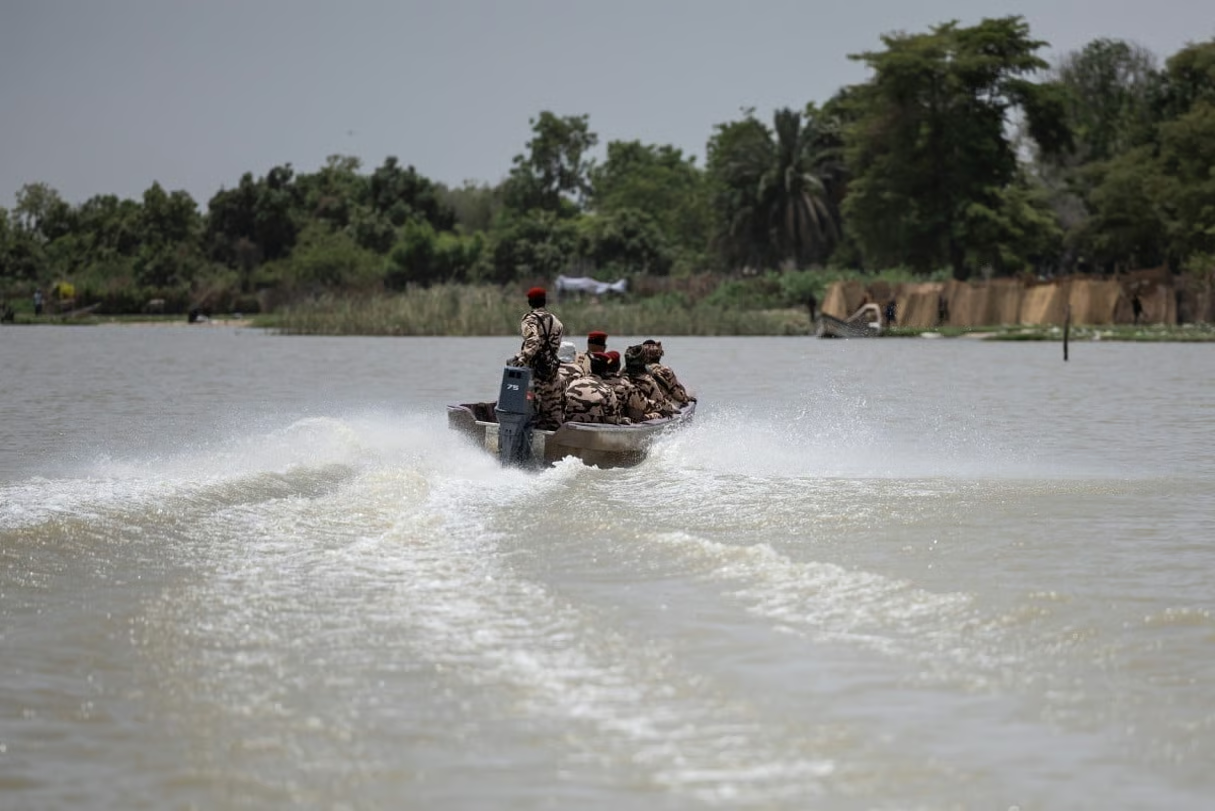
The operation, launched in retaliation for a Boko Haram attack that killed at least 24 Chadian soldiers on May 4, has raised concerns about civilian casualties. Witnesses report that fishermen operating in the region—required to pay taxes to Boko Haram for access to fishing zones—are among the victims.
why fishermen are caught in the crossfire
According to a local fishermen’s union leader, 40 Nigerian fishermen are missing and presumed drowned after the strikes targeted Shuwa Island, a strategic fishing hub near the borders of Nigeria, Niger, and Chad. Shuwa, a known Boko Haram stronghold, attracts fishermen from across the region despite the group’s control.
“Many people have been killed. Most victims came from Doron Baga, on Nigeria’s lake shores, and Taraba State,” said Adamu Haladu, a fisherman from Baga. He added that fishermen pay Boko Haram to access the area’s rich fishing grounds.
a recurring tragedy
Chad’s military has not yet commented on the civilian casualties. This isn’t the first time its airstrikes have resulted in unintended harm. In October 2024, Chadian forces faced criticism for killing dozens of civilians during a retaliatory strike on Tilma Island after a Boko Haram attack that left 40 soldiers dead. The army denied targeting civilians, despite witness testimonies.
The Chad Basin remains a hotspot for insurgent activity, with Boko Haram and the Islamic State West Africa Province (ISWAP) operating in the region’s remote islands and marshes. Since 2009, the lake has become a battleground, displacing millions and claiming over 40,000 lives, per UN estimates.
The conflict has spilled across borders, drawing in Nigeria, Cameroon, and Niger. In 2015, these countries revived the Multinational Joint Task Force to combat insurgencies, though Niger withdrew in 2025.