Senegal’s political landscape shifts as Sonko takes Assembly leadership
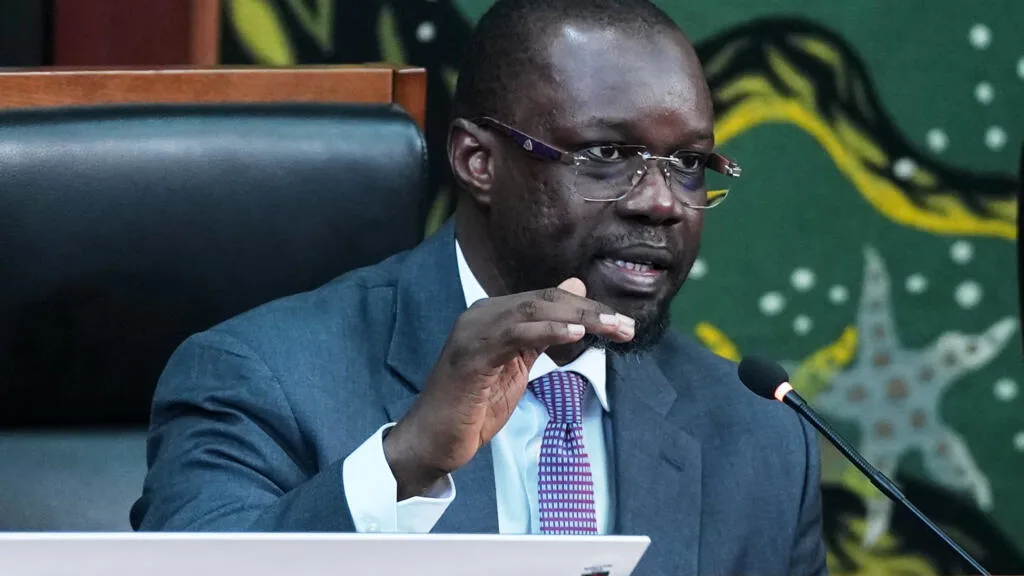
Ousmane Sonko wasted no time in turning a political setback into a strategic comeback. Just four days after his removal from the prime minister’s office, he secured the presidency of Senegal’s National Assembly, signaling a bold new chapter in the country’s political dynamics.
In a measured yet firm tone, Sonko dismissed concerns of political retaliation, asserting that his election was rooted in popular legitimacy rather than personal ambition. « A dismissal does not equate to political disgrace, » he declared, framing his new role as an opportunity to strengthen democratic oversight rather than a confrontation with the executive branch.
His discourse struck a conciliatory note, vowing to avoid « institutional chaos » or « personal vendettas. » Instead, Sonko emphasized his commitment to « rigorous oversight of government actions » and the full use of his constitutional powers as an opposition leader to hold the administration accountable.
An unprecedented cohabitation
Political analysts describe this power-sharing arrangement as an unprecedented experiment in Senegal’s modern history. Ellimane Haby Kane, director of the Legs Africa think tank, notes that while Sonko’s approach appears measured, his ultimate goal remains clear: to exert influence over executive decisions. « He is playing the long game, » Kane observes. « His strategy is not about confrontation but about reshaping the balance of power from within. »
The tension between the presidency and the National Assembly has already surfaced. Sonko’s party, Pastef, has criticized President Bassirou Diomaye Faye for excluding them from key government appointments, including the selection of the prime minister. This dispute is far from resolved, as Pastef officials have since engaged in preliminary discussions with presidential advisors—only to set conditions for their potential participation in the new administration.