Senegal’s constitutional council verdict on Ousmane Sonko stirs legal debate
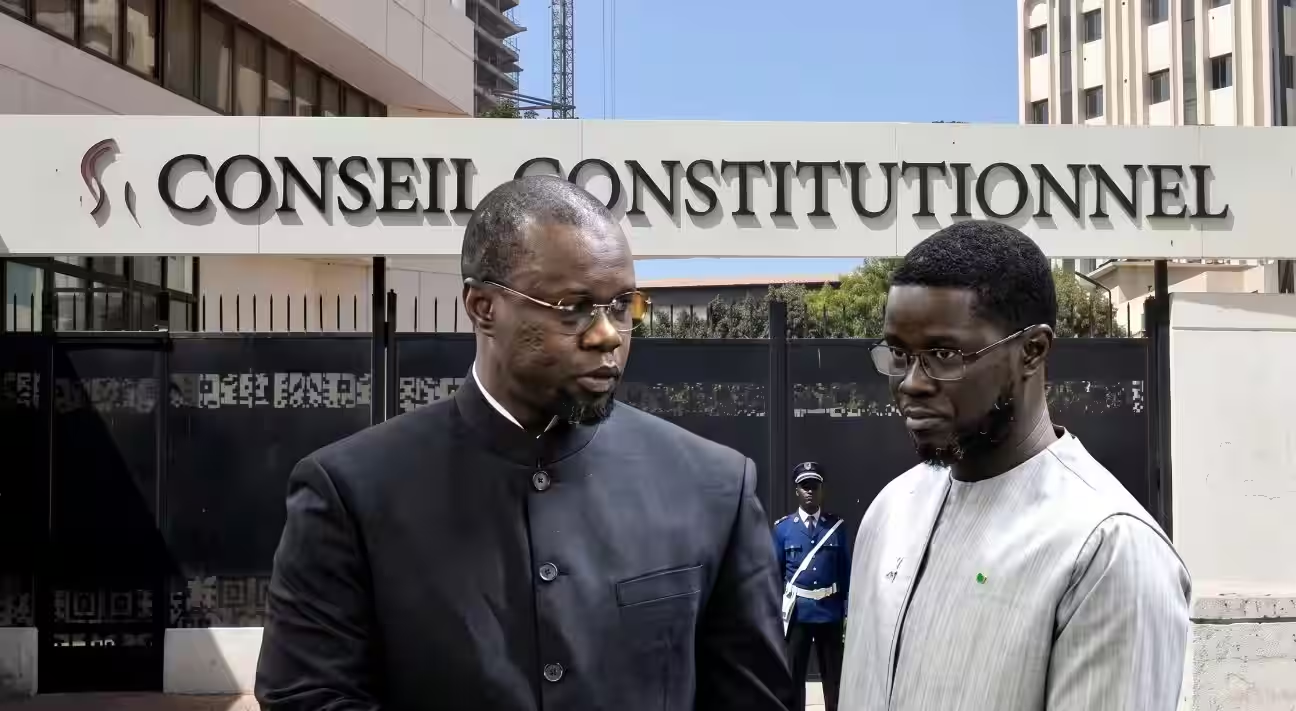
The constitutional council’s ruling on Ousmane Sonko’s reinstatement to Senegal’s national assembly has ignited intense legal discussions. While presented as a procedural decision, deeper questions emerge about the council’s evolving role in safeguarding constitutional principles.
Legal interpretations diverge on council’s procedural stance
On June 17, 2026, Senegal’s constitutional council issued a verdict that continues to spark contrasting interpretations within the country’s legal circles. The decision, which centers on Ousmane Sonko’s reinstatement to the national assembly, was framed as a matter of judicial procedure—specifically, the court’s alleged lack of jurisdiction. However, legal analysts suggest this ruling may represent a subtle but significant shift in the council’s constitutional jurisprudence.
Questions persist about the council’s consistency. Critics point out that this recent decision contrasts sharply with a more assertive judicial posture observed in early 2024, when the council played a more active role in regulating institutional functions and ensuring stability. The June verdict, by contrast, appears to adopt a more restrictive approach, focusing narrowly on the legal qualification of the contested act rather than broader constitutional principles.
Constitutional jurisprudence at a crossroads
The council’s handling of Sonko’s case has become a focal point for analyzing its evolving role. During the February 2024 institutional crisis, the council demonstrated a willingness to intervene decisively, positioning itself as a guarantor of institutional balance. The June 2026 ruling, however, suggests a retreat from this expansive interpretation of its mandate, raising concerns about the court’s ability to address future constitutional challenges effectively.
The decision’s core reasoning has drawn particular scrutiny. Legal scholars note that while the council cited procedural grounds for its ruling, the implications extend far beyond mere technicalities. The verdict’s restrictive interpretation of judicial authority could set a precedent that limits the council’s capacity to act as a counterbalance to executive or legislative overreach in future cases.
Institutional coherence questioned
For many observers, the council’s shifting stance reflects deeper tensions within Senegal’s constitutional framework. The June 2026 ruling highlights the challenges of maintaining a consistent judicial approach when faced with politically sensitive cases. Critics argue that the council’s perceived retreat from its earlier assertive posture risks undermining public trust in the judiciary’s ability to uphold constitutional values impartially.
As legal debates intensify, the council’s decision on Sonko’s reinstatement serves as a reminder of the delicate balance between judicial restraint and active constitutional guardianship. The outcome of this case may well shape the future trajectory of Senegal’s constitutional jurisprudence, with implications for both the judiciary and the broader political landscape.