Just days after his dismissal from the cabinet, Ousmane Sonko, former Prime Minister and leader of the Pastef party, launched a sharp attack on President Bassirou Diomaye Faye. Addressing the media in Dakar, Sonko made it clear that his party retains the power to challenge the government through a no-confidence motion, thanks to its overwhelming parliamentary majority. He stressed that while his party has no intention of destabilizing the state, the political landscape now resembles a tense cohabitation within the ruling coalition. Sonko also revealed that he had repeatedly warned the President about the risks of sidelining Pastef in government decision-making, but his concerns went unheeded.
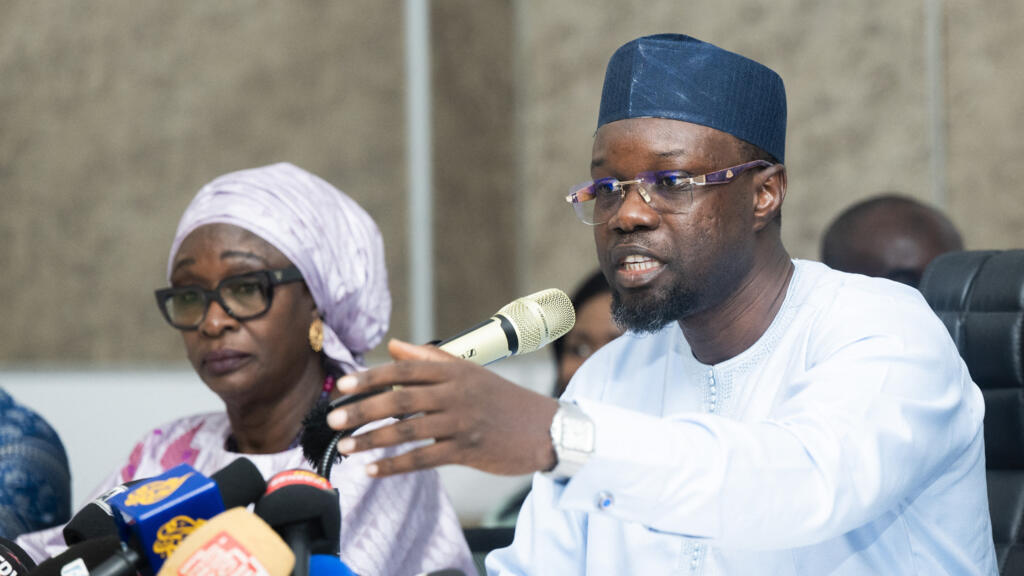
In a blunt assessment of the current administration, Sonko declared that the government lacks fundamental political legitimacy. He argued that the coalition supporting the President holds no real sway among the electorate, dismissing claims of a “government of technocrats” as a thinly veiled acknowledgment of political isolation. “They claim to have a coalition, but it doesn’t represent anyone,” he asserted. “Pastef, on the other hand, is the only party that truly embodies the voice of the people, having secured the largest share of votes in the last election.”
Political isolation threatens government stability
The absence of Pastef from the government presents a significant political challenge for President Bassirou Diomaye Faye’s administration. With 130 of the 165 parliamentary seats, the party remains the dominant force in the legislature. Analysts warn that this unusual setup could lead to a de facto cohabitation within the majority coalition, where the President’s policy agenda may struggle to gain traction without the backing of the largest party. The government’s ability to pass legislation and implement reforms now hinges on whether it can secure cooperation from Pastef lawmakers.
Observers highlight that the political rift is more than just a power struggle—it reflects a deeper crisis of legitimacy. “The President’s administration appears disconnected from the very movement that propelled him to power,” noted one political commentator. “He governs in a void, stripped of the narrative that once defined his rise. Meanwhile, Sonko stands at the helm of the parliamentary majority, ready to challenge every move that strays from the party’s original mandate.”
A unique political crisis in Senegal
Political analysts describe the current situation as unprecedented in Senegal’s history. Unlike traditional cohabitation scenarios, where opposition parties hold the majority, this conflict arises within the ruling coalition itself. Pastef, the party that secured the majority through elections, has chosen not to participate in the government, creating an unusual power dynamic.
“How can a technocratic government function when its policies must navigate a parliament controlled by a party that refuses to endorse it? questioned one analyst. “The coming weeks will determine whether this impasse is resolved through dialogue in institutions or on the streets, where Pastef’s mobilization could reshape the political landscape.”