Ousmane Sonko: “cohabitation may be tough, but it can also be peaceful”
In Senegal, President Diomaye Faye faces a critical governance challenge after the election of his political rival, Ousmane Sonko, as Speaker of the National Assembly. Sonko, who pledged to avoid institutional crises, warned that the Assembly would not serve as a mere rubber-stamp body. Could this lead to a dissolution of the Assembly and early legislative elections? Political scientist Mamadou Lamine Sarr of the Cheikh Hamidou Kane Digital University in Dakar provides insights.
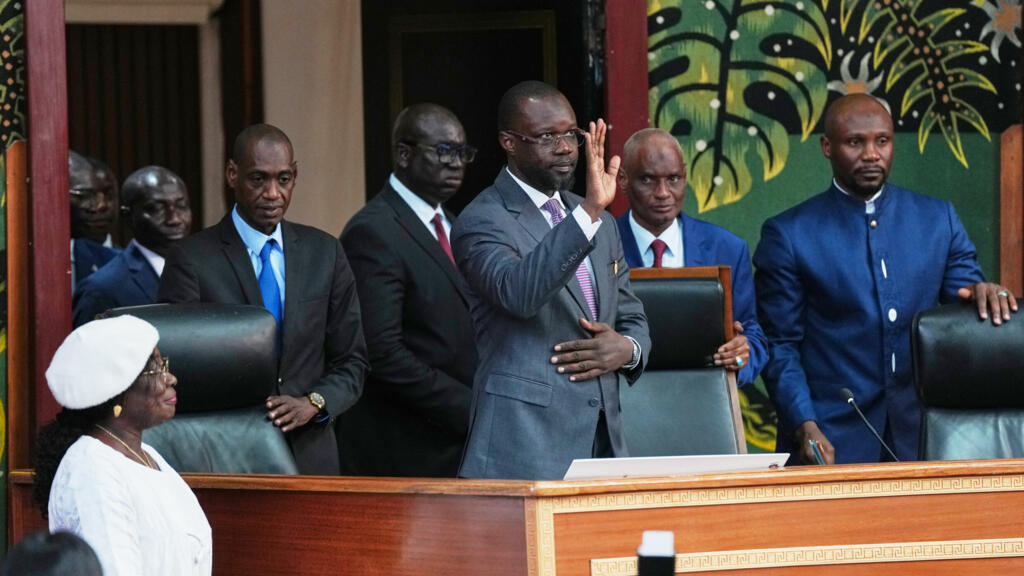
After Ousmane Sonko’s election as President of the National Assembly on Tuesday morning, Senegal’s political landscape has entered uncharted territory. Sonko, a prominent opposition figure and former Prime Minister, secured the position in a decisive vote, setting the stage for what could become a challenging period of cohabitation between the executive and legislative branches.
Sonko’s stance on governance
Sonko has made it clear that while he intends to avoid creating an institutional crisis, he will not allow the Assembly to function merely as a passive body. His statement that “the Assembly will not be a chamber of mere recording” signals a potential shift in legislative dynamics. This raises questions about how President Diomaye Faye will navigate a parliament now led by a political adversary.
Possible early elections
The uncertainty surrounding the future of the current Assembly has led to speculation about a potential dissolution and the possibility of early legislative elections. Such a move could reshape the balance of power in Senegal’s political arena, providing voters with an opportunity to redefine the country’s parliamentary representation.
Expert analysis
Mamadou Lamine Sarr, a political science lecturer at the Cheikh Hamidou Kane Digital University in Dakar, offers a nuanced perspective on the situation. He highlights the delicate nature of cohabitation in Senegal’s political system, where tensions between the presidency and the Assembly could either escalate or be managed through dialogue and compromise. Sarr’s insights underscore the importance of institutional resilience and the role of political actors in maintaining stability.