security failures in Mali after april attacks, analyst warns
In a Timbuktu Institute analysis titled “Mali: anatomy of a security earthquake”, published on May 13, the center highlights the Mali‘s security crisis following coordinated jihadist and separatist attacks on April 25. The assaults, which led to the death of Defense Minister General Sadio Camara and the loss of Kidal to armed groups, raise critical questions about the country’s security framework and its partnerships with international actors.
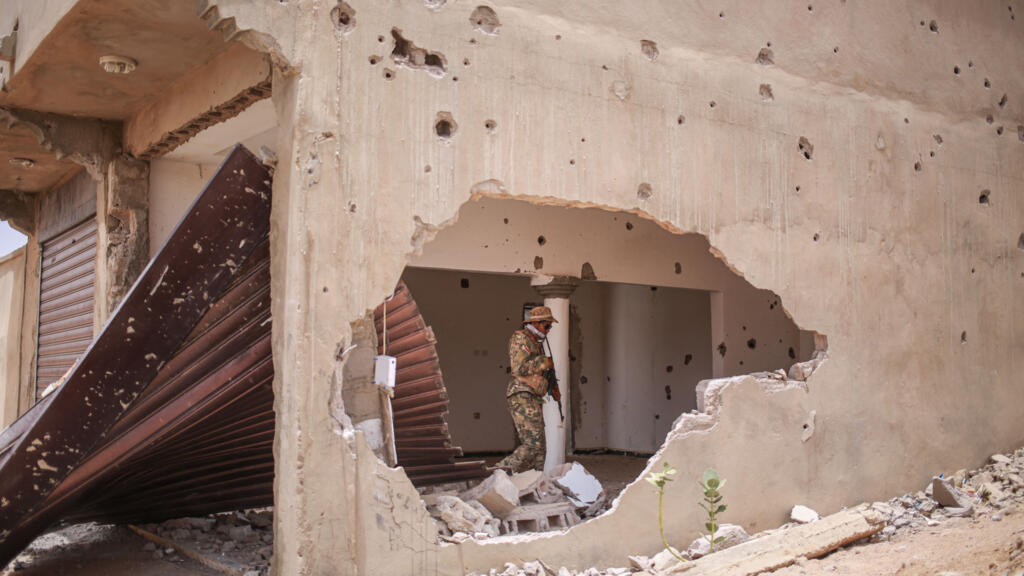
Mali’s security strategy under scrutiny after Russian partnership fails
Bakary Sambe, Director of the Timbuktu Institute in Dakar, argues that the April 25 attacks expose the failure of outsourced security in Mali. “The death of General Sadio Camara and the chaotic withdrawal of Russia’s Africa Corps from Kidal symbolize the collapse of the Wagner-Africa Corps strategy,” he states. “After Barkhane’s mixed civil-military approach, outsourcing security to Moscow proved ineffective against locally rooted guerrilla forces.”
While acknowledging that attacks are inevitable in conflict zones, Sambe notes that despite Russia’s continued presence alongside Mali’s armed forces, the loss of Kidal and Tessalit reveals critical weaknesses. “The withdrawal from these strategic areas demonstrates that outsourcing security simply hasn’t worked in Mali,” he emphasizes.
Sahel Alliance’s limitations exposed by Mali’s crisis
The April 25 assaults also highlight the Alliance of Sahel States (AES)‘s inability to provide military support. Despite the Liptako-Gourma Charter’s solidarity clause—comparable to NATO’s Article 5—the Burkina Faso and Niger have not mobilized troops. While Burkina Faso’s President Traoré condemned the attacks as a “monstrous plot,” Sambe points out that these nations were preoccupied with their own security challenges. “The AES countries face significant internal threats, leaving little room to support Mali militarily,” he explains.
public opinion in Mali: between disillusionment and rallying
The attacks have had a paradoxical effect on Malian public opinion. While the Assimi Goïta regime’s security promises remain unfulfilled, the crisis has paradoxically strengthened nationalist sentiment. “The regime’s legitimacy now hinges almost entirely on security,” Sambe notes. “The attacks have temporarily consolidated support behind the government, creating a paradox reminiscent of 2012 when armed groups swiftly took control of northern Mali.”
This “rally around the flag” effect has left international analysts struggling to understand Mali’s political dynamics. “Foreign observers often fail to grasp this temporary reinforcement of the Goïta regime,” Sambe adds.
Jihadist-separatist alliance: a temporary convergence
Sambe also examines the JNIM (al-Qaeda-linked) and FLA (separatist) alliance, calling it a “strategic constraint” for Mali’s transitional authorities. However, he doubts its long-term viability. “This alliance is a convergence of circumstances, not a marriage,” he says. “While the coordinated attacks show unprecedented coordination, the partnership lacks shared political goals.”
The JNIM seeks to impose Sharia law, while the FLA demands Azawad autonomy. Additionally, the dominance of the Katiba Macina within JNIM raises questions about their commitment to the FLA’s separatist agenda. “Without a shared political vision, this alliance is unlikely to endure,” Sambe warns.
However, he acknowledges that the alliance could serve as a catalyst for the JNIM to reposition itself as a national political actor. “The JNIM is attempting to shed its image as an external movement by aligning with figures like Bina Diarra, positioning itself as a national political force ready to negotiate,” he explains. “This alliance could pave the way for the JNIM to transition into a political group.”
Is dialogue the only way forward for Mali?
On the question of negotiations with armed groups, Sambe stresses that inclusive national dialogue is the only viable path forward. “The jihadist threat in Mali is no longer an external invasion but an internalized phenomenon,” he says. “The vast majority of Malians believe it’s time for the country to engage in dialogue with all its citizens, including those considered lost.”
This sentiment is echoed by opposition figures like Imam Dicko’s Coalition of Forces for the Republic (CFR), who advocate for talks. Meanwhile, Mali’s transitional authorities insist on a military solution. “The regime’s stance is understandable, given the nature of the JNIM,” Sambe notes. “But dialogue has become inevitable to silence the guns.”