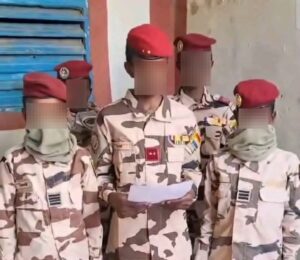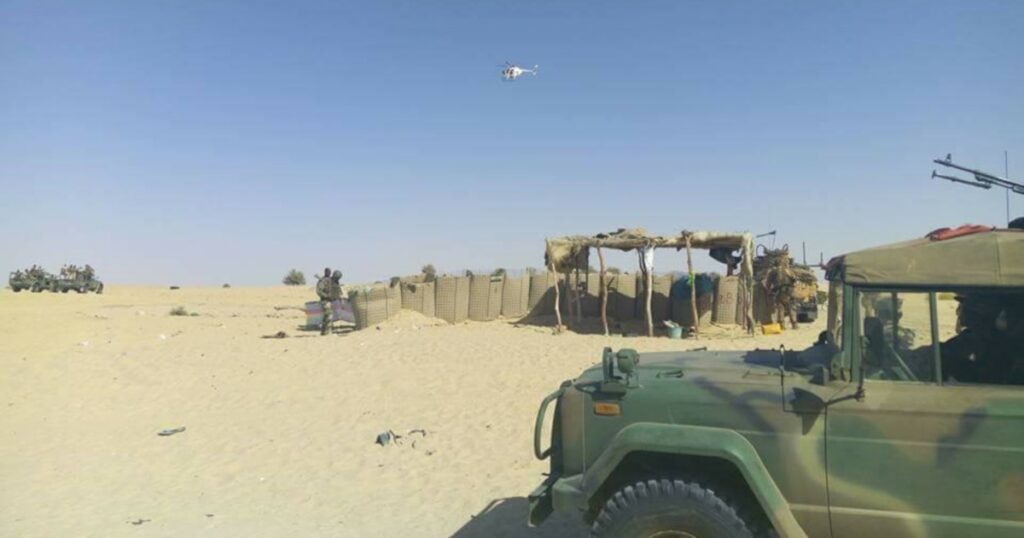
The United Nations has raised serious concerns over a surge in accusations of human rights violations by military forces in the Sahel, including allegations of forced disappearances and summary executions. These claims primarily target soldiers from Mali, Burkina Faso, and Niger, who are actively combating jihadist groups in the region.
escalating allegations and international alarm
Jean-Pierre Lacroix, United Nations Under-Secretary-General for Peace Operations, issued a strong warning during a virtual session of the UN Security Council dedicated to the Sahel. He emphasized the urgent need for the G5 Sahel Joint Force and its member states to prioritize human rights compliance amid ongoing counterterrorism efforts.
The concerns have intensified in recent months, coinciding with widespread condemnation of jihadist violence and intercommunal conflicts across the region. Local and international observers have documented disturbing trends, raising questions about the conduct of national armies in their fight against extremism.
disturbing statistics and documented cases
The United Nations Multidimensional Integrated Stabilization Mission in Mali (MINUSMA) reported a sharp increase in alleged human rights abuses by national armed forces. Between January and March, MINUSMA documented 101 cases of extrajudicial killings attributed to the Malian army, along with approximately 30 similar incidents involving Nigerien troops on Malian soil. These cases, including names and specific circumstances, have been meticulously recorded and verified.
In Burkina Faso, a troubling incident occurred in mid-May when 12 individuals arrested on terrorism charges died in gendarmerie cells. Relatives and human rights organizations claim these were civilians who were summarily executed, though authorities have pledged investigations into the matter.
Meanwhile, in Niger, reports suggest that 102 people were killed by the military in the Tillabéri region (western Niger) in April. The Nigerien Ministry of Defense has announced plans to launch an inquiry while praising the troops’ professionalism. Human rights groups continue to compile lists of victims, many of whom belong to the Fulani ethnic group, often unfairly associated with jihadist sympathies.
A representative from the Malian Fulani association Tabital Pulaaku, speaking on condition of anonymity, expressed frustration over the lack of accountability: “We produce reports, denounce the killing of Fulani individuals, and show the world mass graves, yet nothing changes.”
Abou Sow, President of Tabital Pulaaku, acknowledged that some Fulani have joined jihadist movements but cautioned against oversimplifying the conflict by attributing it solely to ethnicity. “It is naive to reduce jihadism to a single ethnic group,” he stated in a press interview.
governments respond with assurances and investigations
Despite mounting evidence, governments in the Sahel have largely stood by their militaries, which operate under significant strain due to limited resources and training. Ismail Ould Cheikh Ahmed, Mauritania’s Foreign Minister, speaking on behalf of the G5 Sahel (comprising Mauritania, Chad, Niger, Burkina Faso, and Mali), told the UN Security Council that the joint force’s full operational capacity hinges on its ability to uphold human rights. “A force that cannot respect human rights cannot claim full operational readiness,” he asserted.
Abdou Abarry, Niger’s Ambassador to the UN, echoed this commitment, stating, “We fully adhere to human rights principles.” His remarks followed concerns raised by countries like Belgium regarding credible allegations of rights violations.
The UN Security Council acknowledged the steps taken by several Sahelian governments to address these allegations and encouraged further action to strengthen accountability mechanisms.
a critical juncture for the Sahel
The timing of these allegations is particularly sensitive. The UN faces skepticism from some Security Council members regarding the effectiveness of its mission in Mali, which currently deploys around 13,000 peacekeepers. France, a key ally in the region, has also reassessed its military engagement in the Sahel following the deaths of 13 French soldiers in November.
Despite the combined efforts of the UN, MINUSMA, the G5 Sahel Joint Force, and French troops, violence in the region continues unabated. Since 2012, the conflict has claimed thousands of lives and displaced hundreds of thousands of people.
Ibrahim Maïga, a researcher at the Institute for Security Studies (ISS) in Bamako, highlighted a critical imbalance: “Civilian protection remains a secondary objective for military forces, whose primary focus is neutralizing jihadist threats.”
In May, General Pascal Facon, commander of French anti-jihadist forces, described the reported abuses as “intolerable” and warned they could undermine the credibility of military operations in the region.