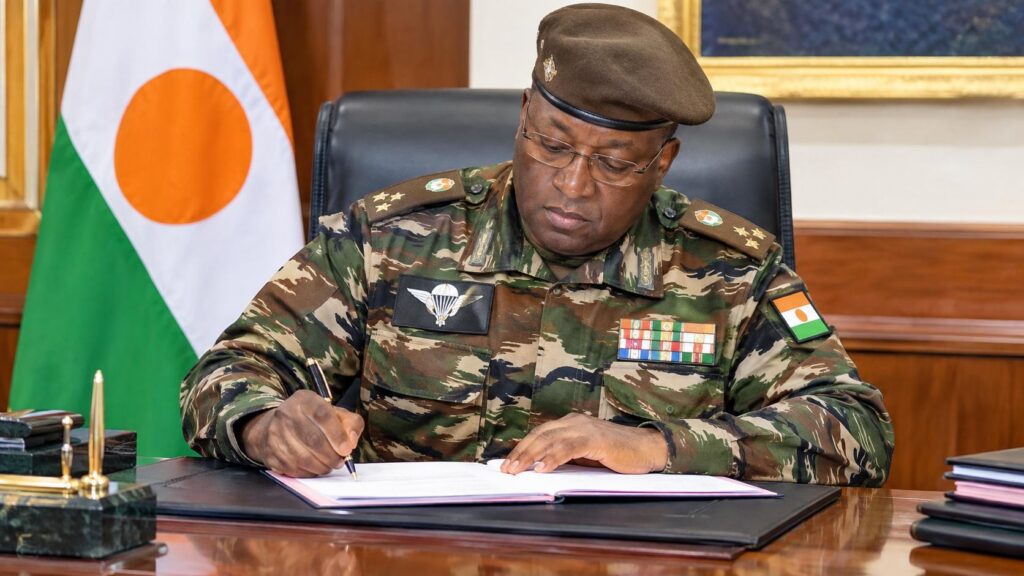
Something shifted in Niger in the closing days of August 2024. With a single stroke of his pen, General Abdourahamane Tiani moved the country past the era of arrests and exile into something far more sweeping: the erasure of citizens from their own nation’s legal record. Since the National Council for the Safeguard of the Homeland (CNSP) seized power by force in July 2023, the hunt for dissenters has escalated by degrees. The presidency no longer contents itself with silencing opponents through prison cells or border expulsions. It now cancels their very existence on paper — turning nationality itself into a revocable privilege dispensed at the ruler’s whim.
A legal guillotine built for one purpose
The machinery of repression hardened in late August 2024, when Tiani signed an ordinance establishing a “National Registry of Persons Involved in Acts of Terrorism or Threats to State Security.” The label sounds narrow. Its reach is anything but. Behind the convenient anti-terrorism pretext sits a legal blade aimed squarely at political figures, civil society organizers and military personnel alike.
The most corrosive clause allows authorities to impose temporary or permanent loss of Nigerien citizenship on anyone suspected of vaguely defined offenses: “activities liable to disturb peace and security,” “regionalist or xenophobic remarks,” or “collusion with a foreign power.” Such elastic language converts an ordinary protest chant — or a critical op-ed — into grounds for national repudiation.
The four-step squeeze under the CNSP
- Step one — Creation of the “security threats” registry (August 2024)
- Step two — Asset freezes and travel bans imposed on opponents
- Step three — Presidential decrees formally stripping citizenship
- Step four — Confiscation of identity documents, producing legal ghosts
The blacklist grows with every signature
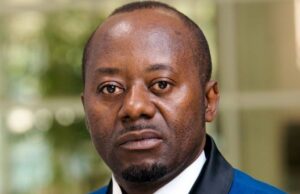
Niamey’s list of targets expands in lockstep with the decrees. Successive waves of revocations have methodically swept through the circle around deposed president Mohamed Bazoum, former ministers and prominent voices of opposition.
| Individual | Role / Position | Justification cited by the junta |
|---|---|---|
| Ouhoumoudou Mahamadou | Former Prime Minister | Alleged intelligence ties with a foreign power |
| Hassoumi Massoudou | Ex-Foreign Minister | Threat to national security and conspiracy |
| Rhissa Ag Boula | Former Minister of State, head of the Resistance Council (FRR) | Reconstituting an armed group, inciting insurrection |
| Alkache Alhada | Former Interior and Trade Minister | Disseminating data disturbing public order |
| Amadou Barou Chekaraou | Former state apparatus official | Threatening state security and glorifying violence |
Alongside these political heavyweights, civil society advocates, media activists such as Mariama Djibrine (known as Mayra), and former senior military officers have had their identities voided by executive order alone. A single signature can strip a person born on Nigerien soil — someone who served the country for decades — of passports, bank accounts and every civic right, leaving them administrative outcasts and de facto stateless.
The patriotic smokescreen behind the escalation
The CNSP’s rhetoric rests on a deliberate and persistent confusion: the equation of the nation with the military regime currently holding power. In Tiani’s framing, challenging the junta means betraying Niger itself. This populist posture flatters sovereignist sentiment while obscuring an uncomfortable reality — a near-total absence of political vision and a security situation that continues to deteriorate across the three-border zone.
In truth, this purge through citizenship betrays deep anxiety. A government confident in its popular legitimacy and territorial control has no need to hand out patriotism certificates or manufacture stateless persons to stay in power. By sealing off every channel of republican dialogue and confiscating opponents’ nationality, the junta only deepens resentment and drives dissent underground — or toward armed resistance.
A direct breach of international obligations
From a legal standpoint, Tiani’s decisions collide head-on with the Universal Declaration of Human Rights. Article 15 is unambiguous: “Everyone has the right to a nationality” and “No one shall be arbitrarily deprived of his nationality.” By applying these sanctions retroactively, outside any judicial process and without the guarantee of a fair hearing before an independent court, Nigerien authorities trample the regional and international conventions the country has signed.
Legal scholars and human rights organizations are sounding the alarm. By setting a precedent in which nationality becomes a reward for loyalty to an authoritarian regime, the CNSP undermines the very concept of citizenship. If being Nigerien now depends on the junta leader’s goodwill, the entire republican edifice is at risk of collapse.
An autocratic spiral with no exit
By turning nationality into a political adjustment variable, Abdourahamane Tiani’s regime reveals its true character: an autocracy lurching forward, incapable of tolerating the slightest contradiction. Revoking identity papers will not lower food prices in Niamey, nor will it restore security in the Liptako-Gourma region.
History offers a consistent lesson: regimes that confiscate their citizens’ papers out of fear of debate inevitably lose their own legitimacy. General Tiani would do well to remember that a people’s identity runs far deeper than any military decree, however absolute it claims to be.