The High Commission for Planning has released its latest demographic projections for Morocco, covering the period from 2024 to 2060. These forecasts are based on various scenarios that account for changes in birth rates, mortality, and migration patterns.
Under the average scenario, Morocco’s population is expected to rise from 36.8 million in 2024 to 43.3 million by 2060, representing a 17.8% increase over 36 years. This translates to an average annual growth of approximately 182,000 people.
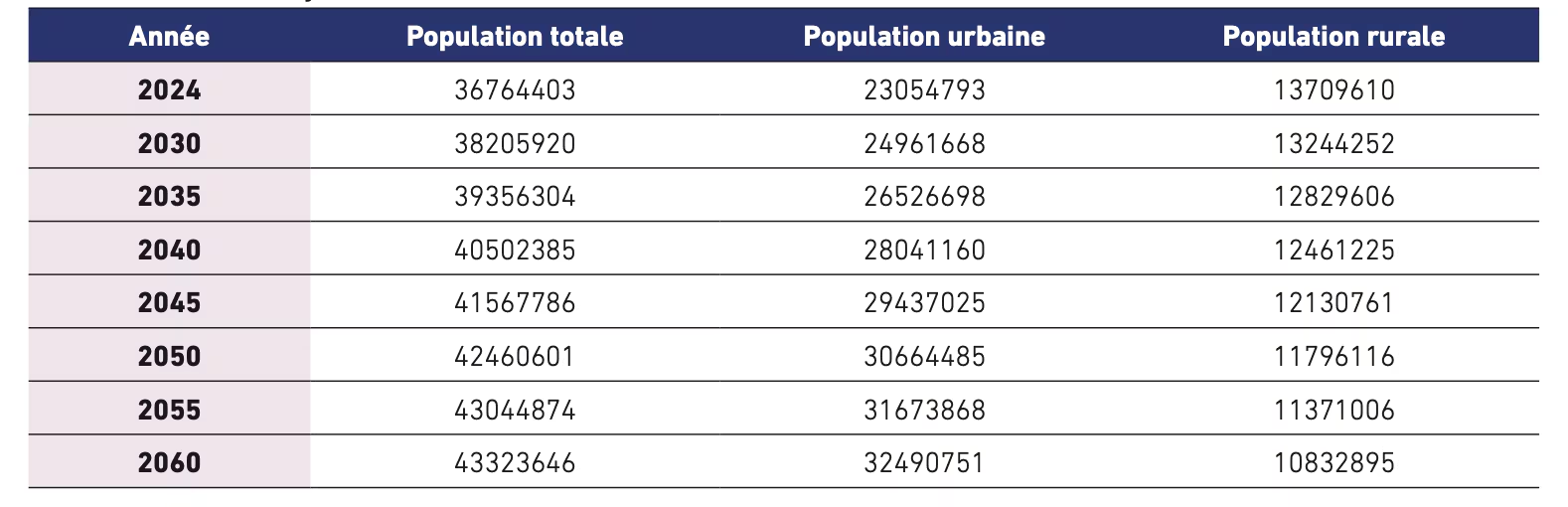
The annual population growth rate, currently at 0.7% in 2024, is projected to gradually decline, approaching zero by 2060. This marks a shift from decades of continuous growth to a phase of near-stagnation. Urban areas will continue to expand, with the urban population expected to reach nearly 32.5 million by 2060—about three-quarters of the country’s total population. Meanwhile, rural areas will see a decline, with their population dropping to around 10.8 million.
The High Commission emphasizes that this shift will intensify urbanization challenges, calling for public policies that address housing, infrastructure, and social services to mitigate territorial imbalances. It also stresses the need to bolster rural development, improve living conditions, retain young people, and leverage local resources to preserve the country’s social and territorial balance.
Fewer births, fewer schoolchildren by 2060?
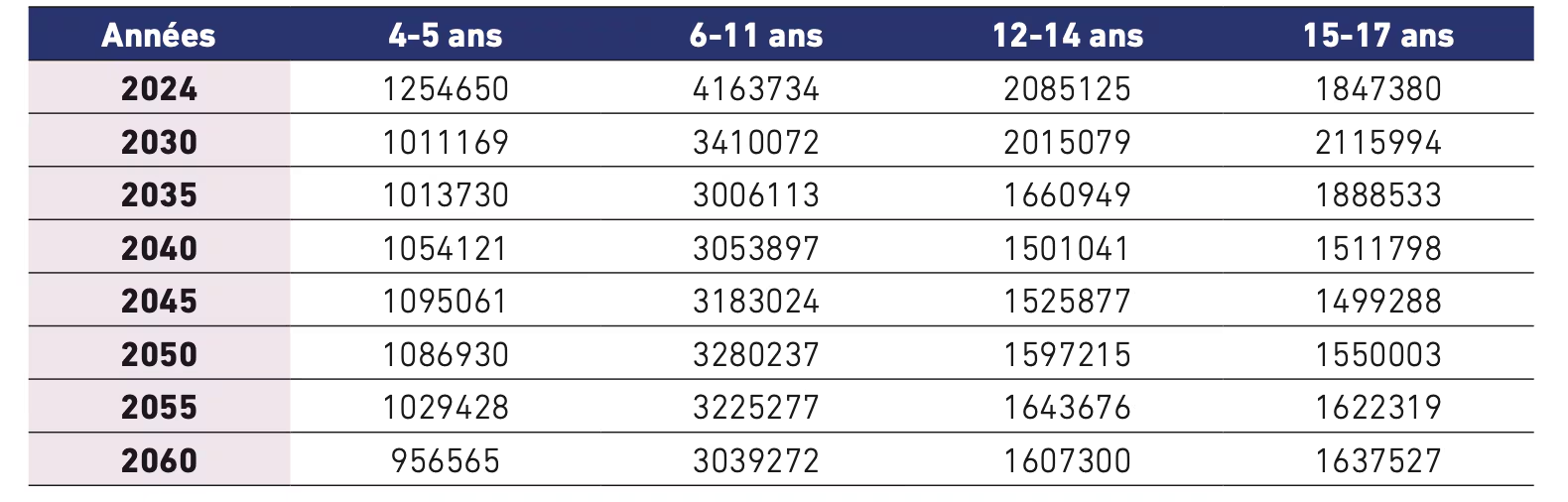
A decline in fertility rates is expected to significantly reduce the number of young people. The preschool population (ages 4-5) is projected to drop by 23.8%, from 1.25 million in 2024 to 0.96 million in 2060. Primary school-aged children (6-11 years) will decrease by 27%, from 4.16 million to 3.04 million.
Similarly, the first cycle of basic education (ages 12-14) will see a 22.9% decline, from 2.08 million to 1.61 million. The 15-17 age group, which includes both young workers and high school students, will shrink by 11.4%, from 1.85 million to 1.64 million.
These demographic shifts present an opportunity for educational policies. With fewer school-age children, resources previously allocated to expanding classroom capacity could be redirected toward improving teaching quality and curriculum development. Reduced pressure on infrastructure could allow for greater investment in educational support and content.
The working-age population (15-59 years) is projected to grow from 22.08 million in 2024 to nearly 24.96 million in 2060, an increase of 13.1% or an average annual rise of about 80,190 people. However, this growth will be unevenly distributed between urban and rural areas.
In cities, driven by rural-to-urban migration, the working-age population will rise from 14.2 million to 19.1 million, a 34.4% increase. In contrast, rural areas will see a decline from 7.9 million to 5.9 million, a 25.4% drop. The High Commission warns that this trend will place additional pressure on urban labor markets, particularly as cities absorb workers from rural areas.
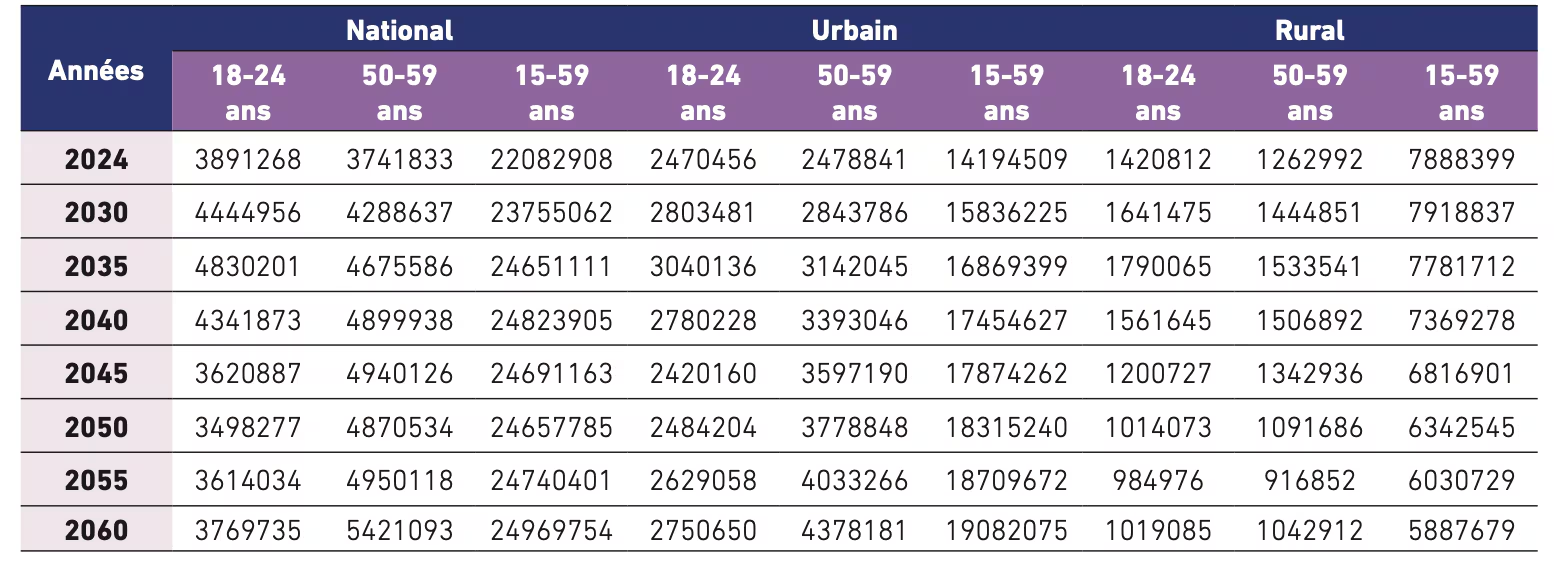
Young adults aged 18-24, the primary new entrants to the labor market, will see their numbers decline slightly by 3.1% nationwide, from 3.89 million to 3.77 million. However, this trend will vary due to migration movements. Urban areas will experience an 11.3% increase, from 2.47 million to 2.75 million, while rural areas will see a 28.3% drop, from 1.42 million to 1.01 million.
The population nearing retirement (ages 50-59) will grow significantly by 44.9% nationwide, from 3.74 million to 5.42 million. This increase will be driven by a 76.6% rise in urban areas, compared to a 17.4% decline in rural regions.
These projections indicate that Morocco will have a window of opportunity where the working-age population continues to grow faster than dependent age groups—both young and elderly. This transitional period is expected to close gradually as the proportion of people aged 60 and older increases, making it crucial for the country to maximize the potential of its available workforce before aging accelerates.
A quarter of the population will be 60 or older
The number of people aged 60 and older will more than double, rising from 5 million in 2024 to 10.9 million in 2060, with an average annual growth rate of 2.2%. By 2060, this age group will represent 25.2% of the total population, compared to 13.6% in 2024, 9.4% in 2014, and just 8% in 2004. This marks a threefold increase in their demographic weight over 56 years. Urban areas will see the most significant rise, with the elderly population multiplying by 2.5, from 3.18 million to 8.06 million, while rural areas will experience a 1.6-fold increase, from 1.81 million to 2.83 million.
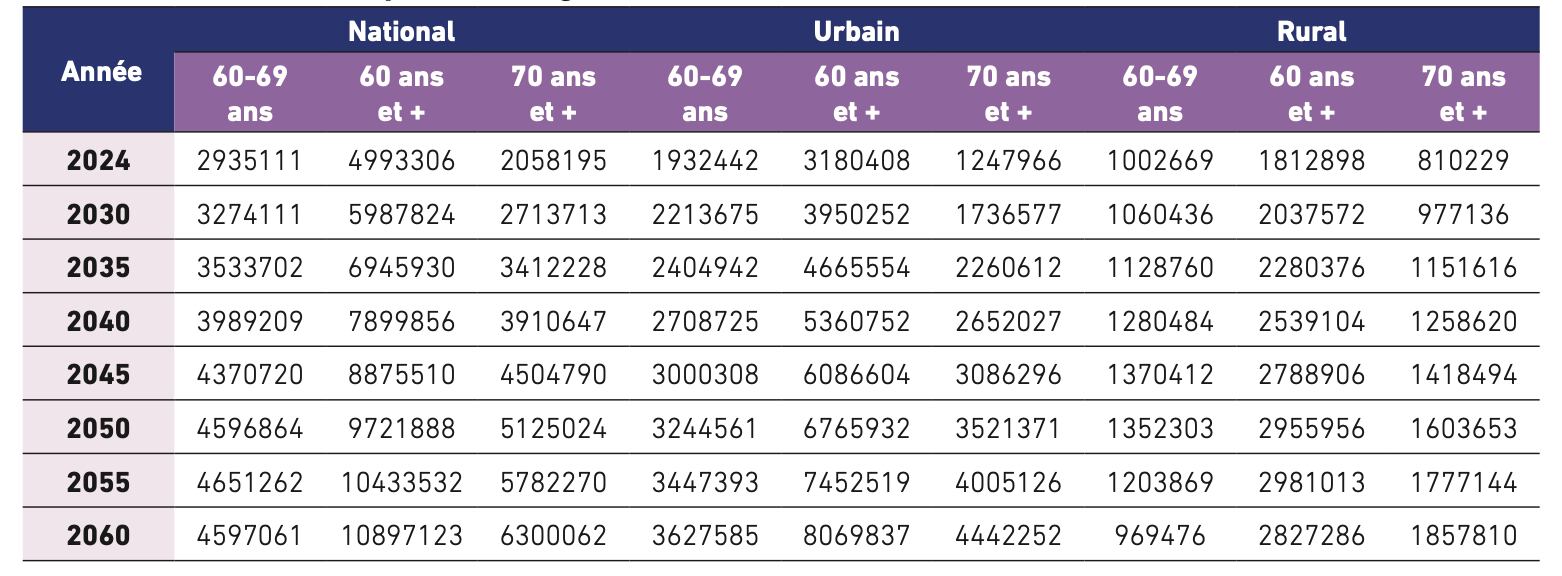
The High Commission attributes this disparity to two key factors: internal migration fuels urban aging, as working-age populations move to cities and typically remain there, while rural areas face higher mortality rates, limiting the growth of the elderly population in those regions.
The population aged 70 and older will experience even more dramatic growth, tripling from 2.06 million in 2024 to 6.3 million in 2060. This represents an average annual increase of about 118,000 people. Urban areas will see a 256% rise, from 1.25 million to 4.44 million, while rural regions will experience a more modest increase, from 0.81 million to 1.86 million.
The High Commission links this trend to the decline in fertility rates that began in 1975, marking the start of Morocco’s demographic transition. It also highlights the significant reduction in mortality and, to a lesser extent, migration flows. Generations born after 1975 will reach retirement age starting in 2035, accelerating the aging process in the decades that follow.
Public policies must be anticipated now
The institution warns that the rapid aging of the population will increase the dependency ratio—the number of dependents (both young and elderly) relative to the working-age population. This shift will pose major challenges, particularly in financing pensions, providing healthcare for an older population, and maintaining family and intergenerational solidarity, especially as rural exodus and urbanization weaken traditional support networks.
The High Commission stresses that demographic aging is a structural and lasting trend, regardless of the scenario considered. It calls for proactive public policies in education, employment, territorial planning, and social protection to support a Morocco where population growth slows but aging accelerates.