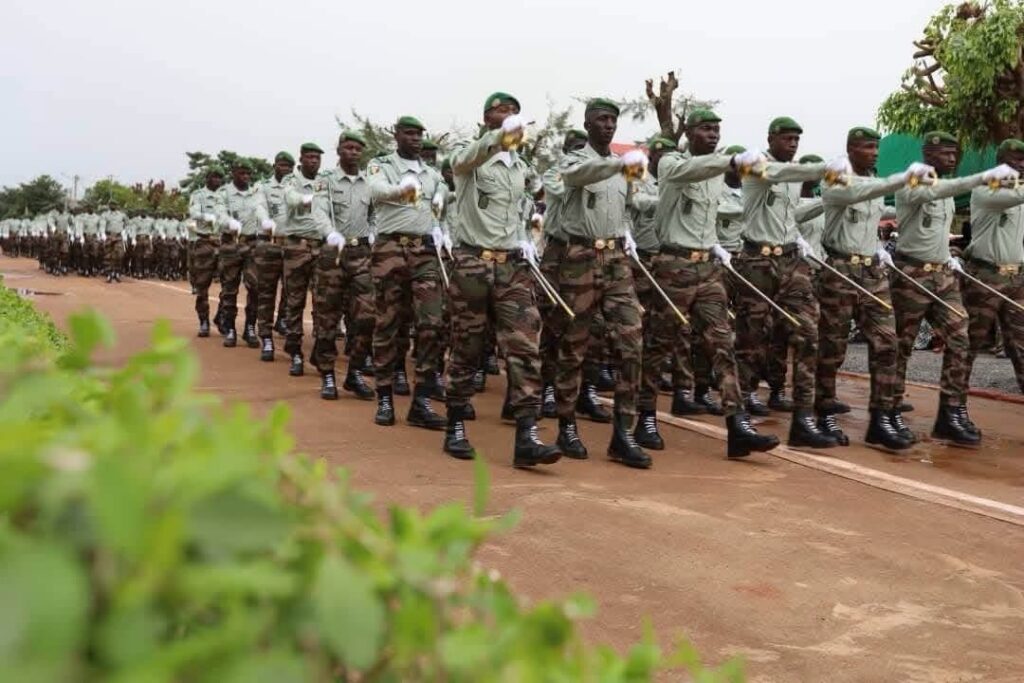
The 66th anniversary of Mali’s independence, commemorated in Bamako on 22 September 2026, represented far more than a customary national ceremony. Presided over by General Assimi Goïta, the event featured a military review, a parade of the Defence and Security Forces, and an aerial display a display of sovereignty that unfolded against the backdrop of an increasingly integrated regional architecture. This celebration marked a decisive turning point, one that crystallises the central question now confronting the Alliance of Sahel States (AES): can a confederation of sovereign nations forge a shared political identity without eroding the national traditions that define each member?
A national commemoration within a broader regional framework
Like Niger and Burkina Faso, Mali continues to observe its independence day with official ceremonies, national tributes, and a military parade. Such events are, in essence, celebrations of each state’s distinct history and sovereignty. Mali had organised comparable ceremonies in previous years, and there was nothing inherently unusual about the 2026 edition.
Yet the regional context lent this year’s commemoration a particular significance. The three nations Mali, Burkina Faso, and Niger now present themselves as members of a single Confederation of Sahel States, committed to deepening their political, diplomatic, economic, and security cooperation while championing a common vision of sovereignty.
This raises a question that merits careful consideration: how far can this new confederal structure advance without effacing the identities, symbols, and traditions unique to each member state?
The AES: a project of coordination, not absorption
The Malian decision to maintain a national ceremony around 22 September does not, in itself, signal a rupture with the AES. On the contrary, the three states continue to demonstrate joint initiatives. On 21 September, on the eve of the 81st United Nations General Assembly, the foreign ministers of Burkina Faso, Mali, and Niger convened to coordinate their participation and advocate a common position on behalf of the Confederation.
Days earlier, officials from Mali, Burkina Faso, and Niger had gathered in Ouagadougou for discussions focused on energy and mining resources within the AES space. These developments complicate any hypothesis of the organisation’s imminent dissolution.
The central question: national symbols in a shared political project
The real issue may not be the Malian military parade itself, but rather the place national symbols will occupy in a Confederation that is progressively constructing common political mechanisms and identity.
Can a Confederation function effectively with three states that fully retain their own calendars, ceremonies, armies, and national symbols while simultaneously developing a shared political identity? For now, the answer appears to be yes. Mali continues to celebrate its independence; Burkina Faso and Niger maintain their own national days. This does not automatically mean the AES is fading.
It does, however, underscore an essential reality: the AES remains a political construction among sovereign states, not the dissolution of those states into a single entity.
The true test lies ahead
To assess the durability of the AES, one must look beyond ceremonies and parades. The forthcoming indicators will be the three states’ capacity to uphold their common commitments, coordinate foreign policies, develop joint economic projects, strengthen security cooperation, and give concrete substance to the Confederation’s institutions.
It is on these fronts not on the staging of a national holiday that the strength of the AES project will truly be measured.
Is Mali, by celebrating its independence with a military parade, distancing itself from Burkina Faso and Niger? At this stage, nothing supports such a conclusion.
But another question deserves to be asked: will the AES succeed in building a genuine common identity while allowing each member the freedom to continue celebrating its national history? Is this the beginning of the end for the AES or simply proof that each state preserves its own national traditions within a shared project? The answer will depend less on the ceremonies of 22 September than on the political decisions and actions taken in the months ahead.
By Kadi Alhassane — Senior correspondent