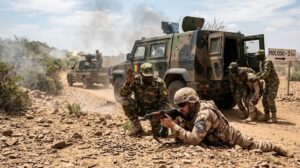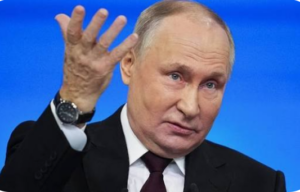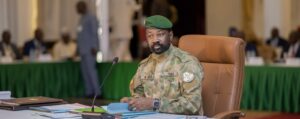
The moment of no return has arrived for Mali’s treasury. As the national budget buckles under an unprecedented squeeze from sanctions and a stalling economy, the bill for Russian paramilitary forces — first the Wagner Group, now Africa Corps under the Kremlin’s direct control — has crossed a threshold that is forcing a fundamental rethink in Bamako. Consolidated financial estimates and leaked figures circulating across West Africa put the total paid to these private contingents at more than 514 billion FCFA, roughly 850 million dollars. The number has set off fierce argument in Mali’s economic and military circles, and it marks a decisive turning point in the country’s financial trajectory.
A monthly outlay that keeps breaking records
Since the paramilitary outfit first deployed in late 2021, the recurring cost has done nothing but climb. The original contract called for an average monthly disbursement of about 6 billion FCFA, or 10 million dollars. Expanding the contingent beyond 2,000 men, buying specialised equipment and funding support logistics sent expenditure through the roof.
Roughly 10,000 dollars per man, every month
On average, each Russian fighter or instructor now drains about 10,000 dollars a month from the Malian state:
- Direct mercenary pay: set at around 3,000 dollars per month.
- Supervision, equipment and combat bonuses: close to 7,000 dollars more, collected by Russian command structures.
By way of comparison, the full cost of keeping a Malian Armed Forces (FAMA) soldier in the field amounts to a tiny fraction of that sum — a gap that has quietly bred resentment inside local barracks.
Mines and money: the payment channels behind the bill
Faced with an overwhelming financial load amid budget scarcity, the transitional authorities have had to multiply their payment routes. Beyond direct bank transfers routed through secure channels, a significant share of the cost is settled through the award of mining exploitation permits, particularly in the gold deposits of southern and western Mali.
The recent restructuring of the outfit under the direct control of Russia’s Ministry of Defence, rebranded as Africa Corps, has not brought the bill down. A planned troop surge to 3,500 men could add more than 210 billion FCFA a year to the total.
What has the security result actually been?
Russian forces have delivered headline operations, including the symbolic recapture of Kidal in late 2023. Yet analysts question the budgetary price against a security picture that keeps deteriorating. Vital road corridors face regular blockades, central Mali remains under intense pressure from groups affiliated with JNIM, and the Malian army continues to take losses in complex ambushes.
For many economic observers in Bamako, channelling more than 514 billion FCFA to foreign praetorian guards and mercenaries starves essential public services — electricity, health, education — of vital resources, while locking the transitional government into total financial and security dependence on Moscow.