The bustling Conakry port has increasingly become a critical transit hub for Mali‘s military shipments, with recent investigations revealing a sophisticated smuggling network funneling Russian-made weapons into the landlocked nation. This emerging route has raised serious concerns about regional security and the expanding influence of external actors in West Africa’s conflict zones.
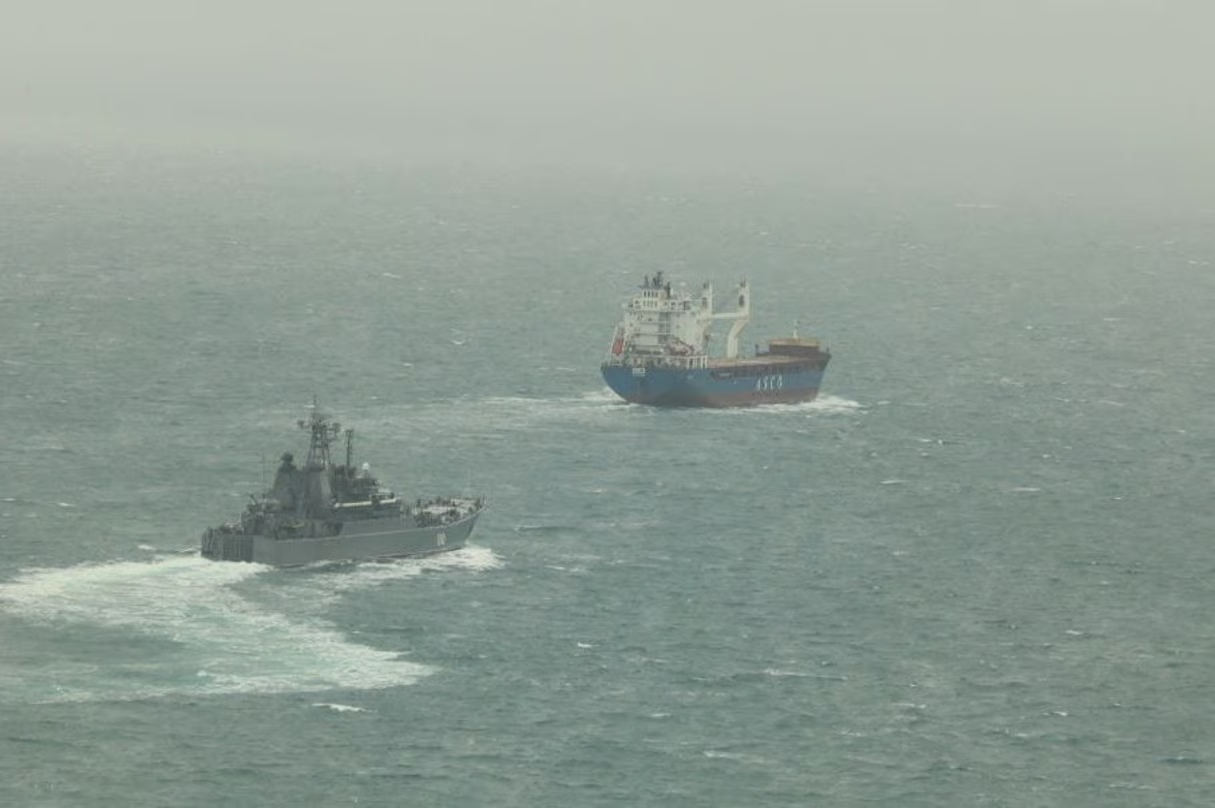
Multiple sources confirm that the Sabetta cargo vessel, recently observed in European waters under Russian naval escort, played a pivotal role in transporting advanced weaponry. These shipments, intercepted in Guinea‘s territorial waters, were ultimately destined for Bamako, bypassing international scrutiny through a carefully orchestrated logistical operation.
a growing smuggling network
The investigation uncovered a multi-layered smuggling operation involving commercial vessels, corrupt port officials, and regional intermediaries. Shipping records show that the Sabetta made several unscheduled stops in Conakry before its interception, with cargo manifests listing industrial equipment rather than the actual contents—military-grade arms and ammunition.
Port authorities in Conakry face mounting pressure to tighten oversight, as evidence suggests that some officials may have facilitated the illegal transfers in exchange for lucrative bribes. This breach of trust has prompted calls for an immediate audit of all incoming and outgoing shipments through the port.
regional security implications
The influx of Russian weapons into Mali comes at a time when the country’s military is engaged in active counterterrorism operations against armed groups in the north. Analysts warn that unchecked arms smuggling could exacerbate existing conflicts, further destabilizing the already fragile Sahel region.
The involvement of the Africa Corps, a shadowy Russian paramilitary group, has added another layer of complexity to the situation. Reports indicate that this entity has been actively supplying weapons to non-state actors in Mali, circumventing international arms embargoes.
International observers are particularly alarmed by the potential for these weapons to fall into the hands of extremist organizations, which have been responsible for numerous attacks across the Sahel. The Economic Community of West African States (ECOWAS) has called for urgent action to dismantle these smuggling networks and prevent further destabilization.
government response and challenges
The Malian transitional government, led by interim President Assimi Goïta, has acknowledged the severity of the situation but faces significant challenges in addressing the issue. Limited resources and logistical constraints have hindered efforts to secure the country’s porous borders.
Meanwhile, the Guinean government has pledged to cooperate with international partners to investigate the smuggling networks operating through Conakry port. However, the scale of the operation suggests that a coordinated regional effort will be necessary to effectively curb these illegal activities.
the role of mercenary groups
The presence of the Africa Corps in Mali has been a contentious issue, with many questioning the group’s true objectives. While officially described as a security contractor, evidence points to its involvement in arms trafficking and support for local militias.
Experts suggest that the group’s activities are part of a broader strategy to expand Russian influence in Africa, leveraging local conflicts to gain a foothold in the region. This has raised concerns among Western governments, who view the situation as a direct challenge to their strategic interests in the Sahel.
As the situation continues to evolve, the international community is closely monitoring developments in Mali and Guinea, with calls for stronger measures to disrupt the smuggling networks that threaten regional stability.