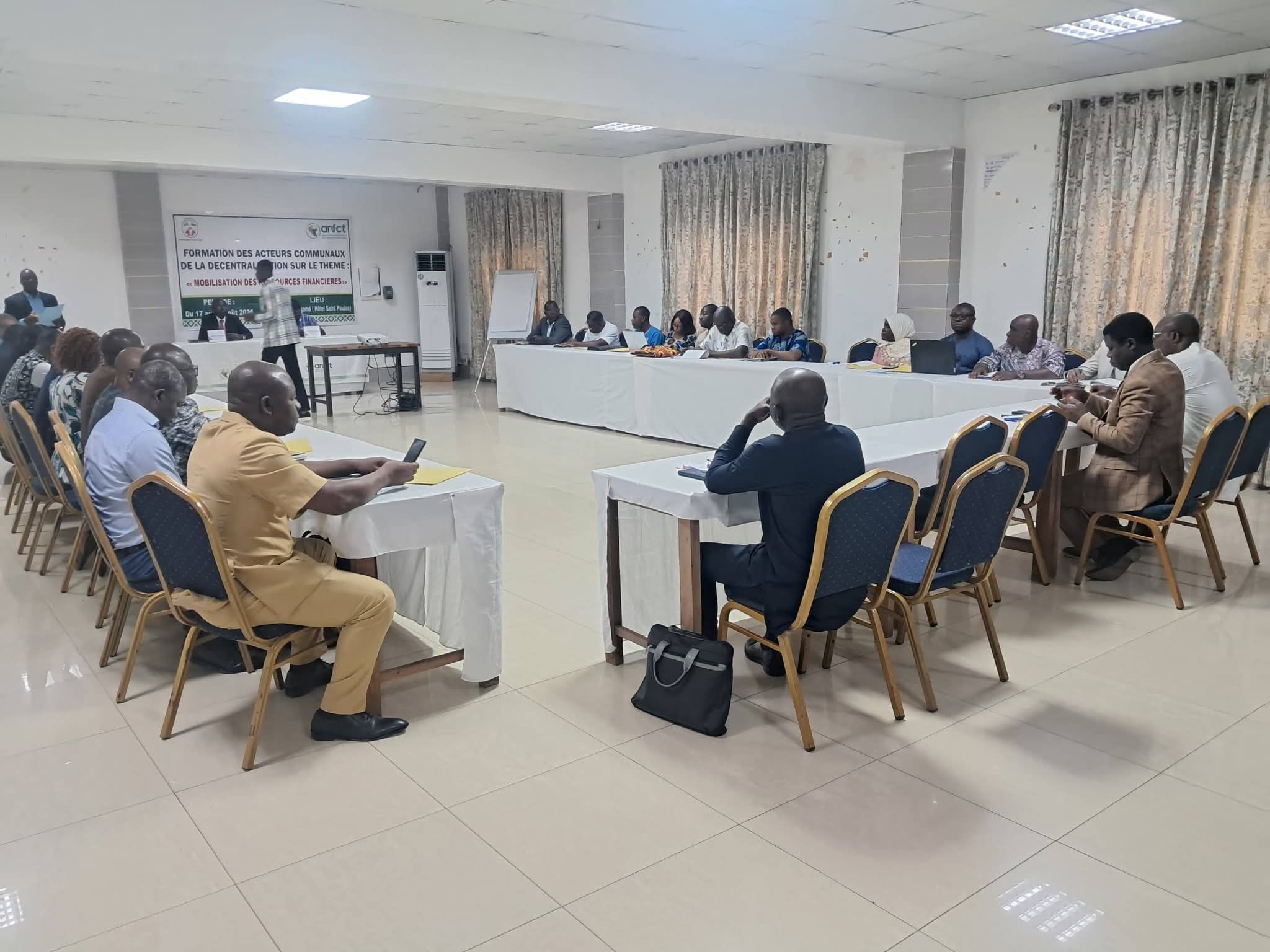
LOMÉ, 17 AUGUST 2026 — Local authorities in Togo’s coastal regions are gathering this week to tackle a critical challenge: securing and managing financial resources to meet community needs. From 17 to 19 August 2026, officials from communes including Golfe 2, Golfe 3, Agoè-Nyivé 5, and Agoè-Nyivé 6 will convene in Golfe 7 for a focused training session on financial resource mobilisation and governance.
The programme, part of the National Training Plan led by the National Agency for Local Authority Training (ANFCT), aims to equip municipal leaders with practical tools to enhance revenue collection, streamline financial management, and translate resources into tangible public services. Without adequate funding and sound fiscal practices, even the most committed local teams struggle to deliver essential infrastructure or respond to urgent social and economic demands.
Building sustainable financial independence
For local governments, the path to self-sufficiency goes beyond simply finding new funding streams. It hinges on securing existing revenue streams, improving collection rates, and ensuring every franc collected delivers measurable impact. The ability to fund infrastructure, maintain facilities, and support local development depends directly on the financial health of the commune.
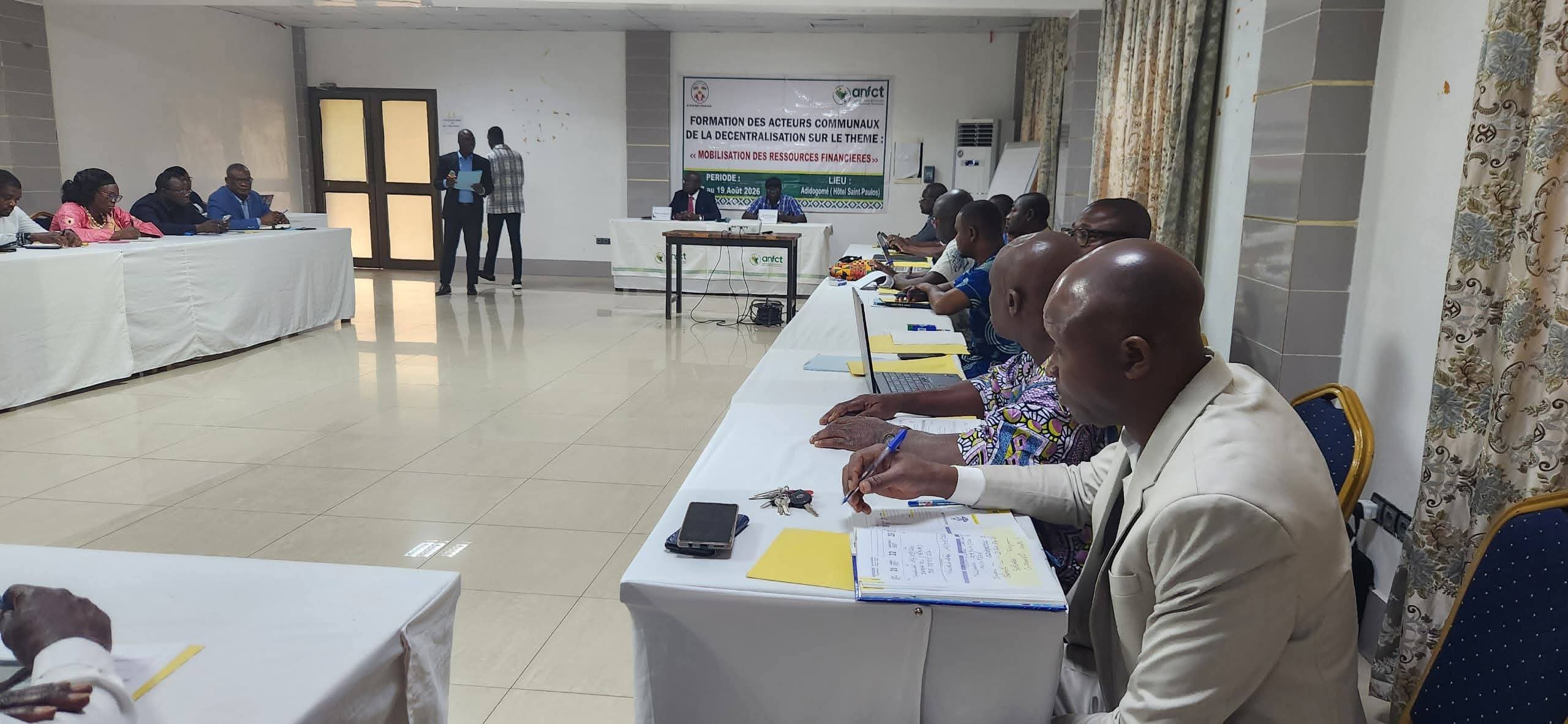
This three-day workshop in Golfe 7 is designed to strengthen the operational and strategic skills of elected officials, municipal staff, and financial officers. By sharing real-world experiences and analysing common obstacles, participants will co-create solutions tailored to their local contexts—bridging the gap between theory and on-the-ground implementation.
Hands-on learning through shared expertise
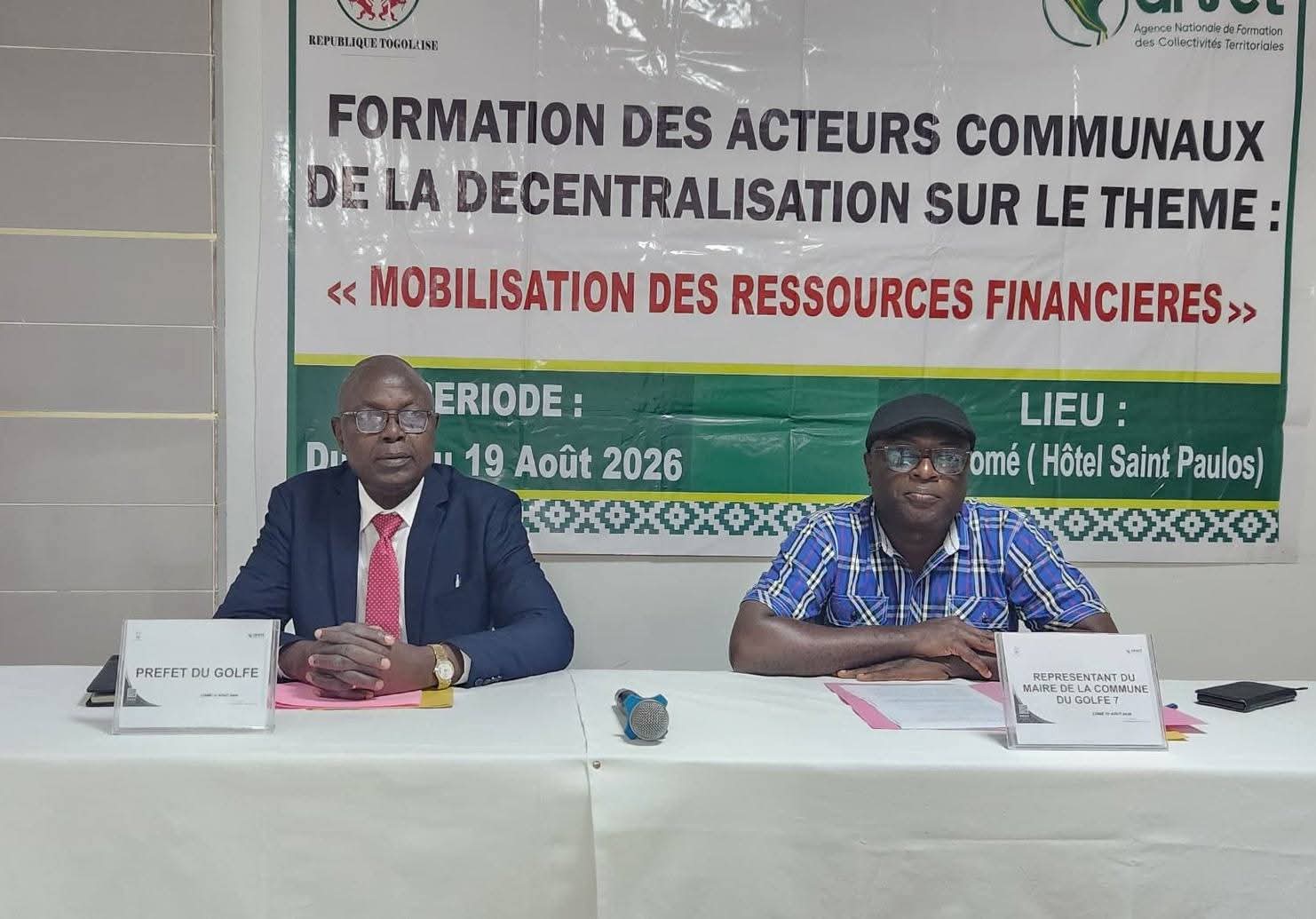
The workshop opened on Monday with a keynote address from Kossivi Agbodan, Prefect of the Golfe Prefecture, alongside Adaka Koffi, Third Deputy Mayor of Golfe 7. The session was attended by mayors, municipal representatives, general secretaries, and finance officers from the participating communes.
Adaka Koffi framed the event as a pivotal opportunity to foster true financial autonomy among local governments. He urged participants to engage fully over the three days—leveraging peer exchanges and collaborative problem-solving to identify solutions that can be immediately applied in their own communes. The training rejects passive learning in favour of dynamic, participatory methods where challenges are dissected and best practices are co-developed.
From revenue growth to fiscal discipline
Prefect Agbodan underscored a second vital dimension: the need for strict discipline in public finance management. He cautioned that simply increasing revenue does not guarantee improved living conditions if funds are mismanaged or misallocated. True progress, he argued, requires not only mobilising resources but doing so with transparency, rigour, and accountability.
The training therefore places equal emphasis on revenue generation and fiscal integrity. Participants are challenged to rethink how funds are tracked, reported, and deployed—ensuring every resource collected contributes directly to the commune’s development priorities and community well-being.
Transforming training into lasting impact
Through 19 August, participants will continue to collaborate in a structured environment designed to deepen understanding, refine techniques, and convert insights into action. The ANFCT’s involvement reflects its ongoing commitment to supporting Togo’s decentralisation process, empowering local governments to take charge of their financial futures.
The four communes represented—Golfe 2, Golfe 3, Agoè-Nyivé 5, and Agoè-Nyivé 6—now face the task of turning lessons learned into measurable improvements. The real test will come when they return to their towns, where the ultimate goal remains the same: stronger financial foundations that translate into better services, safer communities, and sustainable development for all residents.