A violent assault has targeted a combined convoy of the Russian African Corps and Malian government forces, signaling a severe escalation in the region.
Details of the deadly ambush in Mopti
On September 9, insurgents launched a surprise attack near Kaka, a village situated in the Mopti region. This deadly encounter resulted in the deaths of 13 Malian and Russian personnel, further intensifying the Mali security crisis.
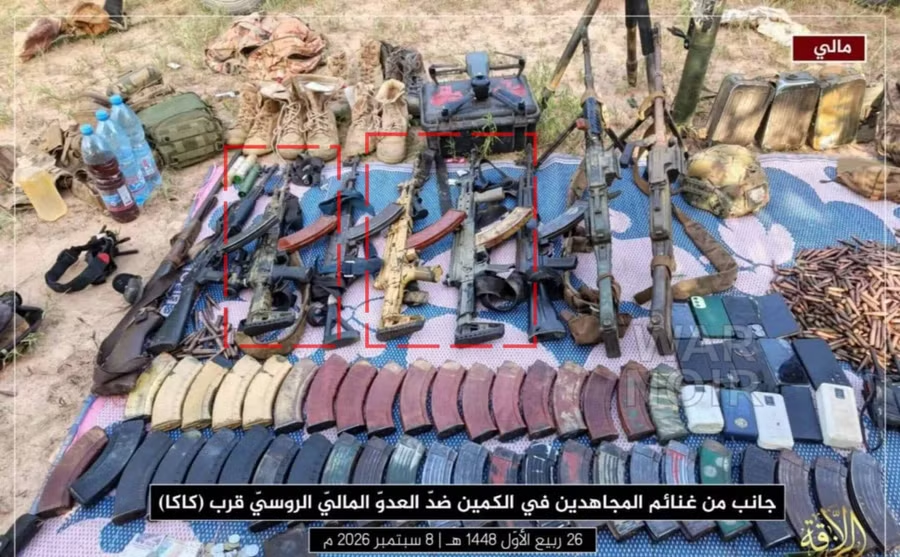
Following the confrontation, the Jama’at Nusrat al-Islam wal-Muslimin (JNIM) claimed to have captured a substantial cache of military gear. The seized arsenal includes 14 motorcycles, two PKM machine guns, six Kalashnikov assault rifles, six grenades, and a significant amount of ammunition.
A pattern of escalating insurgent violence
This incident follows a massive offensive on July 14, when insurgent forces intercepted a large military convoy in northern Mali. That convoy comprised soldiers from the national army alongside fighters from the Russian Defense Ministry’s African Corps.
Initial assessments of the July clash revealed that the convoy, which consisted of over 200 Russian mercenaries and approximately 100 Malian troops, suffered heavy losses. Around 60 Malian soldiers were killed, at least 30 were taken prisoner, and dozens more sustained injuries.
While such ambush tactics regularly disrupt military movements across the territory, coordinated defensive strategies from Bamako or Moscow have yet to materialize to counter these threats.
Understanding the rise of JNIM in West Africa
Operating as the official Al-Qaeda affiliate in the Sahel, JNIM stands as one of the most formidable militant coalitions in the region. Formed on March 2, 2017, the alliance united several pre-existing factions, including Ansar Dine, Al-Mourabitoun, the Sahara Emirate Katiba, and the Macina Katiba.
Although Mali serves as its primary operational hub, the group has expanded its reach far beyond. Its fighters are actively executing operations in Burkina Faso and Niger, while steadily pushing southward into coastal West Africa Mali border regions, including Bénin and Togo. This expansion represents a strategic shift from the central Sahel toward the broader West African coast.