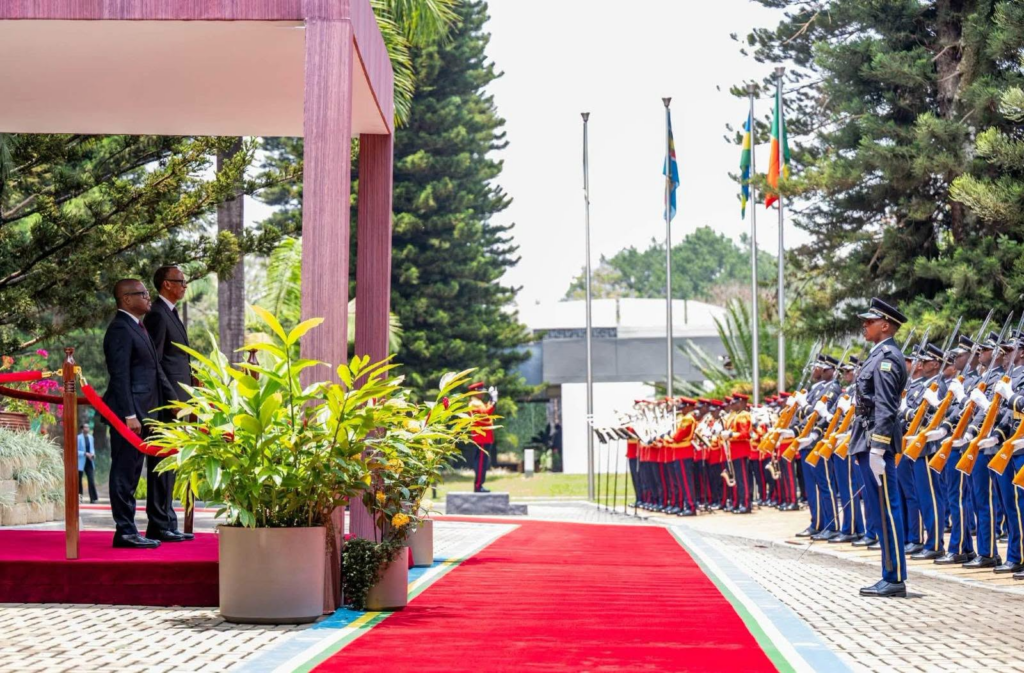
When Romuald Wadagni touched down in Kigali for a 48-hour working visit, the trip carried more weight than a routine diplomatic courtesy call. It was his first official journey to Rwanda since taking the oath of office in May, and the symbolism mattered: Cotonou is signalling that its partnership with Kigali is not a passing experiment but a long-term commitment embedded in Benin’s foreign policy DNA. Behind the ceremonial handshakes lies a carefully calculated logic — a small West African state betting on a proven East African model to sharpen its own security and governance tools.
Why this visit matters more than it appears
Official visits between African heads of state are common. What sets this one apart is the timing and the substance. Wadagni arrived in Kigali with a delegation and an agenda built around two intertwined priorities: hardening security cooperation and importing Rwanda’s administrative playbook. The meeting with President Paul Kagame at Village Urugwiro, the presidential palace, followed the classic format — a private one-on-one, then a broader session with ministerial teams — but the content pointed to something deeper than protocol.
The security file: shared borders, shared intelligence
At the heart of the talks was a partnership that has quietly matured over recent years. Benin and Rwanda maintain close cooperation on regional stability, with joint emphasis on intelligence sharing and technical and logistical support. The two leaders restated their commitment to protecting frontier zones, an issue that resonates strongly in a region grappling with militant threats and cross-border crime. For Cotonou, Rwanda’s experience in securing its territory offers a practical reference point rather than an abstract model.
The governance blueprint: digitisation and investment appeal
On the economic and administrative front, the Beninese delegation studied how Rwanda attracts foreign direct investment and how it has dematerialised public services. Wadagni, whose financial and economic background shapes his approach, stressed the need for pragmatic synergies between Cotonou and Kigali to boost intra-African trade. The underlying insight is straightforward: Rwanda has turned administrative efficiency into a competitive advantage, and Benin wants to replicate that discipline.
A gesture of memory that anchors the relationship
Following the tradition observed by visiting dignitaries in Kigali, Wadagni travelled to the Gisozi Genocide Memorial. There he laid a wreath in tribute to the victims of 1994, acknowledging the resilience of the Rwandan people and their capacity to rebuild a prosperous, united nation. The moment was not decorative — it forms part of a diplomatic grammar that binds remembrance to present-day partnership.
Reading the bigger picture
Step back and the visit reveals a coherent strategic thread. Cotonou-Kigali has become a central pillar of Benin’s foreign policy, anchored in economic development, technological innovation and shared security. The 48-hour stopover was less about announcing new agreements than about consolidating a direction of travel and confirming that the axis will outlast individual administrations. In a continent where bilateral deals often fade with changing governments, that continuity is itself the headline.