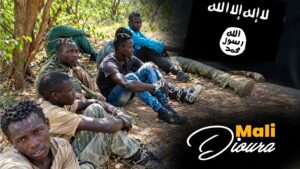
Mali 2025: Systematic Human Rights Violations Under Scrutiny
In 2025, Mali continues to face severe restrictions on fundamental freedoms, including freedom of expression, peaceful assembly, and association. Political opponents and civil society members have faced arbitrary arrests, enforced disappearances, and illegal detentions. Government forces, allied militias, and armed groups have carried out unlawful attacks and killings targeting civilians. Additionally, armed factions have imposed crippling blockades in multiple cities, exacerbating the humanitarian crisis. At least 2,036 schools remained closed due to conflict, depriving thousands of children of education.
Political Context and Transitional Challenges
The country’s political landscape has remained volatile. After a failed peace process in early 2025—boycotted by political parties, civil society, and several armed groups—the government introduced the National Charter for Peace and Reconciliation in February. This was followed in April by a five-year extension of the political transition period, originally initiated after the 2020 military coup.
Security partnerships have also shifted. In June, the Africa Corps, a Russian state-controlled military organization, replaced the Wagner Group in Mali, formalizing a new security agreement with Moscow. The same month, authorities claimed to have thwarted a coup attempt, detaining multiple army officers and a French diplomat, who was later revealed to be a French intelligence agent.
In September, Mali announced its intention to withdraw from the International Criminal Court (ICC), signaling a further distancing from international judicial oversight.
Crackdown on Political Freedoms
The dissolution of all political parties in early 2025 marked a sharp escalation in repression. When citizens protested in Bamako in April and May, security forces responded with excessive force, violently dispersing demonstrations. This move underscored the government’s tightening grip on dissent and public dissent.
Enforced Disappearances Targeting Civil Society and Opposition
Enforced disappearances have become a tool of state intimidation. Notable cases include:
- Alou Badra Sacko, coordinator of the Appel du 20 février movement and president of Touche pas à mon argent, was abducted in central Bamako on March 14 by armed, masked men. He had publicly criticized mobile money transaction taxes. After 72 days in secret detention, he was released on May 24.
- El Bachir Thiam, leader of the Yelema party, was kidnapped from his home on May 8 by unknown assailants. The UN Human Rights Council demanded his immediate release. He was freed on September 26, having played a key role in opposing the dissolution of political parties and the transition extension.
- Alhassane Abba, secretary-general of the Convergence pour le développement du Mali, was abducted on May 8 by men claiming to be gendarmes. He was released on June 5 without judicial proceedings.
Arbitrary Arrests and Torture in State Custody
The UN has repeatedly condemned the detention of political activists subjected to torture. Among them are:
- Moulaye Baba Haïdara, Mahamoud Mohamed Mangane, and Amadou Togola, detained since 2023 on charges including “undermining state security” and “damaging national unity.” Despite torture allegations, their trial has been repeatedly delayed.
- Moussa Mara, former Prime Minister, was arrested in August after posting on X that he would fight “by all means” for the rights of detained dissidents. Charged with undermining state credibility and opposing legitimate authority, he was sentenced in October to one year in prison.
- Clément Dembele, an anti-corruption activist, remained imprisoned despite a court order in April for the dismissal of charges against him, which stemmed from accusations of death threats against the president and his family. The UN urged his unconditional release in August.
Armed Groups: Targeting Civilians and Civilians’ Rights
Non-state armed groups have intensified attacks on civilians:
- In February, the Islamic State in the Greater Sahara (ISGS) killed 34 civilians in an ambush near Gao, targeting a civilian convoy escorted by Malian security forces.
- In May, Sidi Barka, a civil society leader, was abducted by ISGS members in Ménaka. His body was reportedly found in August near the city outskirts.
- Ousmane Kampo, mayor of Konna, was kidnapped by the Group for Support of Islam and Muslims (GSIM) while working in his fields. He was released on October 4.
- In August, the Macina Katiba launched an attack on Farabougou, killing civilians and triggering mass displacement.
- On November 6, Mariam Cissé, a social media influencer, was abducted in Echell (Tombouctou region), taken to her hometown of Tonka, and executed the next day. Her body was left in a public square.
Government Forces and Allied Militias: War Crimes and Impunity
Government forces and their allies have been implicated in serious violations of international humanitarian law:
- On March 16, a Malian Air Force drone strike killed at least 10 civilians during a market day in Ejdeïr (Tombouctou region).
- On April 12, Malian Armed Forces (FAMa) and Wagner-affiliated operatives detained over 100 men, mostly from the Fulani community, at a market in Sebabougou (Kayes region). At least 60 were taken to Kwala military camp, where they were tortured and later executed. Their decomposed bodies were discovered a week later near the camp.
- On May 12, Malian soldiers and allied Dozos militiamen arrested 23–27 men at a weekly market in Diafarabé. After being bound and blindfolded, they were transported across the river and executed in mass graves. Despite promises of an investigation, no updates have been released.
Economic and Social Rights in Freefall
Armed groups have increasingly restricted access to key cities and resources:
- The GSIM continues to blockade cities such as Gossi, Léré, and Diafarabé, violating rights to food security and free movement.
- In July, the group announced a blockade around Kayes and Nioro du Sahel, restricting fuel shipments from Senegal and Côte d’Ivoire. Trucks transporting fuel were systematically targeted in western and central Mali.
Education Crisis Deepens
The education sector has collapsed under the weight of insecurity. By June 2025, 2,036 schools were non-functional—up from 1,984 in June 2024—leaving 618,000 children out of school. Kidal region was hardest hit, with 63% of children out of education.