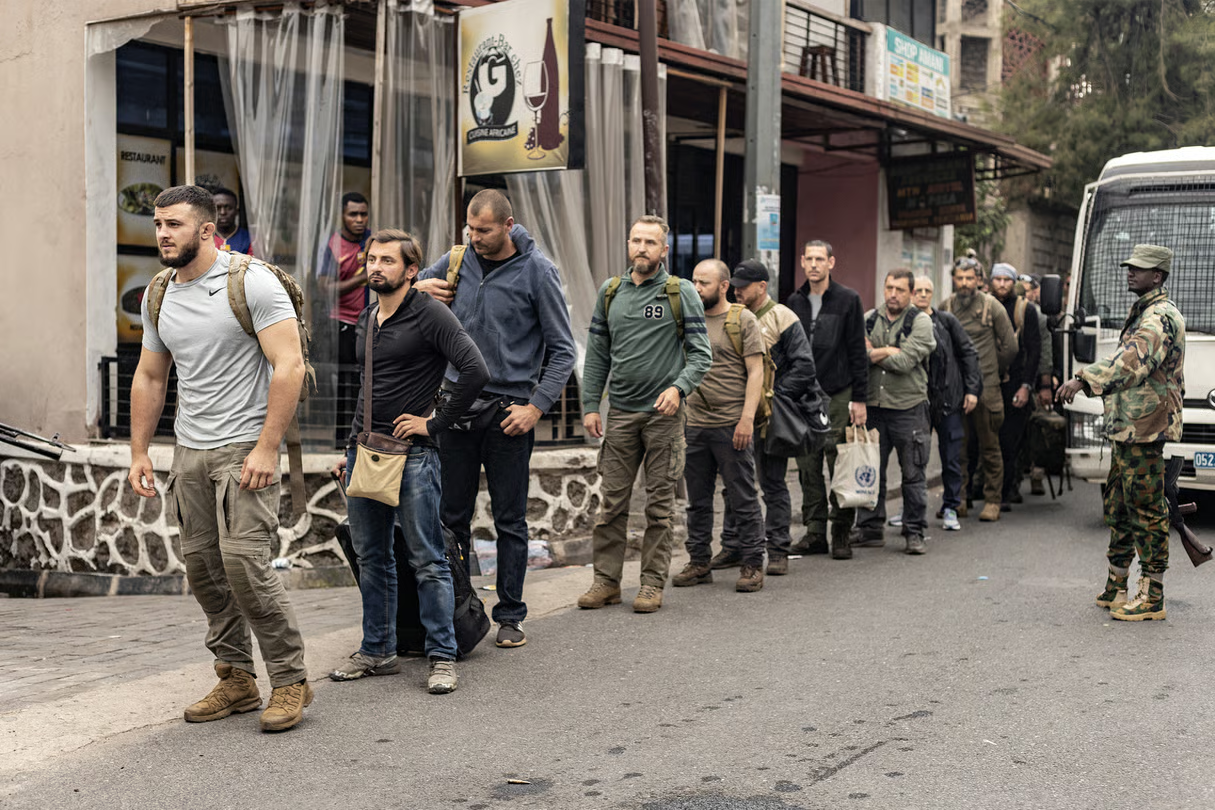
As the M23 rebel group advanced toward Goma, the capital of North Kivu province, in early 2025, the Congolese government in Kinshasa scrambled to mount a last-ditch defense. The strategy involved assembling a fragile alliance of local and international military partners to counter the insurgency threatening to engulf the city.
An explosive investigation titled “Violence for Sale”, conducted by the Global Initiative Against Transnational Organized Crime, has now exposed how President Félix Tshisekedi allegedly outsourced key aspects of the conflict to foreign forces, including mercenaries from Romania.
foreign fighters in the heart of the conflict
According to the report, the Congolese government approved the deployment of foreign troops near Goma as a desperate measure to halt the M23’s advance. The presence of these fighters—reportedly including Romanian mercenaries—was documented at a border crossing with Rwanda, raising serious questions about the government’s reliance on external military support.
Military analysts suggest this move reflects Tshisekedi’s broader strategy to leverage international partnerships in securing eastern DRC. However, the decision has sparked controversy, with critics arguing it undermines national sovereignty and complicates regional stability.
what the investigation reveals
The “Violence for Sale” report provides a detailed account of how the Congolese government coordinated with foreign fighters to reinforce its military operations. Key findings include:
- Foreign mercenaries played a direct role in combat operations alongside Congolese forces, particularly in the North Kivu region.
- The government allegedly provided logistical and financial support to these fighters, despite their questionable legal status.
- The involvement of Romanian mercenaries highlights the international dimension of the conflict, with fighters reportedly arriving from Europe.
- Critics warn that outsourcing security to foreign troops could exacerbate tensions with neighboring countries, including Rwanda and Uganda.
regional reactions and consequences
The revelation has drawn sharp reactions from regional observers. Some analysts argue that Tshisekedi’s reliance on foreign fighters is a pragmatic response to a dire security situation, while others condemn it as a violation of DRC’s sovereignty.
Rwanda has repeatedly denied supporting the M23, but the report’s findings suggest a complex web of foreign involvement in eastern DRC. The situation raises concerns about escalating proxy conflicts and the potential for further destabilization in the Great Lakes region.
what happens next?
As the Congolese government grapples with the fallout from this investigation, questions remain about its long-term strategy in eastern DRC. Will the use of foreign fighters continue, or will Kinshasa seek alternative solutions to the M23 insurgency?
The “Violence for Sale” report underscores the urgent need for transparency and accountability in DRC’s military operations. For now, the government’s reliance on foreign fighters remains a contentious and divisive issue.