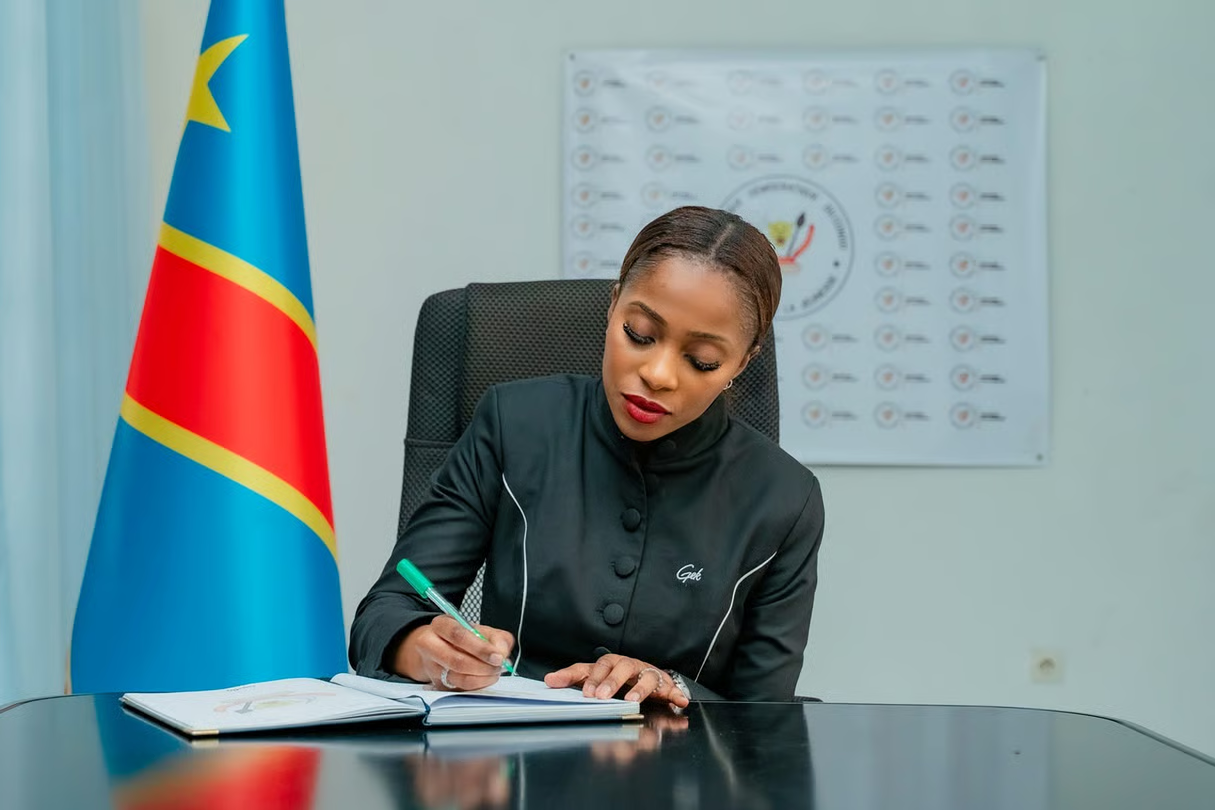
The Democratic Republic of Congo is once again at the center of intense political discussions as the constitutional amendment debate gains momentum. At the heart of the controversy stands Grâce Kutino, Minister of Youth and Patriotic Awakening, whose recent statements have fueled speculation about the government’s stance on these changes.
During a high-profile public address, Kutino delivered a speech that many interpreted as a definitive endorsement of constitutional reforms. Her words, “Yes, I do,” resonated across political circles, sparking immediate reactions from both supporters and critics. The phrase, delivered with conviction, has become a rallying cry for those advocating for the reforms while simultaneously drawing criticism from opponents who view the changes as a power grab.
What did Grâce Kutino say?
Kutino’s remarks came during a session focused on national unity and governance. She emphasized the need for modernizing the country’s legal framework to better align with current challenges. “Our constitution must evolve to reflect our nation’s aspirations,” she stated, adding that the proposed amendments would strengthen democratic institutions and enhance transparency.
The minister’s position appears to align closely with President Félix Tshisekedi’s vision, though she has not explicitly confirmed whether her statements reflect official government policy. This ambiguity has led to widespread debate about the true intentions behind the proposed changes.
Reactions from political circles
The public reaction to Kutino’s speech has been sharply divided. Pro-government factions have praised her words as a bold step toward progress, while opposition leaders have accused her of overstepping her role as a minister. Some critics argue that the proposed amendments could undermine democratic principles and concentrate power in the hands of a few.
Civil society organizations have also weighed in, calling for greater transparency in the amendment process. “The people deserve to know how these changes will impact their rights,” said a spokesperson for a prominent advocacy group. The debate shows no signs of slowing, with protests and counter-protests expected in the coming weeks.
What’s next for the constitutional debate?
As the conversation intensifies, all eyes are on President Tshisekedi, whose support or opposition to the reforms will likely determine their fate. Lawmakers are scheduled to reconvene in the coming days to review the proposed changes, and public hearings are planned to gather input from citizens across the country.
The outcome of this debate will shape the future of the Democratic Republic of Congo’s governance for years to come. Whether Kutino’s statements were a personal endorsement or a reflection of government policy remains to be seen, but one thing is clear: the constitutional amendment process is far from over.
The nation watches closely as political leaders navigate this critical moment in its history.