Gabon : la bataille des 33 commence
Libreville, Wednesday, July 8, 2026 – Gabon’s political landscape is undergoing a significant transformation, marked by a new fault line. As authorities press forward with an extensive overhaul of party life, thirty-three political entities that failed to meet new legal mandates are refusing to fade away quietly.
Amid calls for consolidation, attempts at regrouping, and threats of legal action, an unprecedented political struggle is unfolding, challenging the very definition of pluralism within Gabon’s Fifth Republic.
At the heart of this evolving situation, two distinct strategies have emerged. One favors absorption into more established and compliant political organizations. The other opts for collective resistance against what many perceive as an abrupt reduction in the nation’s political diversity.
The race for consolidation begins
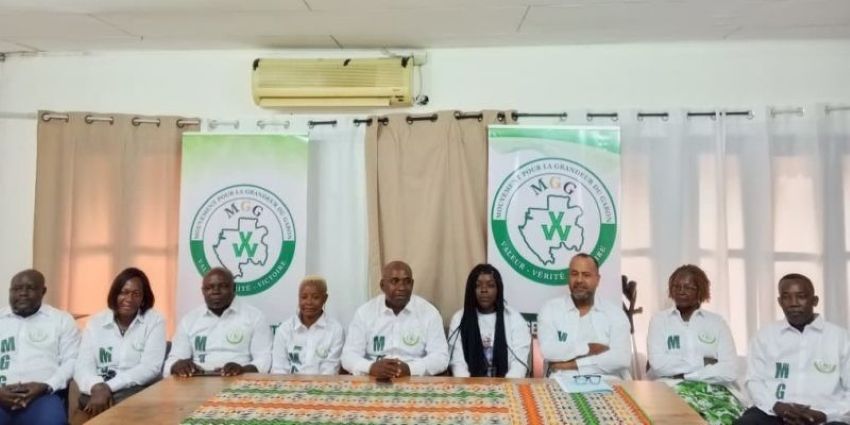
Christian Mermance N’nang Nsome, president of the Mouvement pour la Grandeur du Gabon (MGG), was among the first to publicly extend an invitation. He has opened his party’s doors wide to leaders and members of the parties now facing administrative dissolution.
For the MGG leader, this reform is not an end but rather an opportunity for restructuring. His movement aims to integrate the activist networks, local officials, and political cadres left without a party structure, thereby strengthening its presence across the entire national territory.
This approach is openly declared. In a political environment where the rules of engagement have profoundly shifted, the MGG seeks to leverage the weakening of smaller parties as a catalyst for its own political expansion.
Such a consolidation strategy through absorption could swiftly alter the balance of power within Gabon’s partisan landscape. Parties capable of attracting members from the excluded formations will gain a significant organizational advantage in anticipation of upcoming elections.
The gamble is bold. It remains to be seen whether the affected members will agree to merge into a new organization or choose to defend their historical political identity.
A united front of defiance takes shape in Libreville
In opposition to this consolidation logic, an alternative path is already forming. Jean Romain Fanguinoveny, president of the Parti du Peuple Gabonais (PPG) and a former presidential candidate in 2023, has convened the thirty-three concerned parties to forge a collective response.
Their stated objective is the establishment of a Collective of Historic Political Parties dedicated to upholding the Constitution and democratic pluralism in Gabon.
For its proponents, the stakes far exceed the administrative fate of the individual parties. It is about defending a particular vision of Gabonese democracy and safeguarding the diversity of political sensibilities that have shaped the nation’s institutional history over several decades.
The collective’s initiators decry what they perceive as a form of political purging carried out under the guise of administrative normalization. They are considering various appeals to administrative and constitutional courts, as well as a potential direct appeal to the Head of State to present their arguments.
Their primary legal argument hinges on the principle of non-retroactivity of laws. They contend that parties legally established, some for decades, should not be forced to comply with new conditions under penalty of dissolution.
The true debate centers on pluralism
Beneath this immediate confrontation lies a more fundamental question for Gabon’s political future. How many parties can a democracy reasonably sustain without succumbing to fragmentation? And how far can the rationalization of the political landscape go without undermining pluralism?
The government champions the need to streamline a system long characterized by a proliferation of parties lacking genuine grassroots presence or significant political activity. Conversely, opponents of the reform fear a gradual concentration of political representation around a limited number of organizations, often those already possessing substantial resources or close ties to the ruling power.
Caught between institutional efficiency and democratic diversity, Gabon now faces one of the major political debates currently traversing many African democracies. The coming weeks will reveal whether the thirty-three affected parties choose merger, resistance, or eventual disappearance.
One thing is already clear: the reform of political parties is no longer merely an administrative exercise. It has become the first significant political test for the new democratic architecture envisioned by Gabonese authorities.