Gabon’s parliament becomes center stage in new republic era
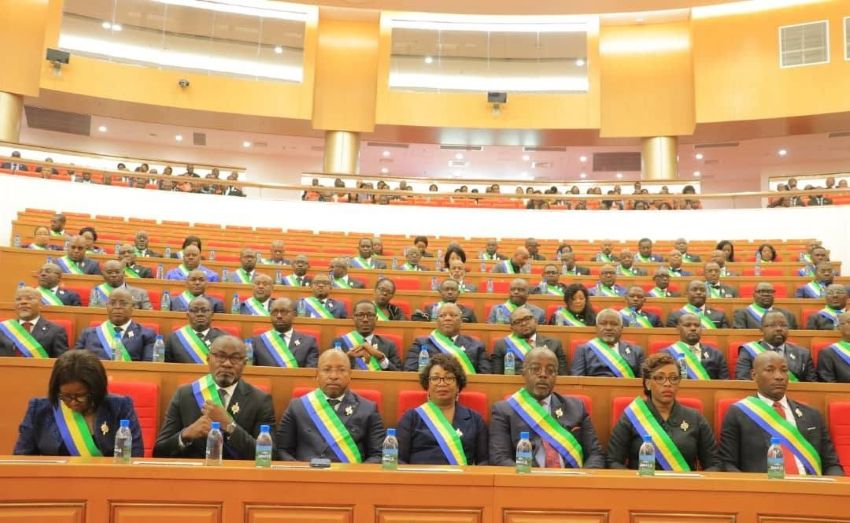
Libreville, Monday, June 15, 2026 – A historic moment is unfolding in Gabon’s political landscape today. For the first time under the Fifth Republic’s Constitution, President Brice Clotaire Oligui Nguema will address a joint session of Parliament, as mandated by Article 59 of the new constitutional framework.
This unprecedented gathering represents far more than a routine institutional exercise. It signals the emergence of a new power structure designed to position Parliament at the heart of the republic, reinforcing accountability and democratic governance.
In an era where many nations grapple with restoring trust between leaders and citizens, Gabon is pioneering a mechanism that could redefine its political identity. The Léon Mba Palace, home to the National Assembly, is no longer merely a legislative workshop but a symbolic forum where the executive branch, parliamentarians, and ultimately the Gabonese people converge annually.
A bold institutional innovation with far-reaching consequences
Under previous regimes, presidential addresses to Parliament were rare exceptions. The Fifth Republic transforms this into a constitutional obligation. Now, the head of state must present his vision, achievements, and future plans to lawmakers every year.
Though seemingly procedural, this change carries profound political significance. It embeds the principle of regular accountability at the highest level of government, ensuring the president answers not only to voters but also to the nation’s representatives.
This approach sets Gabon apart from traditional presidential systems. It institutionalizes public scrutiny of government actions, fostering a culture of transparency and responsibility that strengthens democratic resilience.
The choice of the Léon Mba Palace for this joint session is deliberate. Historically, power gravitated around the executive branch. By appearing before Parliament, the president shifts the center of gravity toward the people’s representatives, underscoring that democratic legitimacy extends beyond elections to include continuous dialogue with elected officials.
Parliament’s reinvention as a pillar of the Fifth Republic
The constitutional reforms stemming from the inclusive national dialogue have dramatically elevated Parliament’s role. Far from its former image as a secondary institution, the legislature now stands as a cornerstone of the new institutional balance.
This transformation responds to a critical need. The 2023 political transition placed national reconciliation and trust-building at the forefront of public debate. The new Constitution addresses this by reinforcing oversight, transparency, and responsibility mechanisms.
The annual joint session embodies this philosophy. While debates or votes may not occur, its impact is undeniable. It creates a platform for institutional unity, where majority and opposition share a common republican moment—an antidote to political fragmentation.
Here, Parliament reflects the nation’s diversity. The 215 deputies and senators gathered represent Gabon’s political, geographical, and social spectrum. Though the president’s address is formally directed at them, its message resonates with all citizens.
Crafting a new political culture for Gabon
Every enduring democracy relies on rituals that shape its political identity. Gabon’s annual joint session could become such a defining tradition, anchoring institutions in the public consciousness.
Beyond its ceremonial function, this gathering embodies a governance philosophy rooted in transparency and dialogue. It signals a shift from authority exercised through decree to governance through explanation and accountability—a model increasingly valued by investors and international partners across Africa.
The true significance of today’s session extends beyond the president’s speech. It marks the birth of a republican tradition destined to shape Gabon’s political fabric for generations. By making Parliament the annual meeting ground for the executive and legislature, the Fifth Republic redefines state power—not through concentration, but through accountability.
This may well be the most profound transformation since the republic’s inception.