The Gabonese government has quietly slashed its projected mining tax revenue in the 2025 revised finance bill, cutting corporate income tax from 53.2 billion to just 1.47 billion FCFA—a 97% reduction. This drastic adjustment, unmatched by any other taxpayer category, translates to a staggering loss of 51.8 billion FCFA (about €78 million) in expected state income from a single fiscal measure.
How Libreville’s mining strategy hit a fiscal wall
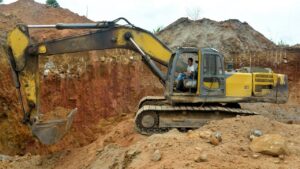
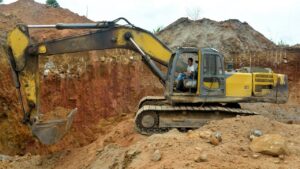
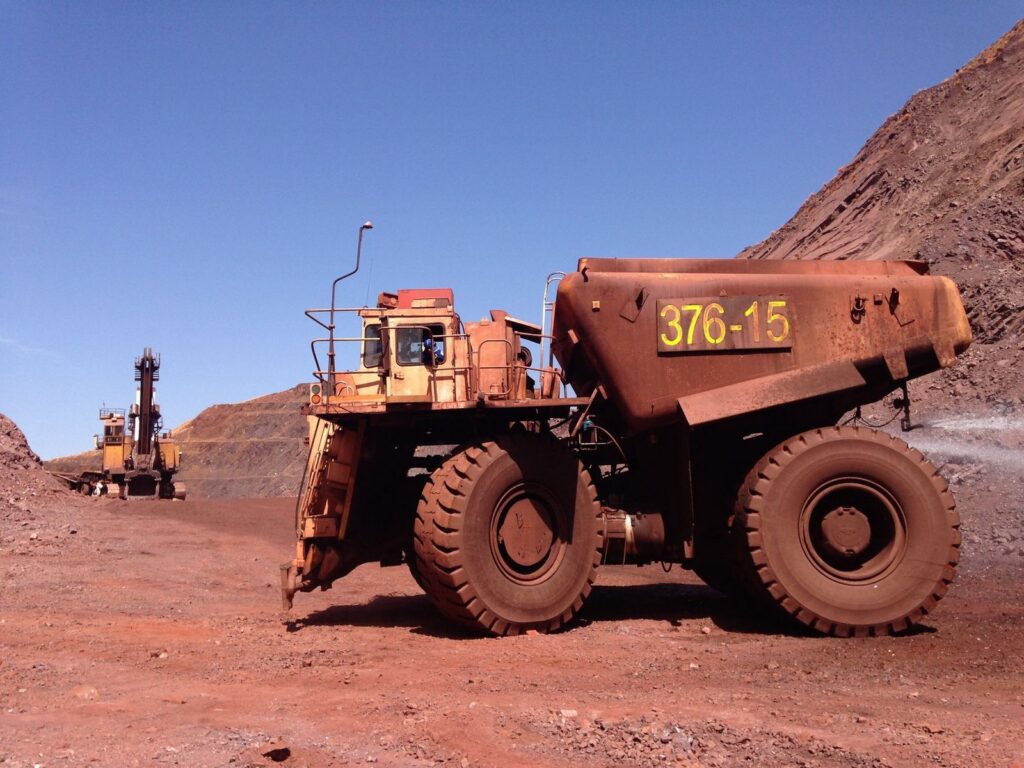
Manganese remains Gabon’s third-largest foreign exchange earner after oil and timber, with the country ranking as the world’s second-largest producer. Most output comes from the Haut-Ogooué region, dominated by Comilog (a subsidiary of French giant Eramet) and Nouvelle Gabon Mining. Since the 2023 military transition, authorities have repeatedly vowed to boost state revenue from mining concessions—yet the revised budget tells a different story.
The sharp decline in mining tax receipts coincides with a severe correction in global manganese prices after a mid-2024 market peak triggered by a major mine fire in Australia. While falling prices squeezed operators’ profits—and thus their taxable income—the yawning gap between forecast and reality raises questions about the accuracy of the original budget assumptions.
Transparency in doubt as Gabon sacrifices 51.8 billion FCFA
The loss comes at a delicate time. Gabon has recently re-engaged with the Extractive Industries Transparency Initiative (EITI) after years of absence, making the revenue shortfall all the more politically sensitive. The 51.8 billion FCFA gap is equivalent to several months’ salary bill for key ministries, arriving as Libreville negotiates a fresh IMF support package amid liquidity strains and mounting recourse to regional BEAC markets for monthly cash infusions.
Local analysts highlight a stark contradiction: while the transitional authorities have pledged to renegotiate allegedly unfavorable mining and oil agreements, the revised budget shows mining corporate tax receipts at just 3% of their original target. Yet no official explanation has been provided for the assumptions behind this drastic revision.
Mixed signals to investors and partners
With the country preparing to publish its multi-year budget framework and weigh major infrastructure spending against deficit control, a 51.8 billion FCFA revenue hole forces tough choices: either slash expenditures or increase domestic borrowing. Multilateral lenders will closely scrutinize how the transitional government justifies this shortfall to the National Transitional Council.
For mining operators, the move sends mixed signals. While lower effective tax rates provide temporary relief in a low-price cycle, they risk stoking public debate over whether Gabon is receiving fair value for its mineral wealth. The upcoming 2026 budget—due in the autumn—must clarify whether this adjustment is a temporary setback or a lasting shift in the fiscal yield from Gabon’s mines.