Gabon’s evolving diplomacy: strengthening its role in the global South
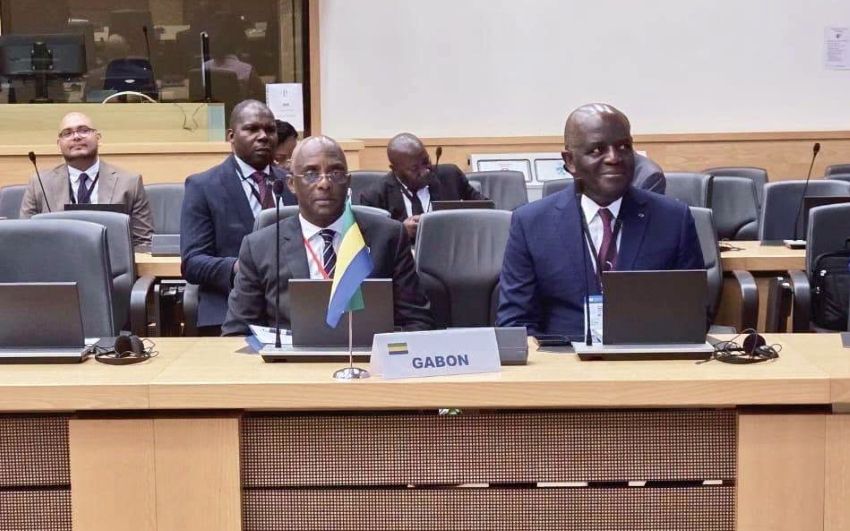
Libreville, Friday, July 17, 2026 – Amidst a complex international landscape characterized by escalating geopolitical tensions, the fragmentation of traditional alliances, and the growing urgency of climate and economic challenges, Gabon is determined to solidify its standing within the key consultation forums of the global South.
Libreville’s active participation in the Bureau of the Council of Ministers of the Organisation of African, Caribbean and Pacific States (OEACP), which convened on July 15 in Brussels, underscores this commitment to exert greater influence in shaping the new parameters of global multilateralism.
The Gabonese delegation, led by Marc Abeghe, the Minister Delegate for the Budget, and Régis Immongault Tatangani, Ambassador and Permanent Representative to the OEACP, did more than merely attend a preparatory meeting for the organization’s 121st ministerial session. Gabon actively positioned itself as a dedicated contributor to the strategic deliberations aimed at transforming this institution into a primary political platform for the developing world.
The OEACP at a pivotal juncture
The Organisation of African, Caribbean and Pacific States is currently navigating a crucial phase in its evolution. Historically viewed as a framework primarily focused on cooperation with the European Union, the OEACP is now striving to forge its own distinct political identity and assert autonomous influence on major international issues.
Discussions in Brussels therefore centered on the organization’s institutional reforms, the implementation of the Samoa Agreement, and the imperative to enhance its visibility and operational capacity within a profoundly altered global environment.
In this context, the Samoa Agreement represents a significant turning point. As the successor to the Cotonou Agreements, it seeks to redefine political, economic, and commercial relationships between member states and their international partners, focusing on emergent challenges such as climate change, food security, governance, migration, and energy transitions.
For numerous African nations, this innovative framework offers a crucial opportunity to champion a more equitable vision of international relations, one founded on genuine partnership rather than mere assistance.
Gabon amplifies its voice within Central Africa
In its capacity as coordinator for the Central African region and a member of the OEACP Bureau of Ministers, Gabon held a particularly prominent role in the exchanges. The Gabonese delegation advocated for more inclusive governance within the organization and urged for the accelerated implementation of commitments outlined in both the Malabo Declaration and the Samoa Agreement.
Debates also addressed the institution’s financial sustainability, its strategic repositioning within the evolving international order, and the critical need to foster stronger dialogue among member states to bolster their collective ability to tackle economic, social, and environmental challenges.
This assertive stance reflects a significant shift in Gabonese diplomacy, which now aims to integrate its regional foundations with a more prominent presence in multilateral forums. Libreville is particularly keen to ensure its perspectives are heard on matters pertaining to development financing, the reform of global governance, and the defense of the interests of Africa’s intermediate economies.
Economic diplomacy: a core Gabonese priority
Beyond institutional discussions, Gabon utilized this international platform to reiterate its specific strategic priorities. Economic transformation stands as a foremost objective championed by Gabonese authorities. Productive diversification, industrialization, upgrading local value chains, and mobilizing international investments now form the primary pillars of this strategy.
Environmental preservation and the enhancement of climate resilience also occupy a central position in the nation’s diplomatic discourse. As the world’s leading carbon sink per capita and a recognized participant in international climate negotiations, Gabon is committed to continuing its advocacy for an approach that harmonizes economic development with the protection of vital ecosystems.
This strategic direction is complemented by an active pursuit of strategic partnerships designed to support the country’s economic and environmental transition.
As major global power dynamics continue to realign, multilateralism is emerging as a sphere of influence as vital as economic or military might.
Gabon appears to have fully grasped this reality. Within this emergent global power structure, the capacity to forge coalitions, champion shared interests, and articulate a collective vision for development could well become one of the most potent levers of sovereignty for African states in the coming decades.